


A randomized controlled clinical trial of Ocimum sanctum and chlorhexidine mouthwash on dental plaque and gingival inflammation
- PMID: 24948862
- PMCID: PMC4061585
- DOI: 10.4103/0975-9476.131727
A randomized controlled clinical trial of Ocimum sanctum and chlorhexidine mouthwash on dental plaque and gingival inflammation
Abstract
Background: Periodontal diseases are ubiquitous, affecting all dentate animals. Regular methods for controlling it have been found to be ineffective, which have paved the way for the use of herbal products as an adjunctive to mechanical therapy as they are free to untoward effects and hence can be used for a long period of time. Ocimum sanctum is a plant which has the greater medicinal value and enormous properties for curing and preventing disease.
Objective: In the present study we assessed the effectiveness of Ocimum sanctum on dental plaque, gingival inflammation and comparison with gold standard chlorhexidine and normal saline (placebo).
Materials and methods: A triple blind randomized control trial was conducted among volunteered medical students. They were randomly allocated into three study groups: (1) Ocimum sanctum mouthwash (n = 36); (2) Chlorhexidine (active control) (n = 36); (3) normal saline (negative control) (n = 36). Assessment was carried out according to plaque score and gingival score. Statistical analysis was carried out later to compare the effect of both mouthwash. ANOVA (Analysis of variance) and post-hoc LSD tests were performed using software package used for statistical analysis (SPSS) version 17. P ≤0.05 was considered as statistically significant.
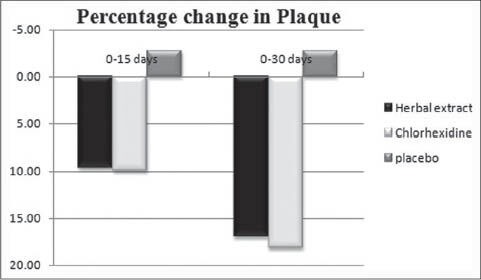
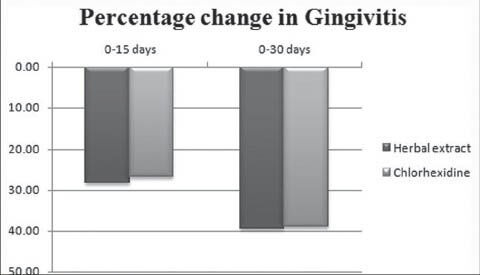
Results: Our result showed that Ocimum sanctum mouthrinse is equally effective in reducing plaque and gingivitis as Chlorhexidine. The results demonstrated a significant reduction in gingival bleeding and plaque indices in both groups over a period of 15 and 30 days as compared to control group.
Conclusion: The results of the present study indicate that Ocimum sanctum mouthrinse may prove to be an effective mouthwash owing to its ability in decreasing periodontal indices by reducing plaque accumulation, gingival inflammation and bleeding. It has no side effect as compared to chlorhexidine.
Keywords: Chlorhexidine; Ocimum sanctum; gingival index; plaque index.
Conflict of interest statement
Figures
References
-
- Hugoson A, Norderyd O. Has the prevalence of periodontitis changed during the last 30 years? J Clin Periodontol. 2008;35:338–45. - PubMed
-
- Löe H, Theilade E, Jensen SB. Experimental gingivitis in man. J Periodontol. 1965;36:177–87. - PubMed
-
- Axelsson P, Lindhe J. Effect of controlled oral hygiene procedures on caries and periodontal disease in adults. Results after 6 years. J Clin Periodontol. 1981;8:239–48. - PubMed
-
- Selwitz RH, Ismail AI, Pitts NB. Dental caries. Lancet. 2007;369:51–9. - PubMed
-
- Paraskevas S. Randomized controlled clinical trials on agents used for chemical plaque control. Int J Dent Hyg. 2005;3:162–78. - PubMed
LinkOut - more resources
Full Text Sources
Other Literature Sources
Medical