


Biofilm formation by Staphylococcus aureus from food contact surfaces in a meat-based broth and sensitivity to sanitizers
- PMID: 24948915
- PMCID: PMC4059327
- DOI: 10.1590/s1517-83822014000100010
Biofilm formation by Staphylococcus aureus from food contact surfaces in a meat-based broth and sensitivity to sanitizers
Abstract
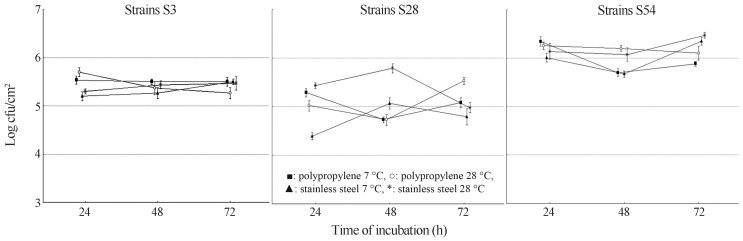
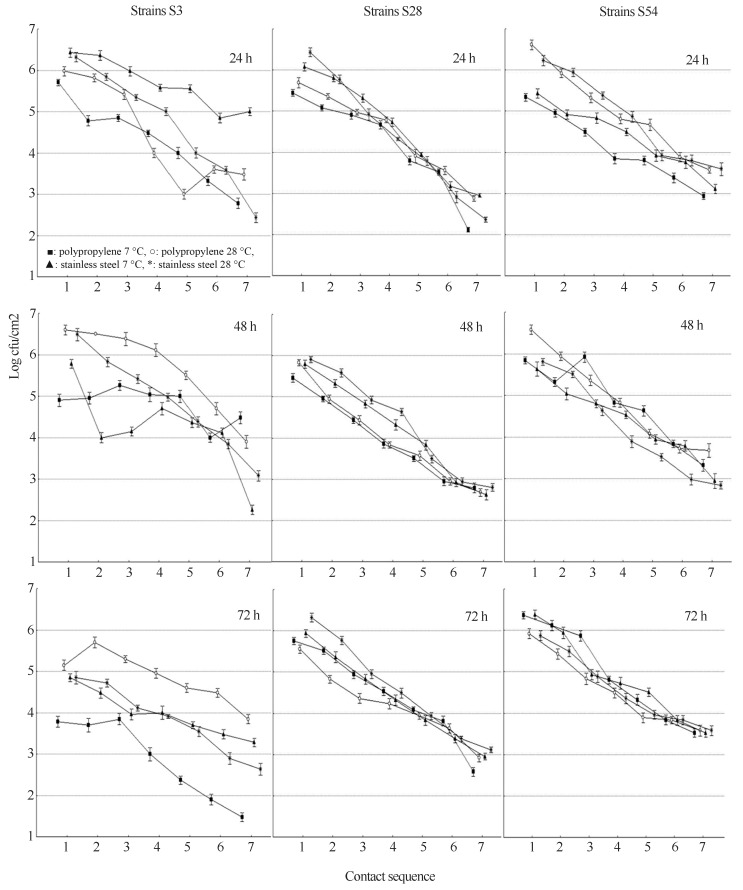
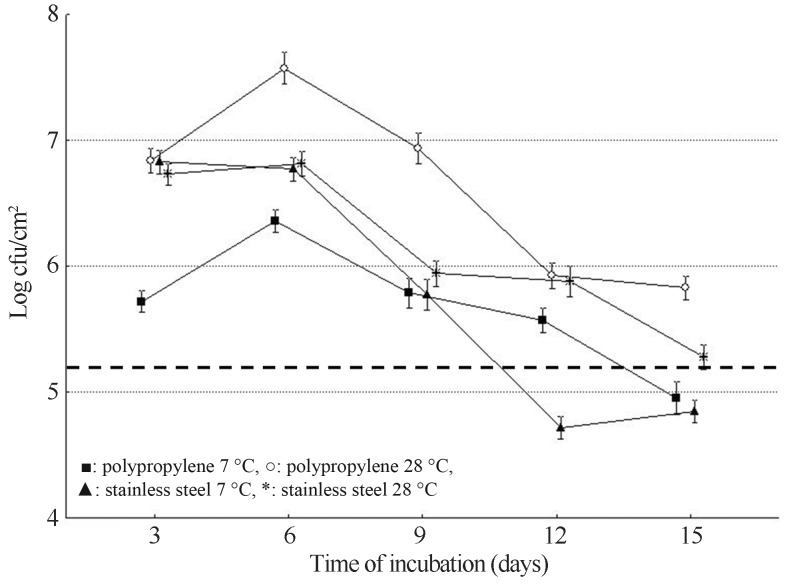
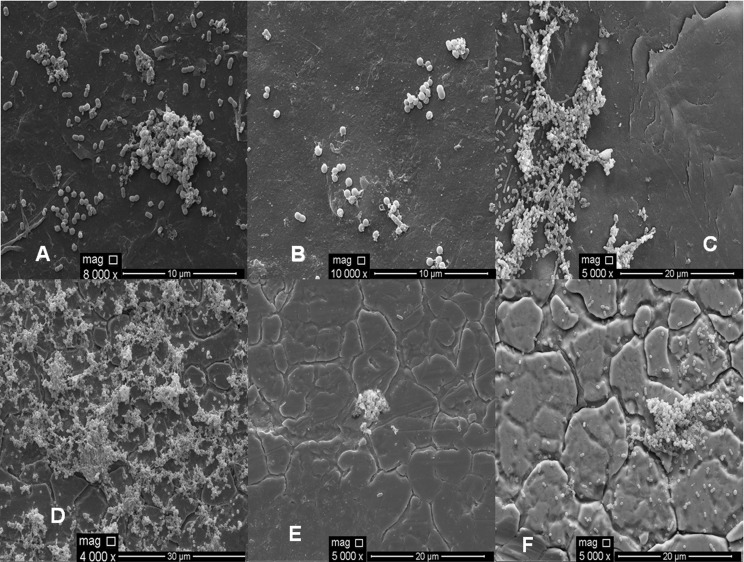
This study assessed the capacity of adhesion, the detachment kinetic and the biofilm formation by Staphylococcus aureus isolated from food services on stainless steel and polypropylene surfaces (2 × 2 cm) when cultivated in a meat-based broth at 28 and 7 °C. It was also to study the efficacy of the sanitizers sodium hypochlorite (250 mg/L) and peracetic acid (30 mg/L) in inactivating the bacterial cells in the preformed biofilm. S. aureus strains adhered in high numbers regardless the assayed surface kind and incubation temperature over 72 h. Cells detachment of surfaces revealed high persistence over the incubation period. Number of cells needed for biofilm formation was noted at all experimental systems already after 3 days. Peracetic acid and sodium hypochlorite were not efficient in completely removing the cells of S. aureus adhered on polypropylene and stainless steel surfaces. From these results, the assayed strains revealed high capacity to adhere and form biofilm on polypropylene and stainless steel surfaces under different growth conditions. Moreover, the cells in biofilm matrix were resistant for total removal when submitted to the exposure to sanitizers.
Keywords: Staphylococcus aureus; biofilm; cross-contamination; food processing environment; sanitizers.
Figures
References
-
- Ammor S, Chevallier I, Laguet A, Labadie J, Tallon R, Dufour E. Investigating of the selective bactericidal effect of several decontaminating solutions on bacterial biofilms including useful, spoilage and/or pathogenic bacteria. Food Microbiol. 2004;21:11–17.
-
- Asséré A, Oulahal N, Carpentier B. Comparative evaluation of methods for counting surviving biofilm cells adhering to a polyvinyl chloride surface exposed to chlorine or drying. J Appl Microbiol. 2008;104:1692–1702. - PubMed
-
- Braga LC, Shupp JW, Cummings C, Jett M, Takahashi JÁ, Carmo LS, Chartone-Souza E, Nascimento AMA. Pomegranate extract inhibits Staphylococcus aureus growth and subsequent enterotoxin production. J Ethnopharmacol. 2005;96:335–339. - PubMed
Publication types
MeSH terms
Substances
LinkOut - more resources
Full Text Sources
Other Literature Sources