


Gremlin activates the Smad pathway linked to epithelial mesenchymal transdifferentiation in cultured tubular epithelial cells
- PMID: 24949470
- PMCID: PMC4052161
- DOI: 10.1155/2014/802841
Gremlin activates the Smad pathway linked to epithelial mesenchymal transdifferentiation in cultured tubular epithelial cells
Abstract
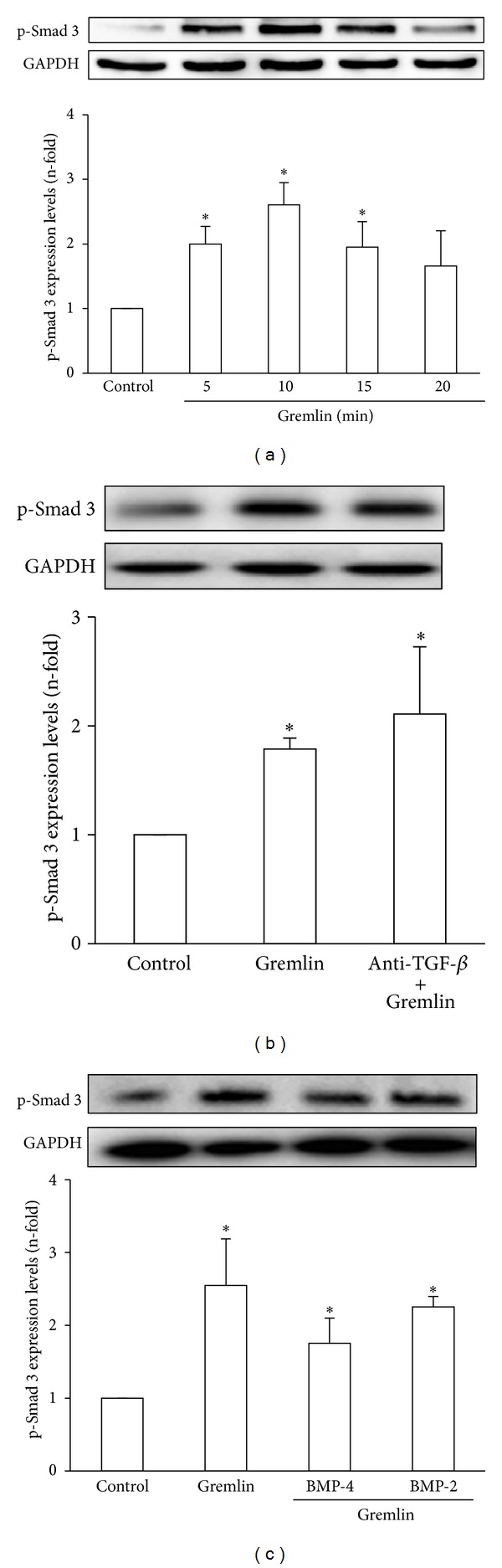
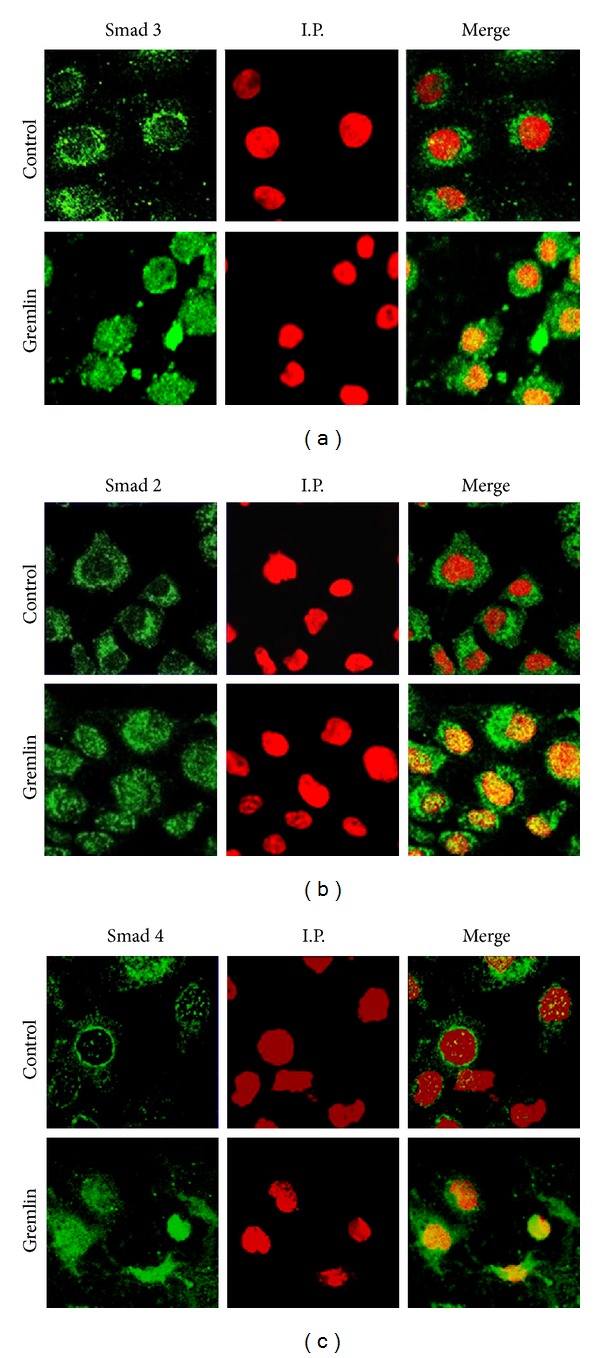
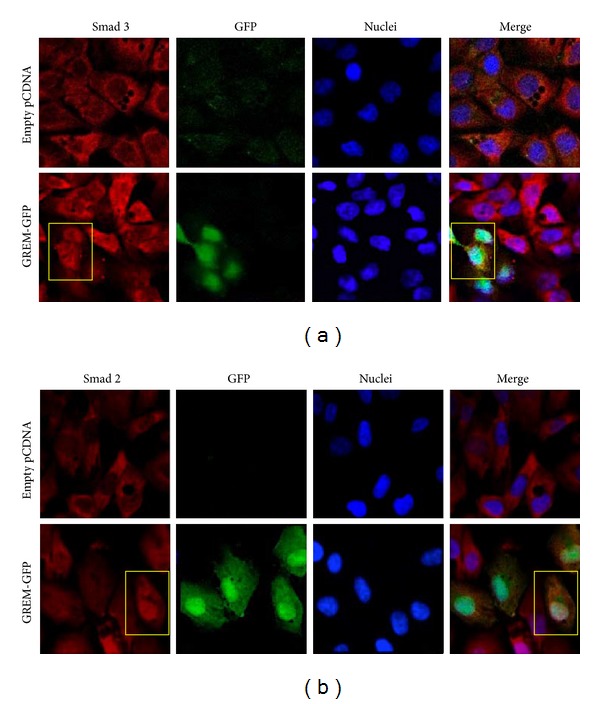
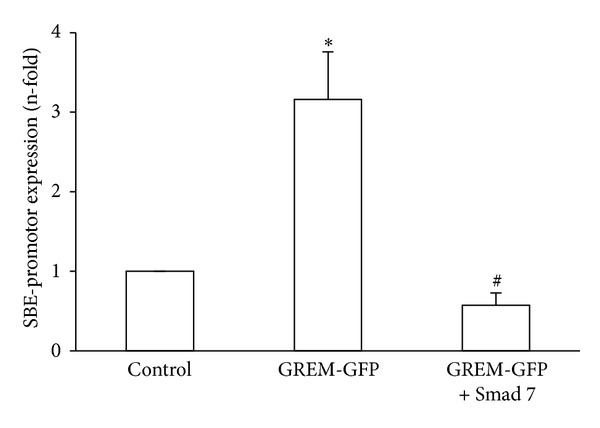
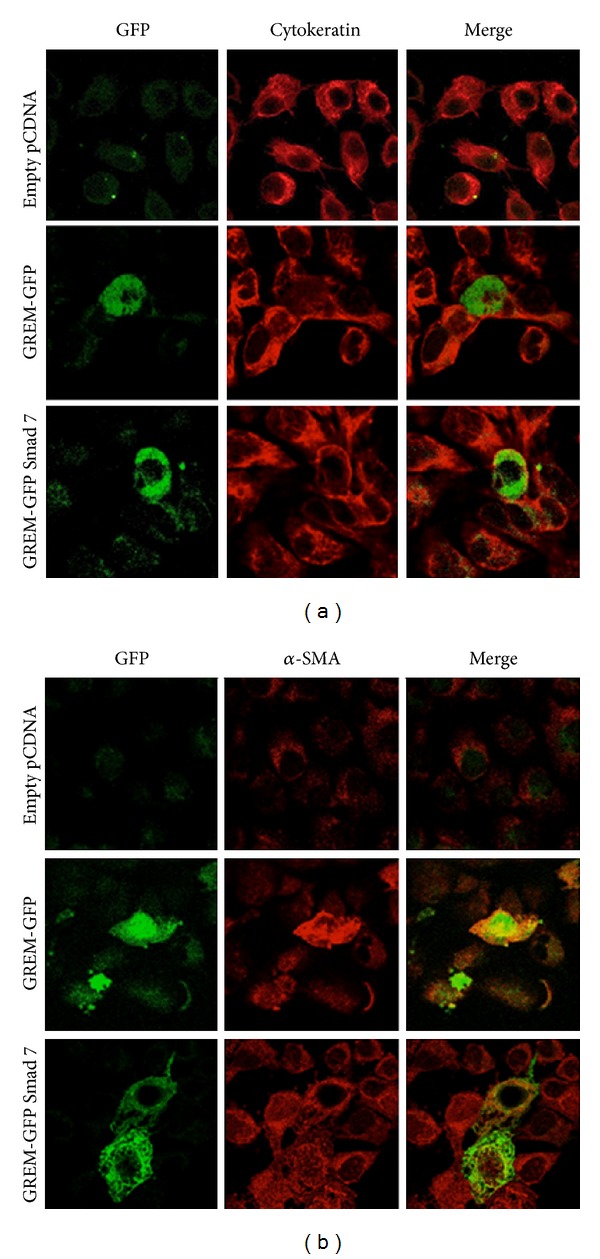
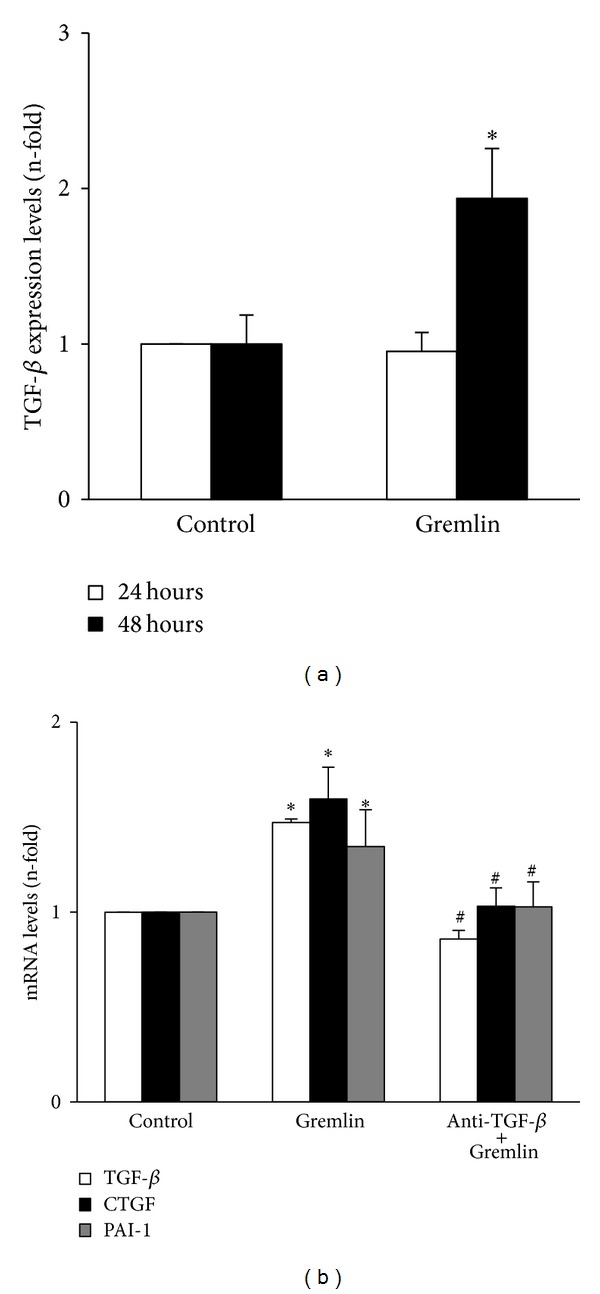
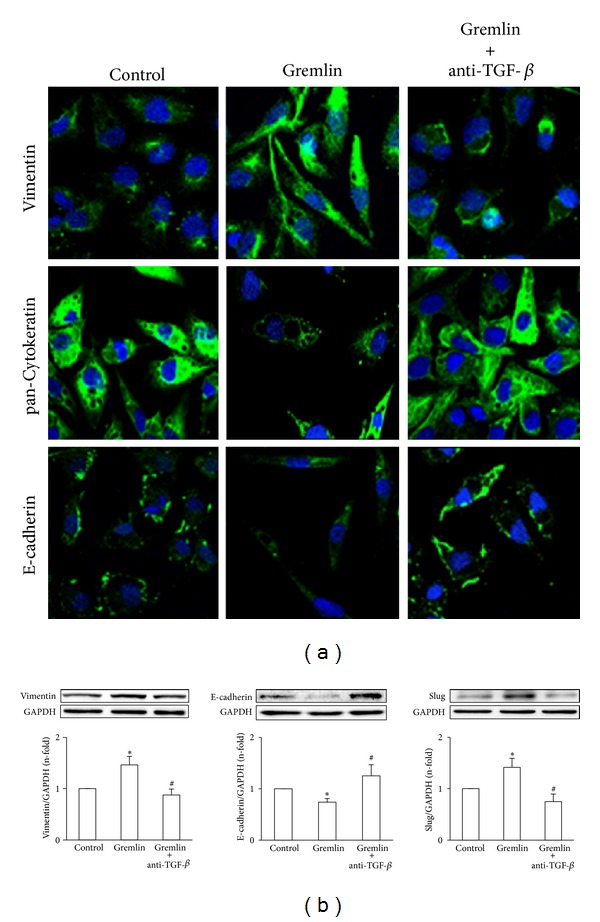
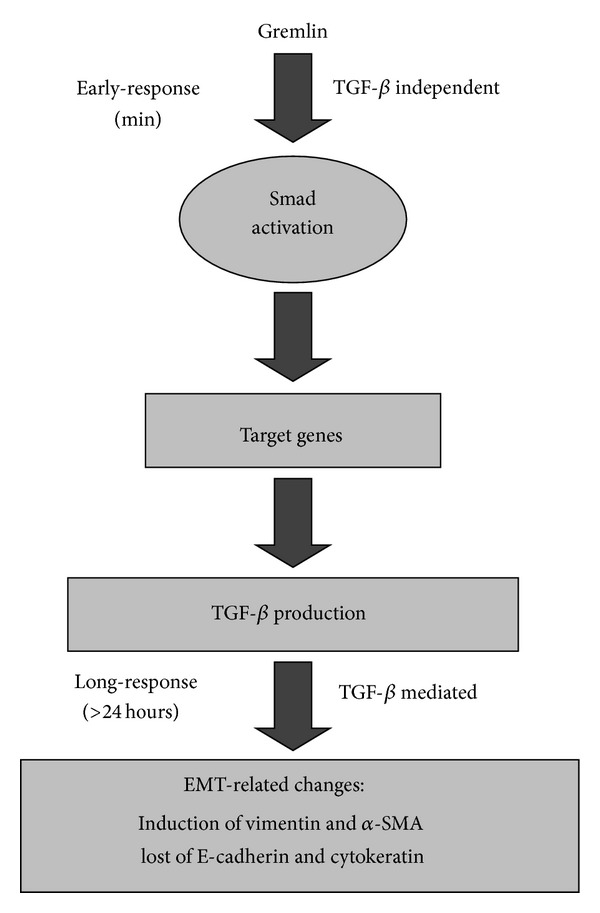
Gremlin is a developmental gene upregulated in human chronic kidney disease and in renal cells in response to transforming growth factor-β (TGF-β). Epithelial mesenchymal transition (EMT) is one process involved in renal fibrosis. In tubular epithelial cells we have recently described that Gremlin induces EMT and acts as a downstream TGF-β mediator. Our aim was to investigate whether Gremlin participates in EMT by the regulation of the Smad pathway. Stimulation of human tubular epithelial cells (HK2) with Gremlin caused an early activation of the Smad signaling pathway (Smad 2/3 phosphorylation, nuclear translocation, and Smad-dependent gene transcription). The blockade of TGF-β, by a neutralizing antibody against active TGF-β, did not modify Gremlin-induced early Smad activation. These data show that Gremlin directly, by a TGF-β independent process, activates the Smad pathway. In tubular epithelial cells long-term incubation with Gremlin increased TGF-β production and caused a sustained Smad activation and a phenotype conversion into myofibroblasts-like cells. Smad 7 overexpression, which blocks Smad 2/3 activation, diminished EMT changes observed in Gremlin-transfected tubuloepithelial cells. TGF-β neutralization also diminished Gremlin-induced EMT changes. In conclusion, we propose that Gremlin could participate in renal fibrosis by inducing EMT in tubular epithelial cells through activation of Smad pathway and induction of TGF-β.
Figures
References
-
- Roxburgh SA, Murphy M, Pollock CA, Brazil DP. Recapitulation of embryological programmes in renal fibrosis—the importance of epithelial cell plasticity and developmental genes. Nephron Physiology. 2006;103(3):p139–p148. - PubMed
-
- McMahon R, Murphy M, Clarkson M, et al. IHG-2, a mesangial cell gene induced by high glucose, is human gremlin: regulation by extracellular glucose concentration, cyclic mechanical strain, and transforming growth factor-β1. The Journal of Biological Chemistry. 2000;275(14):9901–9904. - PubMed
-
- Topol LZ, Bardot B, Zhang Q, et al. Biosynthesis, post-translation modification, and functional characterization of Drm/Gremlin. The Journal of Biological Chemistry. 2000;275(12):8785–8793. - PubMed
-
- Michos O, Panman L, Vintersten K, Beier K, Zeller R, Zuniga A. Gremlin-mediated BMP antagonism induces the epithelial-mesenchymal feedback signaling controlling metanephric kidney and limb organogenesis. Development. 2004;131(14):3401–3410. - PubMed
-
- Dolan V, Murphy M, Sadlier D, et al. Expression of gremlin, a bone morphogenetic protein antagonist, in human diabetic nephropathy. American Journal of Kidney Diseases. 2005;45(6):1034–1039. - PubMed
Publication types
MeSH terms
Substances
LinkOut - more resources
Full Text Sources
Other Literature Sources
