


Elevated risk of type 2 diabetes for development of Alzheimer disease: a key role for oxidative stress in brain
- PMID: 24949886
- PMCID: PMC4125611
- DOI: 10.1016/j.bbadis.2014.06.010
Elevated risk of type 2 diabetes for development of Alzheimer disease: a key role for oxidative stress in brain
Abstract
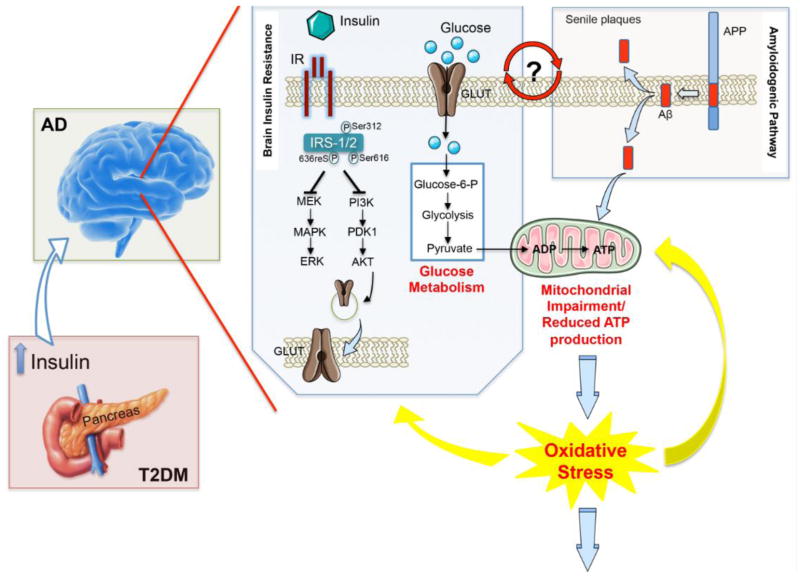
Alzheimer disease (AD) is the most common form of dementia among the elderly and is characterized by progressive loss of memory and cognition. Epidemiological data show that the incidence of AD increases with age and doubles every 5 years after 65 years of age. From a neuropathological point of view, amyloid-β-peptide (Aβ) leads to senile plaques, which, together with hyperphosphorylated tau-based neurofibrillary tangles and synapse loss, are the principal pathological hallmarks of AD. Aβ is associated with the formation of reactive oxygen (ROS) and nitrogen (RNS) species, and induces calcium-dependent excitotoxicity, impairment of cellular respiration, and alteration of synaptic functions associated with learning and memory. Oxidative stress was found to be associated with type 2 diabetes mellitus (T2DM), which (i) represents another prevalent disease associated with obesity and often aging, and (ii) is considered to be a risk factor for AD development. T2DM is characterized by high blood glucose levels resulting from increased hepatic glucose production, impaired insulin production and peripheral insulin resistance, which close resemble to the brain insulin resistance observed in AD patients. Furthermore, growing evidence suggests that oxidative stress plays a pivotal role in the development of insulin resistance and vice versa. This review article provides molecular aspects and the pharmacological approaches from both preclinical and clinical data interpreted from the point of view of oxidative stress with the aim of highlighting progresses in this field.
Keywords: Alzheimer disease; Heme oxygenase 1 and biliverdin reductase; Insulin; Oxidative stress; Protein oxidation; Type-2 diabetes mellitus and insulin resistance.
Copyright © 2014 Elsevier B.V. All rights reserved.
Figures
References
-
- Querfurth HW, LaFerla FM. Alzheimer’s disease. N Engl J Med. 2010;362:329–344. - PubMed
-
- Mayeux R. Clinical practice. Early Alzheimer’s disease. N Engl J Med. 2010;362:2194–2201. - PubMed
-
- Ott A, Stolk RP, Hofman A, van Harskamp F, Grobbee DE, Breteler MM. Association of diabetes mellitus and dementia: the Rotterdam Study. Diabetologia. 1996;39:1392–1397. - PubMed
-
- Luchsinger JA, Tang MX, Shea S, Mayeux R. Hyperinsulinemia and risk of Alzheimer disease. Neurology. 2004;63:1187–1192. - PubMed
Publication types
MeSH terms
Grants and funding
LinkOut - more resources
Full Text Sources
Other Literature Sources
Medical
