Review
. 2014 Jun 19;157(7):1515-26.
doi: 10.1016/j.cell.2014.05.031.

The search for antiaging interventions: from elixirs to fasting regimens

Affiliations
Review

The search for antiaging interventions: from elixirs to fasting regimens

Rafael de Cabo et al. Cell. .

Abstract

The phenomenon of aging is an intrinsic feature of life. Accordingly, the possibility to manipulate it has fascinated humans likely since time immemorial. Recent evidence is shaping a picture where low caloric regimes and exercise may improve healthy senescence, and several pharmacological strategies have been suggested to counteract aging. Surprisingly, the most effective interventions proposed to date converge on only a few cellular processes, in particular nutrient signaling, mitochondrial efficiency, proteostasis, and autophagy. Here, we critically examine drugs and behaviors to which life- or healthspan-extending properties have been ascribed and discuss the underlying molecular mechanisms.


Figures

Figure 1
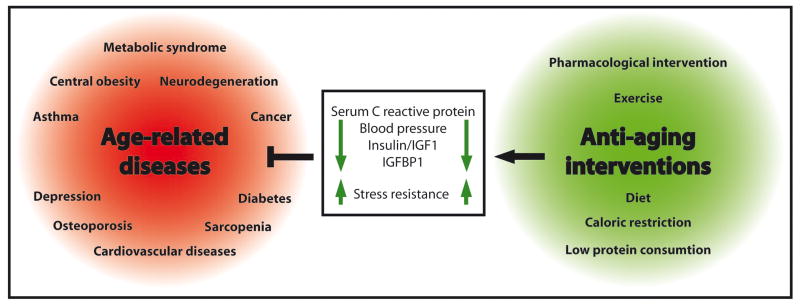
Figure 1. Health-promoting interventions against age-related diseases
Three distinct approaches are currently being tested as feasible strategies to counteract a series of disorders, whose risk of emergence is directly linked to increased age: (i) specific anti-aging drugs, (ii) fasting, which seems best associated to a beneficial diet that includes low protein consumption, and (iii) periodic exercise. All of them have been shown to reduce the risk of age-related diseases in mammalian models, including neurodegeneration and cardiovascular afflictions, among others.
Figure 2
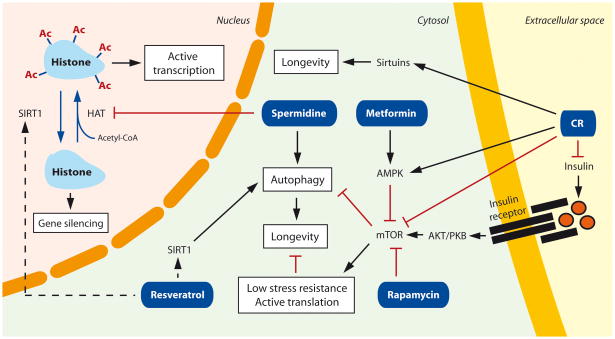
Figure 2. Molecular targets for caloric restriction and pharmacological interventions against premature aging
Caloric restriction promotes longevity through sirtuin activation as well as through inhibition of the insulin and the mTOR pathways, which both lead to stress resistance and autophagy activation. Resveratrol, rapamycin, and spermidine exert autophagy-dependent anti-aging mechanisms that are exerted both at the cytosolic and nuclear levels. Whether resveratrol directly interacts with the sirtuin family member SIRT1 remains controversial. Metformin promotes AMPK activity and prevents oxidative damage. Ac: acetyl residue; HAT: histone acetyl transferase; AMPK: adenosine monophosphate-activated protein kinase; AKT/PKB: protein kinase B; CR: caloric restriction.

References

    1. Anderson RM, Shanmuganayagam D, Weindruch R. Caloric restriction and aging: studies in mice and monkeys. Toxicol Pathol. 2009;37:47–51. - PMC - PubMed
    1. Anisimov VN, Zabezhinski MA, Popovich IG, Piskunova TS, Semenchenko AV, Tyndyk ML, Yurova MN, Rosenfeld SV, Blagosklonny MV. Rapamycin increases lifespan and inhibits spontaneous tumorigenesis in inbred female mice. Cell Cycle. 2011a;10:4230–4236. - PubMed
    1. Anisimov VN, Berstein LM, Popovich IG, Zabezhinski MA, Egormin PA, Piskunova TS, Semenchenko AV, Tyndyk ML, Yurova MN, Kovalenko IG, et al. If started early in life, metformin treatment increases life span and postpones tumors in female SHR mice. Aging (Albany NY) 2011b;3:148–157. - PMC - PubMed
    1. Bauer JH, Goupil S, Garber GB, Helfand SL. An accelerated assay for the identification of lifespan-extending interventions in Drosophila melanogaster. Proc Natl Acad Sci USA. 2004;101:12980–12985. - PMC - PubMed
    1. Baur JA, Sinclair DA. Therapeutic potential of resveratrol: the in vivo evidence. Nat Rev Drug Discov. 2006;5:493–506. - PubMed

Publication types