


Atorvastatin helps preserve pancreatic β cell function in obese C57BL/6 J mice and the effect is related to increased pancreas proliferation and amelioration of endoplasmic-reticulum stress
- PMID: 24950764
- PMCID: PMC4078942
- DOI: 10.1186/1476-511X-13-98
Atorvastatin helps preserve pancreatic β cell function in obese C57BL/6 J mice and the effect is related to increased pancreas proliferation and amelioration of endoplasmic-reticulum stress
Abstract
Background: 3-Hydroxy-3-methyl-glutaryl CoA (HMG-CoA) reductase inhibitors or statins are competitive inhibitors of the rate-limiting enzyme in cholesterol biosynthesis. Currently, statins are used as first-line therapy in the treatment of diabetic dyslipidemia. However, effects of statins on β cell function remains unclear. This study aims to examine effects of atorvastatin treatment on pancreatic β cell function in obese C57BL/6 J mice and the possible mechanisms.
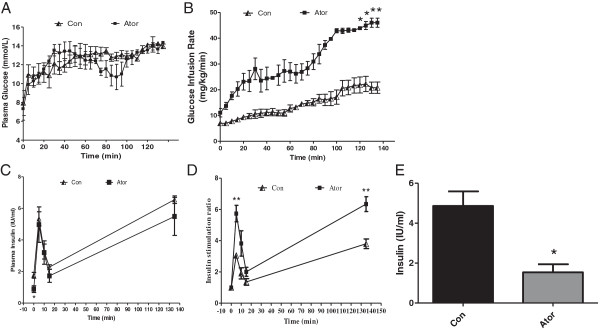
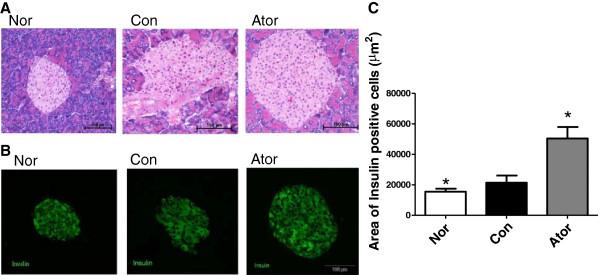
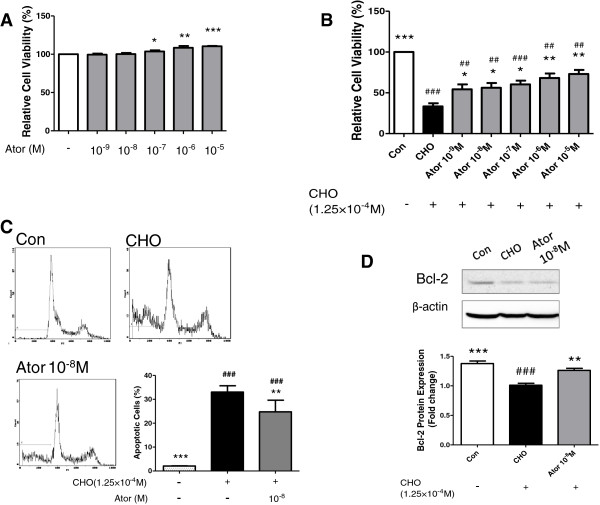
Methods: Diet-induced obesity (DIO) C57BL/6 J mice were treated with atorvastatin (30 mg/kg/day) for 58 days. β cell function was assessed by hyperglycemic clamp and the area of insulin-positive β cells was examined by immunofluorescence. Gene expression was assessed by RT-PCR, and endoplasmic reticulum (ER) stress related proteins were examined by Western blot. Additionally, cell viability and apoptosis of the cholesterol-loaded NIT-1 cells were investigated after atorvastatin treatment.
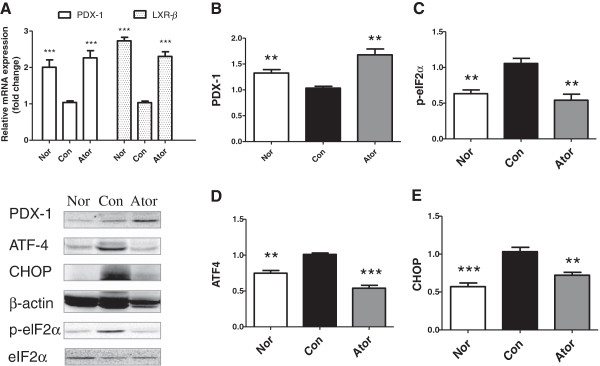
Results: Hyperglycemic clamp study revealed that glucose infusion rate (GIR) and insulin stimulation ratio in atorvastatin-treated DIO mice were markedly higher than control mice (P < 0.05, P < 0.01 vs. con), indicating preserved β-cell sensitivity to glucose. Lipid profiles of plasma triglyceride (TG), pancreas TG and plasma cholesterol (CHO) were improved. Pancreas weight and weight index were improved significantly after atorvastatin treatment (P < 0.05 vs. con). Immunofluorescence results showed that atorvastatin-treated mice had significantly larger insulin-positive β cell area (P < 0.05 vs. con). Furthermore, RT-PCR and western blot showed that the mRNA and protein expression of pancreatic and duodenal homeobox 1 (Pdx1) in the pancreas were upregulated (P < 0.001, P < 0.01 vs. con). Moreover, the expression level of ER stress markers of activating transcription factor 4 (ATF4), CCAAT-enhancer-binding protein homologous protein (CHOP) and phosphorylated eukaryotic initiation factor 2α (eIF2α) were downregulated in the pancreas of atorvastatin-treated mice (P < 0.001, P < 0.01, P < 0.01 vs. con). Besides, atorvastatin protected the pancreatic β cell line of NIT-1 from cholesterol-induced apoptosis. Western blot showed increased expression of anti-apoptotic protein of B-cell lymphoma 2 (Bcl-2).
Conclusion: Pancreatic β cell function of obese C57BL/6 J mice was preserved after atorvastatin treatment, and this improvement may be attributed to enhanced pancreas proliferation and amelioration of pancreatic ER stress.
Figures
References
-
- Mason RP, Walter MF, Day CA, Jacob RF. Intermolecular differences of 3-hydroxy-3-methylglutaryl coenzyme a reductase inhibitors contribute to distinctpharmacologic and pleiotropic actions. Am J Cardiol. 2005;96:11–23. - PubMed
-
- Heart Protection Study Collaborative Group. MRC/BHF Heart Protection Study of cholesterol lowering with simvastatin in 20,536 high-risk individuals: a randomised placebo-controlled trial. Lancet. 2002;360:7–22.
-
- Lehto S, Rönnemaa T, Haffner SM, Pyörälä K, Kallio V, Laakso M. Dyslipidemia and hyperglycemia predict coronary heart disease events in middle-aged patients with NIDDM. Diabetes. 1997;46:1354–1359. - PubMed
-
- Grundy SM, Cleeman JI, Merz CN, Brewer HB Jr, Clark LT, Hunninghake DB, Pasternak RC, Smith SC Jr, Stone NJ. National Heart, Lung, and Blood Institute; American College of Cardiology Foundation; American Heart Association. Implications of recent clinical trials for the National Cholesterol Education Program Adult Treatment Panel III guidelines. Circulation. 2004;110:227–239. - PubMed
Publication types
MeSH terms
Substances
LinkOut - more resources
Full Text Sources
Other Literature Sources
Research Materials
Miscellaneous
