


Histological characteristics of the abdominal aortic wall in patients with vascular chronic Q fever
- PMID: 24953727
- PMCID: PMC4170970
- DOI: 10.1111/iep.12086
Histological characteristics of the abdominal aortic wall in patients with vascular chronic Q fever
Abstract
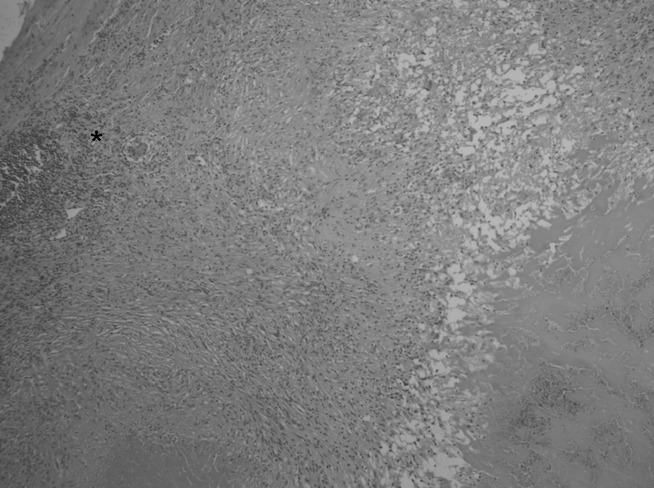
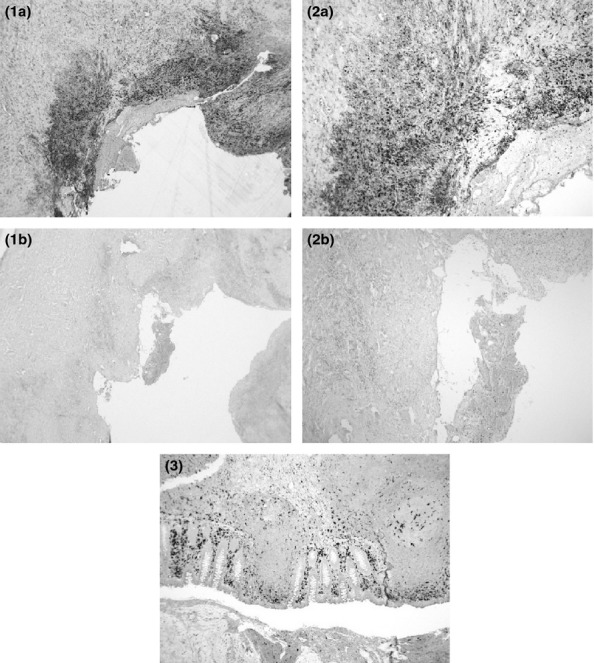
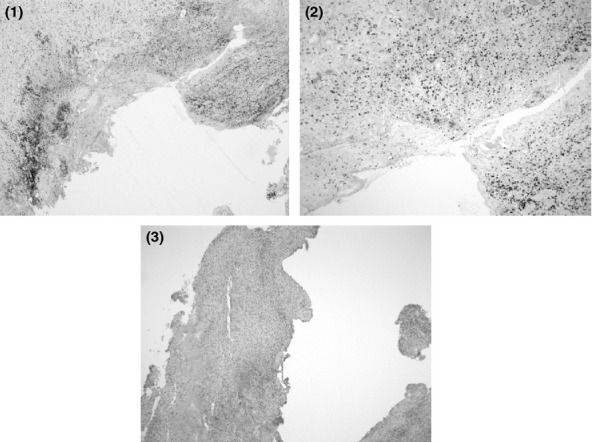
The aim of this study was to describe specific histological findings of the Coxiella burnetii-infected aneurysmal abdominal aortic wall. Tissue samples of the aneurysmal abdominal aortic wall from seven patients with chronic Q fever and 15 patients without evidence of Q fever infection were analysed and compared. Chronic Q fever was diagnosed using serology and tissue PCR analysis. Histological sections were stained using haematoxylin and eosin staining, Elastica van Gieson staining and immunohistochemical staining for macrophages (CD68), T lymphocytes (CD3), T lymphocyte subsets (CD4 and CD8) and B lymphocytes (CD20). Samples were scored by one pathologist, blinded for Q fever status, using a standard score form. Seven tissue samples from patients with chronic Q fever and 15 tissue samples from patients without Q fever were collected. Four of seven chronic Q fever samples showed a necrotizing granulomatous response of the vascular wall, which was characterized by necrotic core of the arteriosclerotic plaque (P = 0.005) and a presence of high numbers of macrophages in the adventitia (P = 0.007) distributed in typical palisading formation (P = 0.005) and surrounded by the presence of high numbers of T lymphocytes located diffusely in media and adventitia. Necrotizing granulomas are a histological finding in the C. burnetii-infected aneurysmal abdominal aortic wall. Chronic Q fever should be included in the list of infectious diseases with necrotizing granulomatous response, such as tuberculosis, cat scratch disease and syphilis.
Keywords: aneurysm; chronic Q fever; granulomatous disease; infection; vascular disease.
© 2014 The Authors. International Journal of Experimental Pathology © 2014 International Journal of Experimental Pathology.
Figures
References
-
- Algood HM, Lin PL, Flynn JL. Tumor necrosis factor and chemokine interactions in the formation and maintenance of granulomas in tuberculosis. Clin. Infect. Dis. 2005;41:S189–S193. - PubMed
-
- Barzilai A, Huszar M, Shpiro D, Nass D, Trau H. Pseudo-rheumatoid nodules in adults. A juxta-articular form of nodular granuloma annulare. Am. J. Dermatopathol. 2005;27:1–5. - PubMed
-
- Botelho-Nevers E, Fournier PE, Richet H, et al. Coxiella burnetii infection of aortic aneurysms or vascular grafts: report of 30 new cases and evaluation of outcome. Eur. J. Clin. Microbiol. Infect. Dis. 2007;26:635–640. - PubMed
-
- Brinster DR, Grizzard JD, Dash A. Lupus aortitis leading to aneurysmal dilatation in the aortic root and ascending aorta. Heart Surg. Forum. 2009;12:105–108. - PubMed
Publication types
MeSH terms
LinkOut - more resources
Full Text Sources
Other Literature Sources
Research Materials
Miscellaneous
