


A novel fluid resuscitation protocol: provide more protection on acute kidney injury during septic shock in rats
- PMID: 24955162
- PMCID: PMC4057841
A novel fluid resuscitation protocol: provide more protection on acute kidney injury during septic shock in rats
Abstract
Objective: To investigate the therapeutic effects of a novel fluid resuscitation protocol (early fluid resuscitation plus 2% hydrogen inhalation) on acute kidney injury during septic shock induced by lipopolysaccharide in rats.
Methods: Sixty male Wistar rats were randomly divided into four groups (n = 15 per group): control group (C), septic shock group (S), septic shock with early fluid resuscitation group (R), and septic shock with early fluid resuscitation plus 2% hydrogen inhalation group (R+R+H2). The rats were ventilated, and a 2% hydrogen mixture was used in Group R+H2. Lipopolysaccharide (10 mg/kg) was administered to establish the septic shock model in rats and fluid resuscitation was performed in Groups R and R+R+H2.
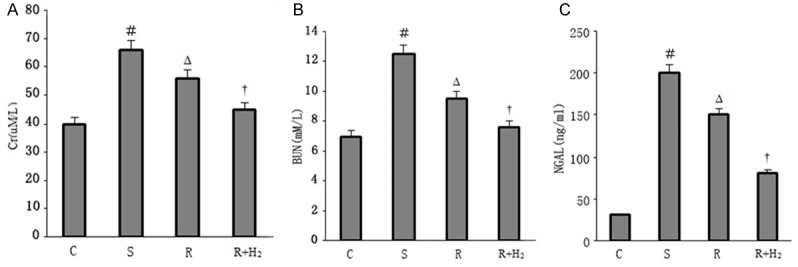
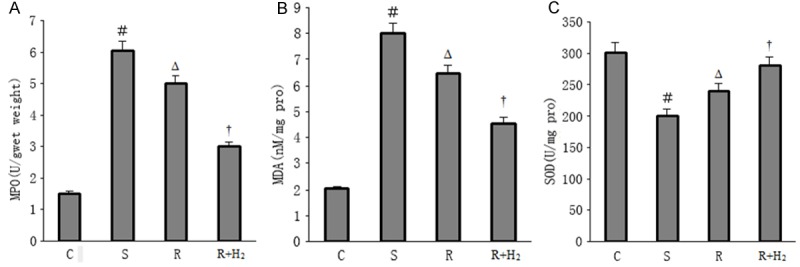
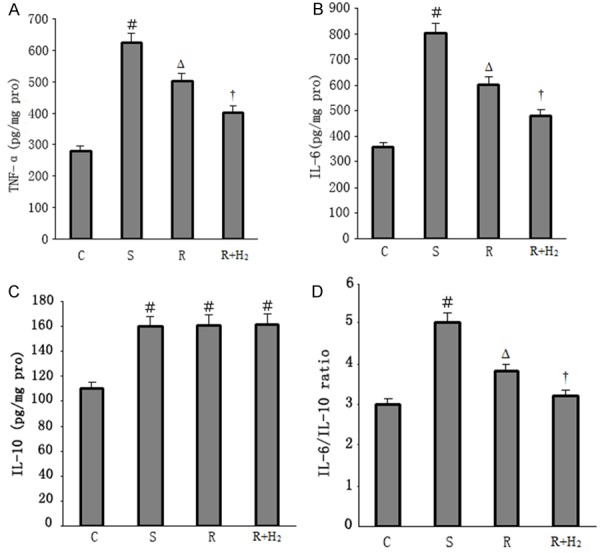
Results: Fluid resuscitation with 2% hydrogen inhalation decreased serum creatinine, blood urea nitrogen, and neutrophil gelatinase-associated lipocalin. It also reduced oxidative stress injury and decreased renal tumor necrosis factor-α and interleukin-6 levels compared with fluid resuscitation alone.
Conclusion: Early fluid resuscitation plus 2% hydrogen inhalation provided more protection against AKI during septic shock.
Keywords: Septic shock; acute kidney injury; fluid resuscitation; hydrogen inhalation; inflammation; oxidative stress.
Figures
References
-
- Angus DC, Linde-Zwirble WT, Lidicker J, Clermont G, Carcillo J, Pinsky MR. Epidemiology of severe sepsis in the United States: analysis of incidence outcome and associated costs of care. Crit Care Med. 2001;29:1303–1310. - PubMed
-
- Martin GS, Mannino DM, Eaton S. The epidemiology of sepsis in the United States from 1979 through 2000. N Engl J Med. 2003;348:1546–1554. - PubMed
-
- Rivers E, Nguyen B, Havstad S. Early goal-directed therapy in the treatment of severe sepsis and septic shock. N Engl J Med. 2001;345:1368–1377. - PubMed
LinkOut - more resources
Full Text Sources