Making sense of misfortune: deservingness, self-esteem, and patterns of self-defeat
- PMID: 24956317
- PMCID: PMC4076324
- DOI: 10.1037/a0036640
Making sense of misfortune: deservingness, self-esteem, and patterns of self-defeat
Abstract
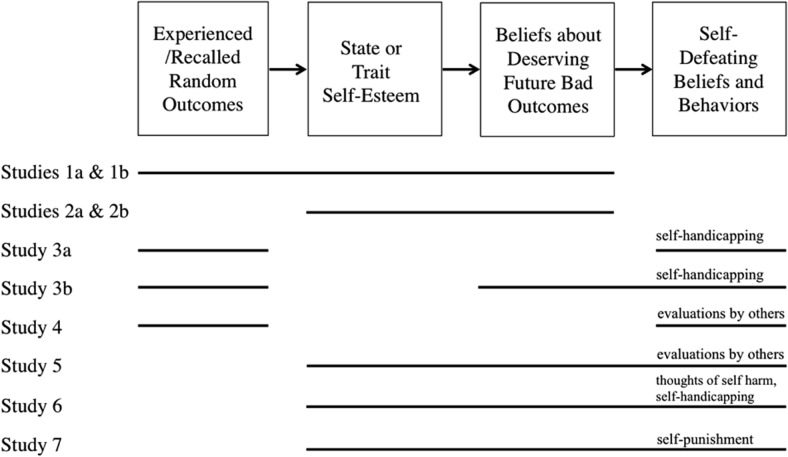
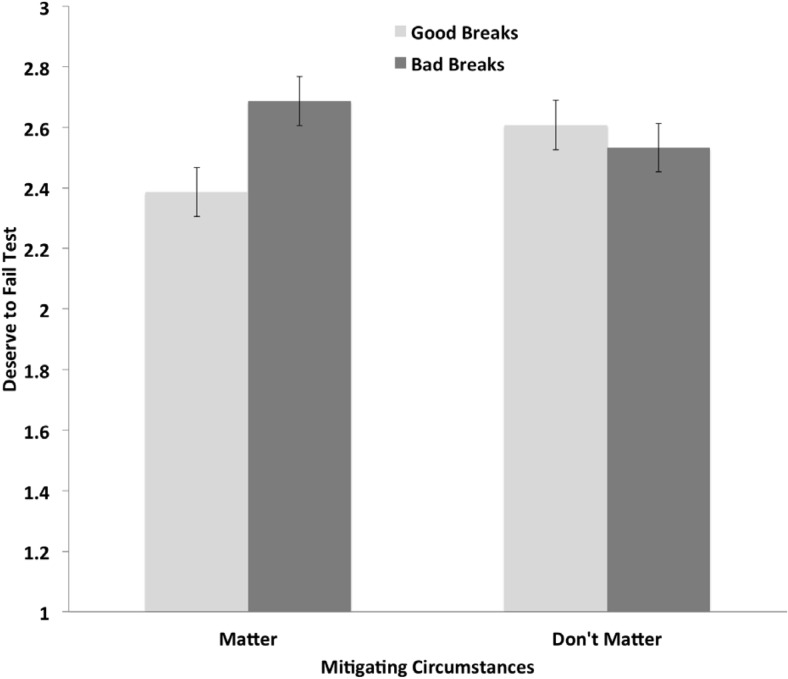
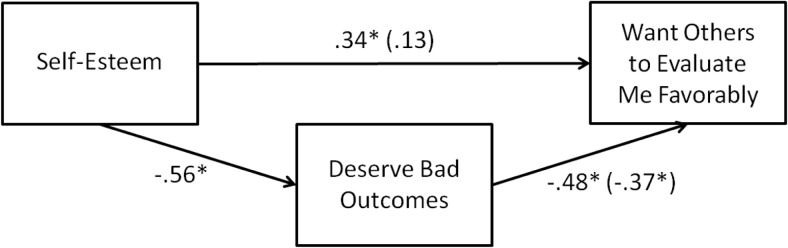
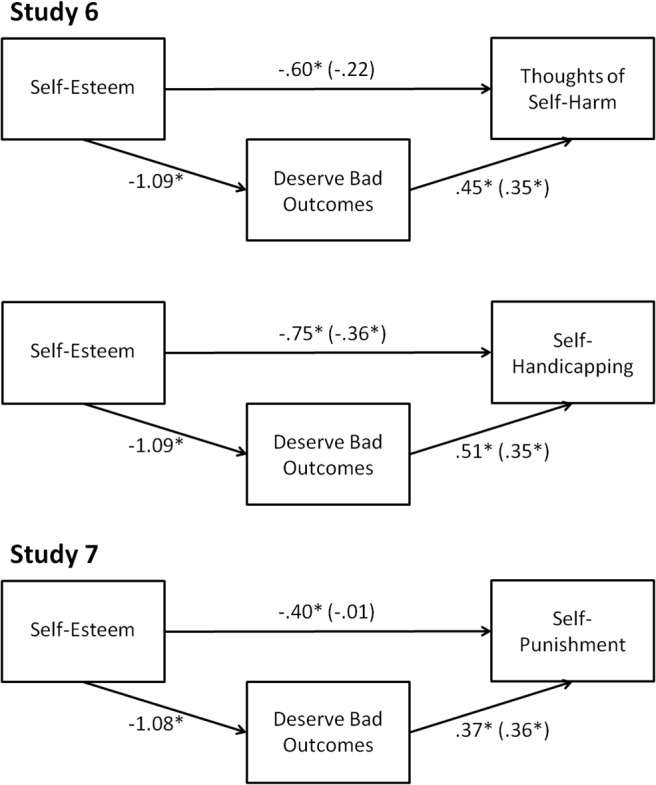
Drawing on theorizing and research suggesting that people are motivated to view their world as an orderly and predictable place in which people get what they deserve, the authors proposed that (a) random and uncontrollable bad outcomes will lower self-esteem and (b) this, in turn, will lead to the adoption of self-defeating beliefs and behaviors. Four experiments demonstrated that participants who experienced or recalled bad (vs. good) breaks devalued their self-esteem (Studies 1a and 1b), and that decrements in self-esteem (whether arrived at through misfortune or failure experience) increase beliefs about deserving bad outcomes (Studies 1a, 1b, 2a, 2b). Five studies (Studies 3-7) extended these findings by showing that this, in turn, can engender a wide array of self-defeating beliefs and behaviors, including claimed self-handicapping ahead of an ability test (Study 3), the preference for others to view the self less favorably (Studies 4-5), chronic self-handicapping and thoughts of physical self-harm (Study 6), and choosing to receive negative feedback during an ability test (Study 7). The current findings highlight the important role that concerns about deservingness play in the link between lower self-esteem and patterns of self-defeating beliefs and behaviors. The theoretical and practical implications of these findings are discussed.
Figures
References
-
- Abelson R. P. (1995). Statistics as principled argument. Hillsdale, NJ: Erlbaum
-
- Apsler R., & Friedman H. (1975). Chance outcomes and the just world: A comparison of observers and recipients. Journal of Personality and Social Psychology, 31, 887–894. doi: 10.1037/h0076845 - DOI
-
- Baumeister R. F. (1997). Esteem threat, self-regulatory breakdown, and emotional distress as factors in self-defeating behavior. Review of General Psychology, 1, 145–174. doi: 10.1037/1089-2680.1.2.145 - DOI
Publication types
MeSH terms
LinkOut - more resources
Full Text Sources
Other Literature Sources
Research Materials