


doi: 10.3390/membranes2030367.
Membranes in lithium ion batteries
Affiliations
- PMID: 24958286
- PMCID: PMC4021910
- DOI: 10.3390/membranes2030367
Item in Clipboard
Membranes in lithium ion batteries
Membranes (Basel).
.
Abstract
Lithium ion batteries have proven themselves the main choice of power sources for portable electronics. Besides consumer electronics, lithium ion batteries are also growing in popularity for military, electric vehicle, and aerospace applications. The present review attempts to summarize the knowledge about some selected membranes in lithium ion batteries. Based on the type of electrolyte used, literature concerning ceramic-glass and polymer solid ion conductors, microporous filter type separators and polymer gel based membranes is reviewed.
Figures
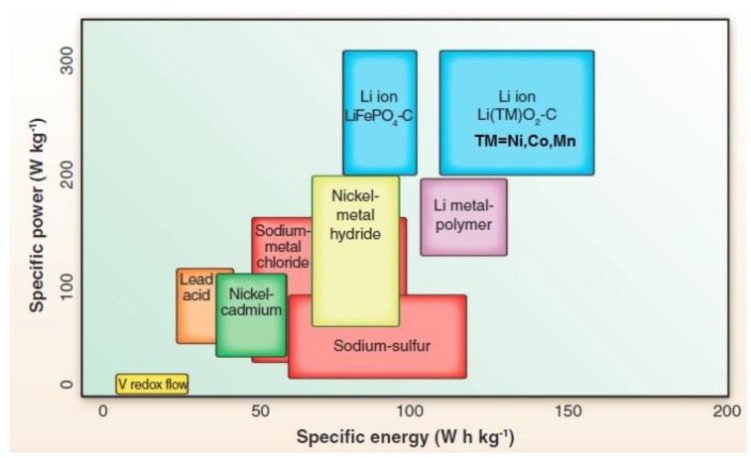
Ragone plots (power vs. energy density) for different rechargeable batteries [3].
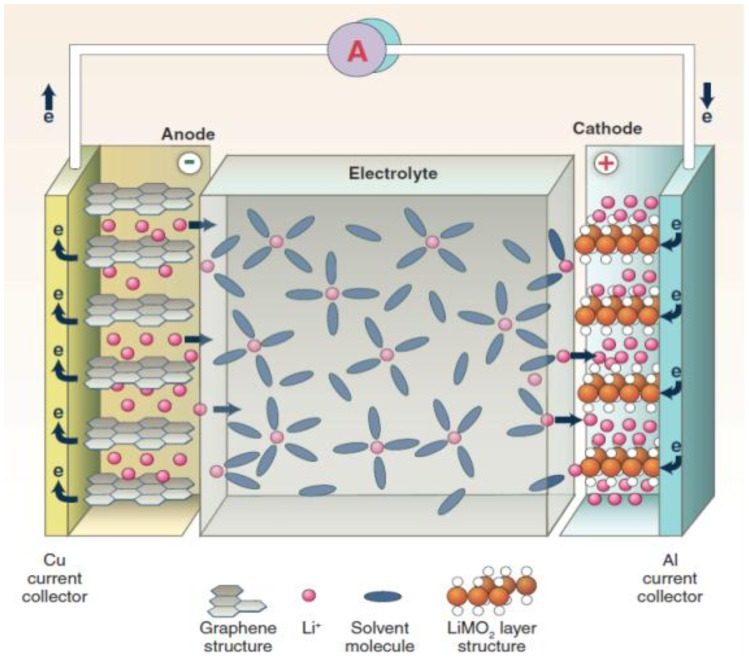
Schematic of a lithium ion battery (LIB) consisting of the negative electrode (graphitic carbon) and positive electrode (Li-intercalation compound) [5].
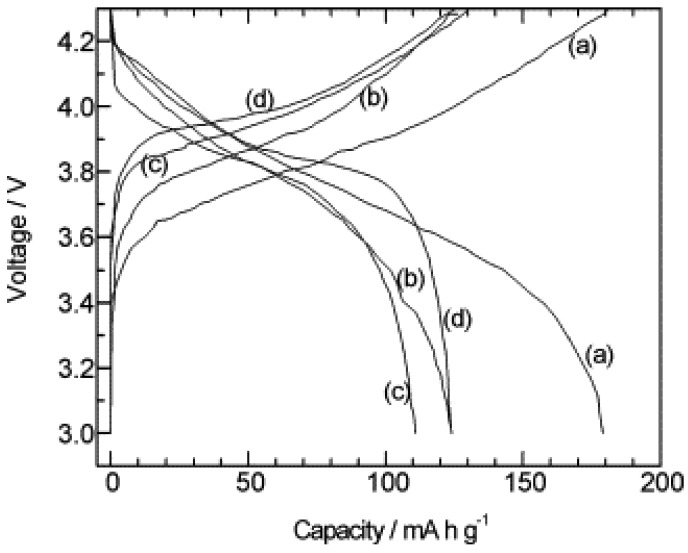
Charge and discharge curves of Li/PEO/LTAP/LiCoO2 cells at 50 °C at different annealing temperatures: (a) as-deposited; (b) 300 °C; (c) 400 °C and (d) 500 °C [15].
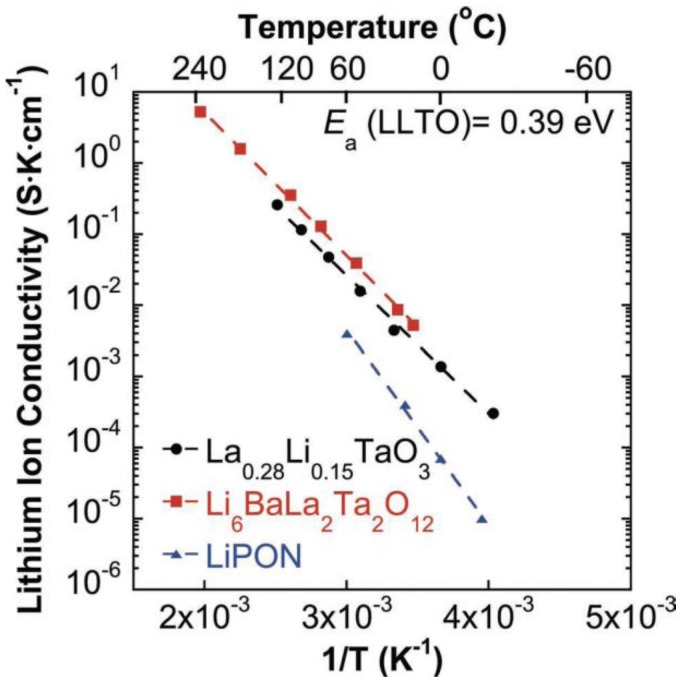
Arrhenius plot for the lithium-ion conductivity of La0.281Li0.155TaO3 compared with data for Li6BaLa2Ta2O12 and lithium phosphorus oxy-nitride (LiPON) [27].
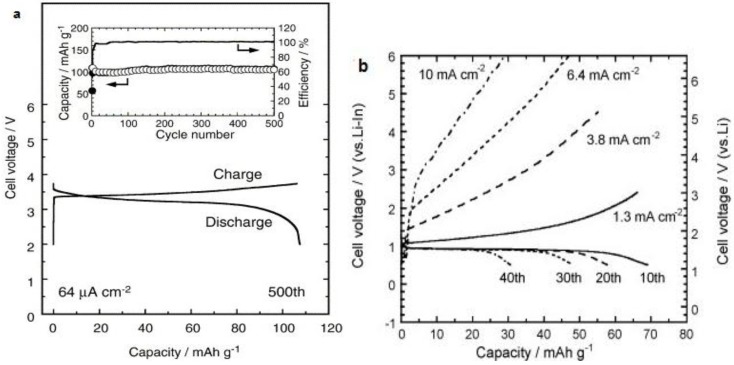
(a) Charge-discharge curves and cycling performance at 64μAcm−2 for the 500th cycle of In/LiCoO2 cells with 80Li2S-20P2S5 glass-ceramic [28]; (b) Charge-discharge curves of the all-solid-state Li-In/70Li2S-27P2S5-3P2O5/Li4Ti5O12 cell (discharge always at 64μAcm−2) [35].
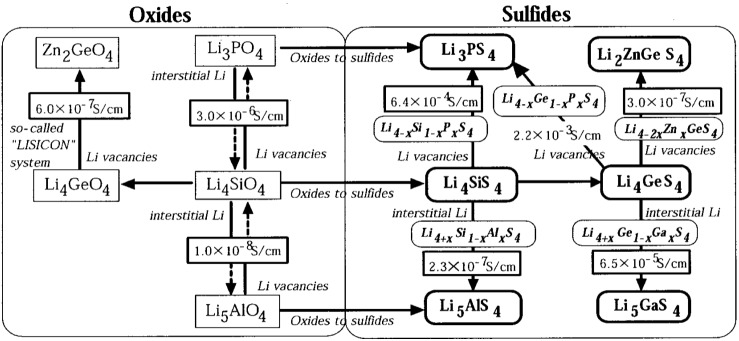
The concept of material design for the lithium superionic conductor (LISICON) system, and materials belonging to the LISICON (oxides) and the thio-LISICON (sulfides) are summarized [36].
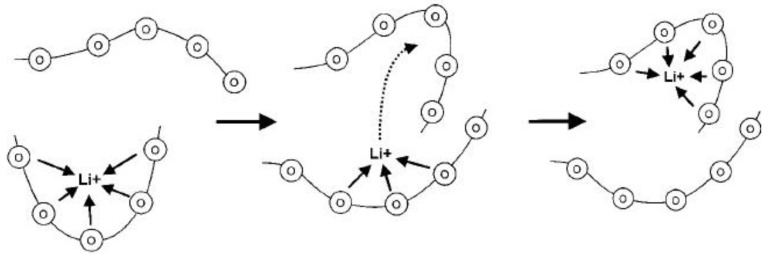
Schematic of the segmental motion assisted diffusion of Li ions in the poly(ethylene oxide) (PEO) matrix. The circles represent the ether oxygens of PEO [45].
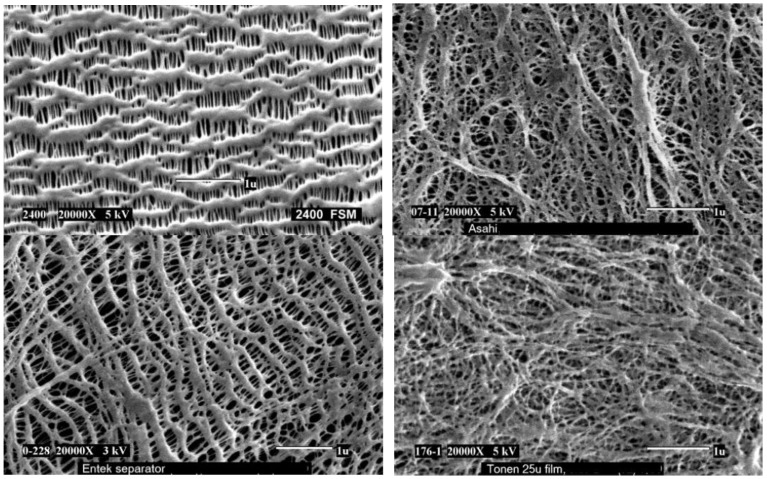
Scanningelectron micrographs (SEMs) of (a) Celgard separator using dry process; (b) Asahi separator using wet process; (c) Entek separator using wet process; (d) Tonen separator using wet process [49].
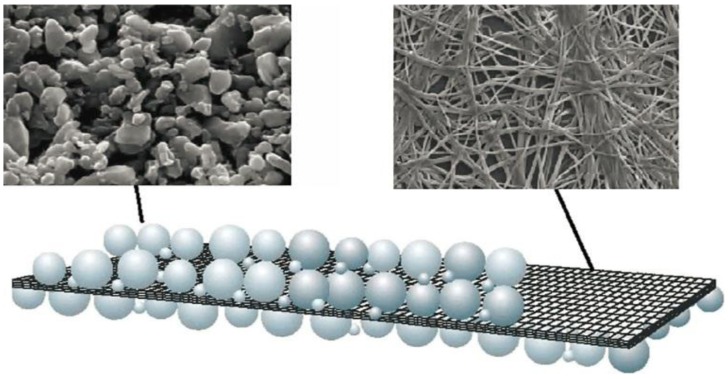
Schematic and SEMs of a Degussa composite separator [54].
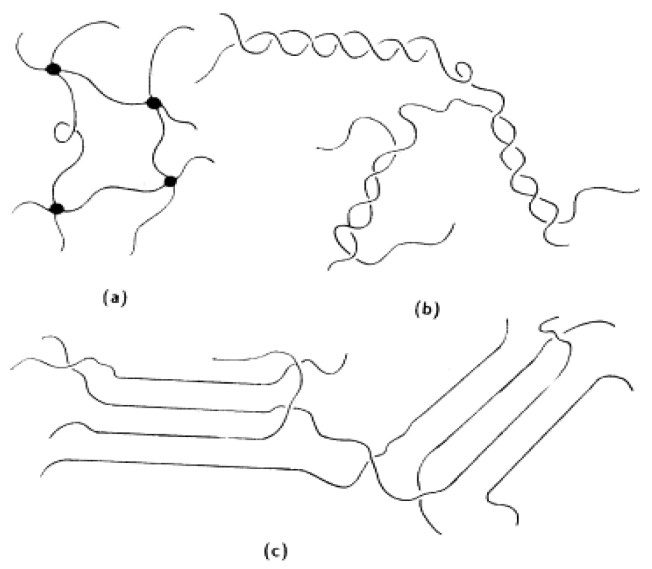
Schematic representation of (a) a chemical gel network with junction points; (b) physical gel networks having junction zones and (c) fringed micelles, respectively [55].
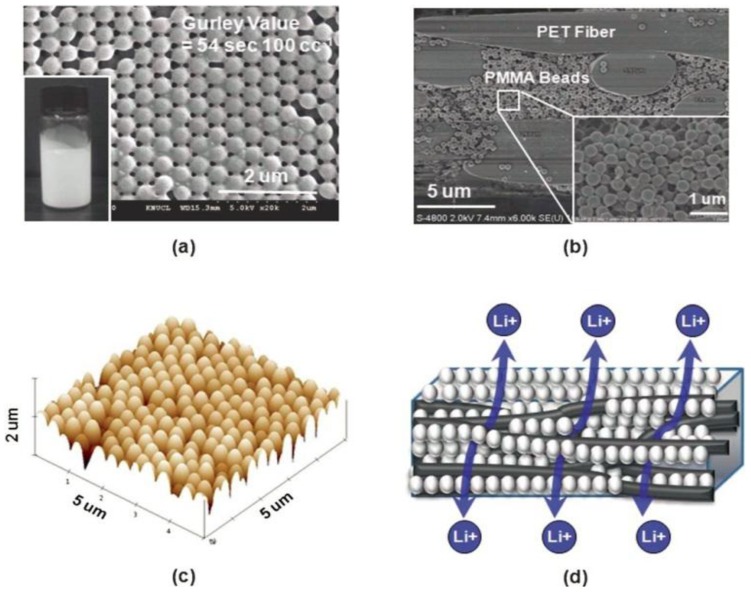
(a) Surface SEM of the composite nonwoven separator;the inset is a photograph of Poly(methyl methacrylate) (PMMA) nanoparticles suspension; (b) Cross-section SEM; (c) AFM photograph of the composite nonwoven separator; (d) Schematic illustration of nanoporous structure [69].
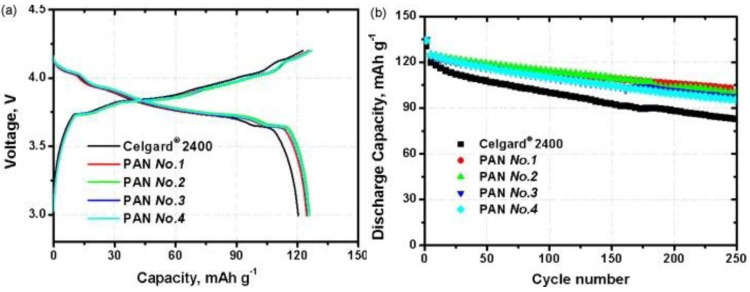
(a) Initial charge-discharge curves for the cells with the Celgard membrane and the Poly(acrylonitrile) (PAN) nonwoven membranes; (b) Discharge capacities vs. cycle numbers of the test cells at the 0.5C rate [78].
References
LinkOut - more resources
Full Text Sources
Other Literature Sources
