


Regulation of gene expression by the BLM helicase correlates with the presence of G-quadruplex DNA motifs
- PMID: 24958861
- PMCID: PMC4103369
- DOI: 10.1073/pnas.1404807111
Regulation of gene expression by the BLM helicase correlates with the presence of G-quadruplex DNA motifs
Abstract
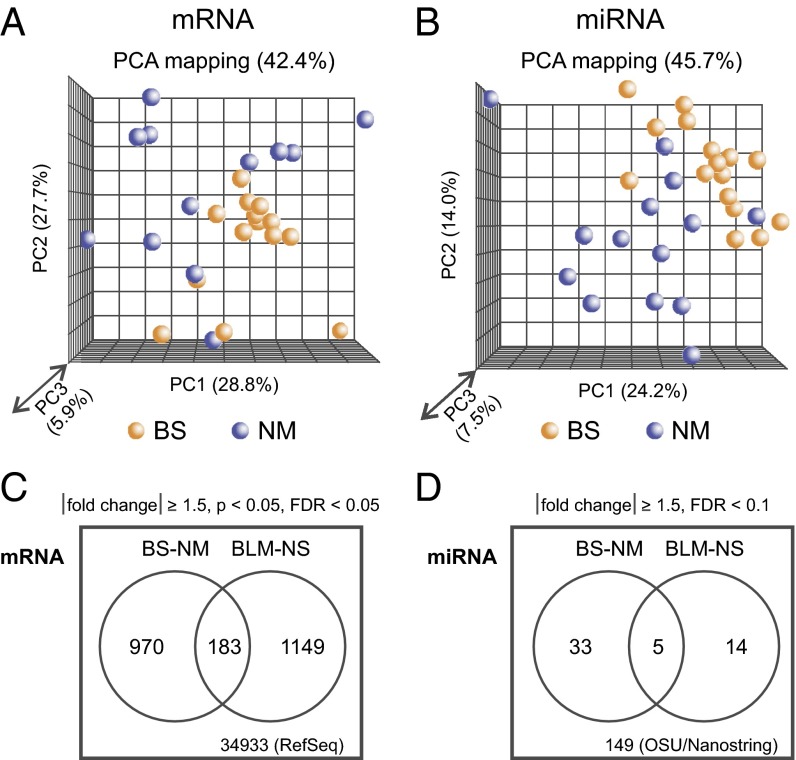
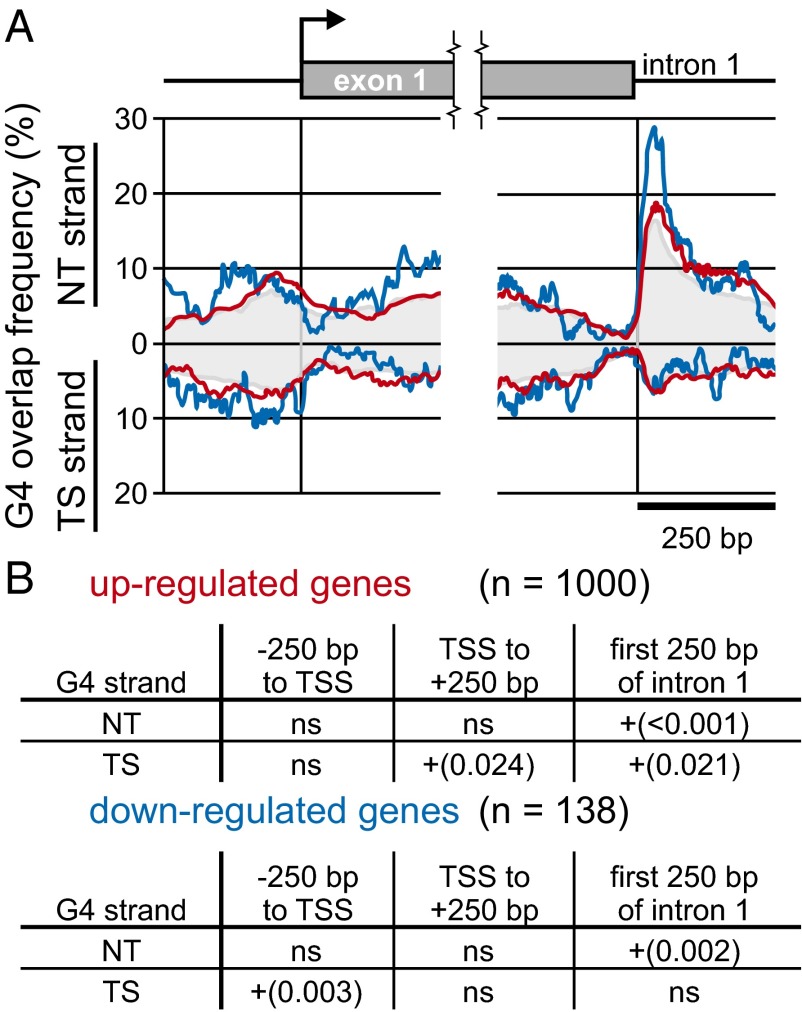
Bloom syndrome is a rare autosomal recessive disorder characterized by genetic instability and cancer predisposition, and caused by mutations in the gene encoding the Bloom syndrome, RecQ helicase-like (BLM) protein. To determine whether altered gene expression might be responsible for pathological features of Bloom syndrome, we analyzed mRNA and microRNA (miRNA) expression in fibroblasts from individuals with Bloom syndrome and in BLM-depleted control fibroblasts. We identified mRNA and miRNA expression differences in Bloom syndrome patient and BLM-depleted cells. Differentially expressed mRNAs are connected with cell proliferation, survival, and molecular mechanisms of cancer, and differentially expressed miRNAs target genes involved in cancer and in immune function. These and additional altered functions or pathways may contribute to the proportional dwarfism, elevated cancer risk, immune dysfunction, and other features observed in Bloom syndrome individuals. BLM binds to G-quadruplex (G4) DNA, and G4 motifs were enriched at transcription start sites (TSS) and especially within first introns (false discovery rate ≤ 0.001) of differentially expressed mRNAs in Bloom syndrome compared with normal cells, suggesting that G-quadruplex structures formed at these motifs are physiologic targets for BLM. These results identify a network of mRNAs and miRNAs that may drive the pathogenesis of Bloom syndrome.
Conflict of interest statement
The authors declare no conflict of interest.
Figures
References
-
- Ellis NA, et al. The Bloom’s syndrome gene product is homologous to RecQ helicases. Cell. 1995;83(4):655–666. - PubMed
-
- Bloom D. Congenital telangiectatic erythema resembling lupus erythematosus in dwarfs; probably a syndrome entity. AMA Am J Dis Child. 1954;88(6):754–758. - PubMed
-
- German J. Bloom's syndrome. VIII. Review of clinical and genetic aspects. In: Goodman RM, Motulsky AG, editors. Genetic Diseases Among Askenazi Jews. Vol 1. New York: Raven; 1979. pp. 121–139.
-
- German J. Bloom syndrome: A mendelian prototype of somatic mutational disease. Medicine (Baltimore) 1993;72(6):393–406. - PubMed
-
- German J. Bloom’s syndrome. XX. The first 100 cancers. Cancer Genet Cytogenet. 1997;93(1):100–106. - PubMed
Publication types
MeSH terms
Substances
Associated data
- Actions
Grants and funding
LinkOut - more resources
Full Text Sources
Other Literature Sources
Molecular Biology Databases
Research Materials
