


Universality and diversity in the signal transduction pathway that regulates seasonal reproduction in vertebrates
- PMID: 24959116
- PMCID: PMC4033074
- DOI: 10.3389/fnins.2014.00115
Universality and diversity in the signal transduction pathway that regulates seasonal reproduction in vertebrates
Abstract
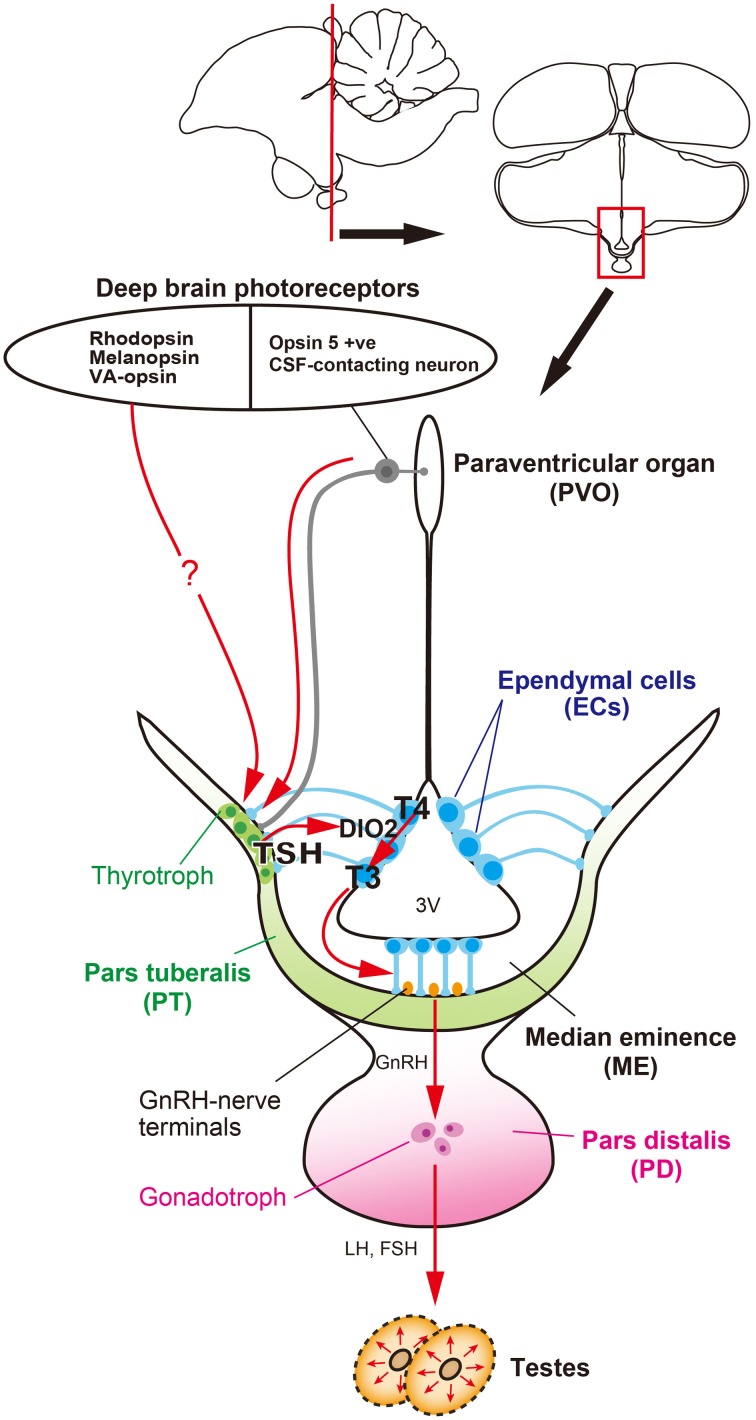
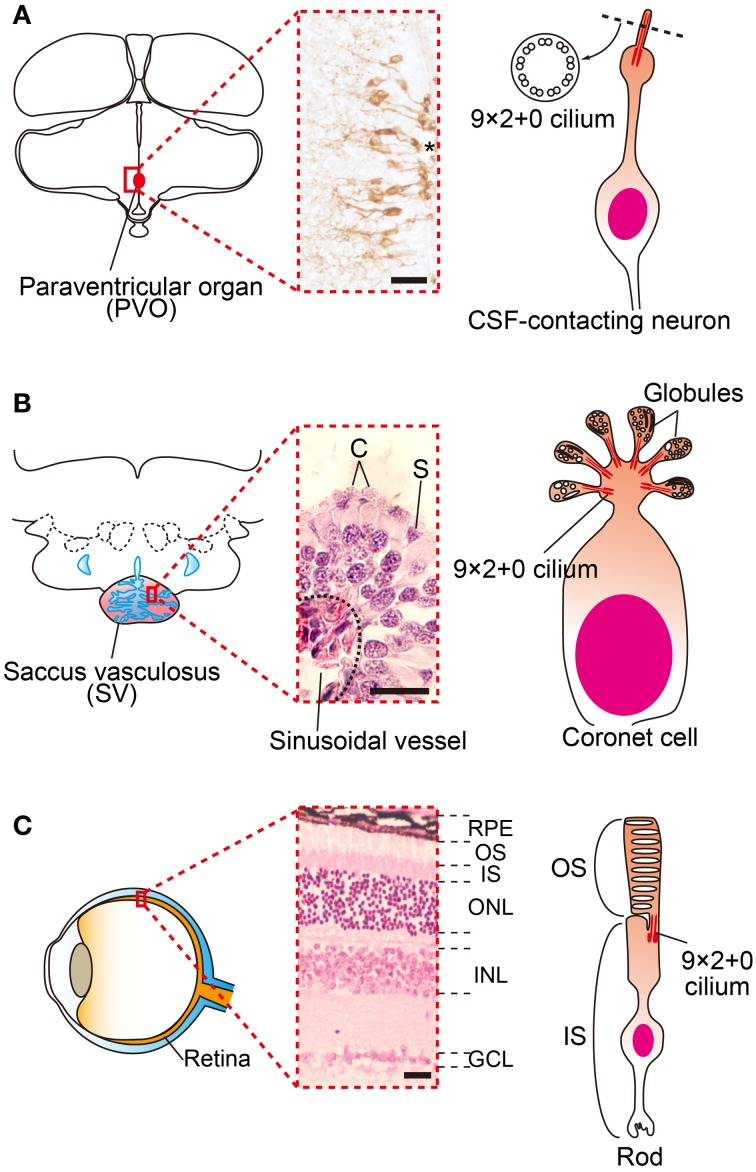
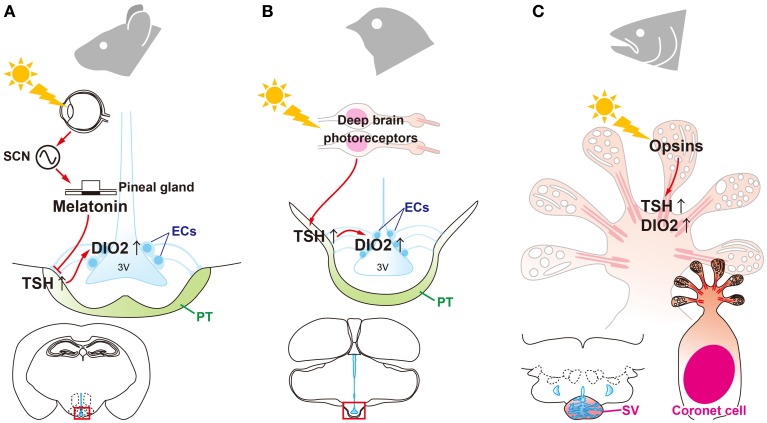
Most vertebrates living outside the tropical zone show robust physiological responses in response to seasonal changes in photoperiod, such as seasonal reproduction, molt, and migration. The highly sophisticated photoperiodic mechanism in Japanese quail has been used to uncover the mechanism of seasonal reproduction. Molecular analysis of quail mediobasal hypothalamus (MBH) revealed that local thyroid hormone activation within the MBH plays a critical role in the photoperiodic response of gonads. This activation is accomplished by two gene switches: thyroid hormone-activating (DIO2) and thyroid hormone-inactivating enzymes (DIO3). Functional genomics studies have shown that long-day induced thyroid-stimulating hormone (TSH) in the pars tuberalis (PT) of the pituitary gland regulates DIO2/3 switching. In birds, light information received directly by deep brain photoreceptors regulates PT TSH. Recent studies demonstrated that Opsin 5-positive cerebrospinal fluid (CSF)-contacting neurons are deep brain photoreceptors that regulate avian seasonal reproduction. Although the involvement of TSH and DIO2/3 in seasonal reproduction has been confirmed in various mammals, the light input pathway that regulates PT TSH in mammals differs from that of birds. In mammals, the eye is the only photoreceptor organ and light information received by the eye is transmitted to the pineal gland through the circadian pacemaker, the suprachiasmatic nucleus. Nocturnal melatonin secretion from the pineal gland indicates the length of night and regulates the PT TSH. In fish, the regulatory machinery for seasonal reproduction, from light input to neuroendocrine output, has been recently demonstrated in the coronet cells of the saccus vasculosus (SV). The SV is unique to fish and coronet cells are CSF-contacting neurons. Here, we discuss the universality and diversity of signal transduction pathways that regulate vertebrate seasonal reproduction.
Keywords: cerebrospinal fluid-contacting neuron; circadian rhythm; coronet cell; deep brain photoreceptor; pars tuberalis; saccus vasculosus; thyroid hormone; thyroid-stimulating hormone.
Figures
References
-
- Benoit J. (1935). Le role des yeux dans l'action stimulante de la lumiere sure le developpement testiulaire chez le canard. CR. Soc. Bio. (Paris.) 118, 669–671
-
- Borg B. (2010). Photoperiodism in fishes, in Photoperiodism: The Biological Calendar, eds Nelson R. J., Denlinger D. L., Somers D. E. (New York, NY: Oxford University Press; ), 371–398
Publication types
LinkOut - more resources
Full Text Sources
Other Literature Sources
Miscellaneous
