


Lipoprotein insulin resistance index: a lipoprotein particle-derived measure of insulin resistance
- PMID: 24959989
- PMCID: PMC4175429
- DOI: 10.1089/met.2014.0050
Lipoprotein insulin resistance index: a lipoprotein particle-derived measure of insulin resistance
Abstract
Abstract Background: Lipoprotein particle sizes and concentrations are characteristically altered in patients with insulin resistance (IR) or type 2 diabetes mellitus (T2DM). This study assessed the ability of an IR score, based on nuclear magnetic resonance (NMR)-derived lipoprotein information, to detect IR in otherwise healthy individuals.
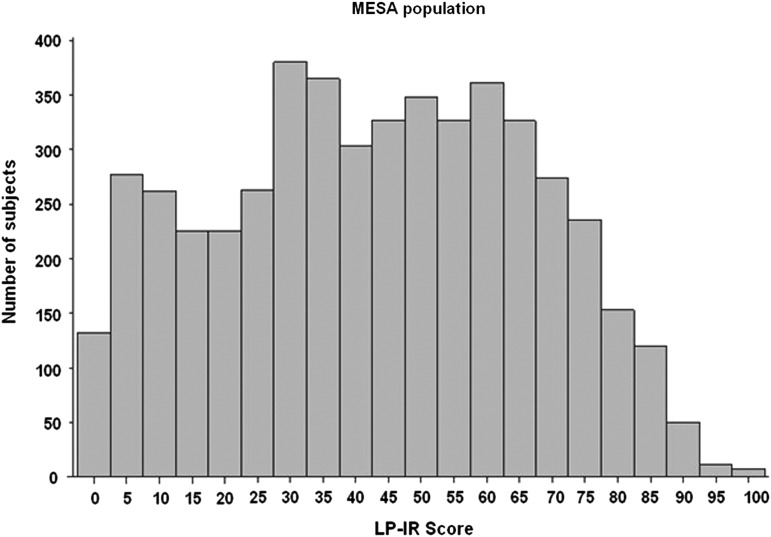
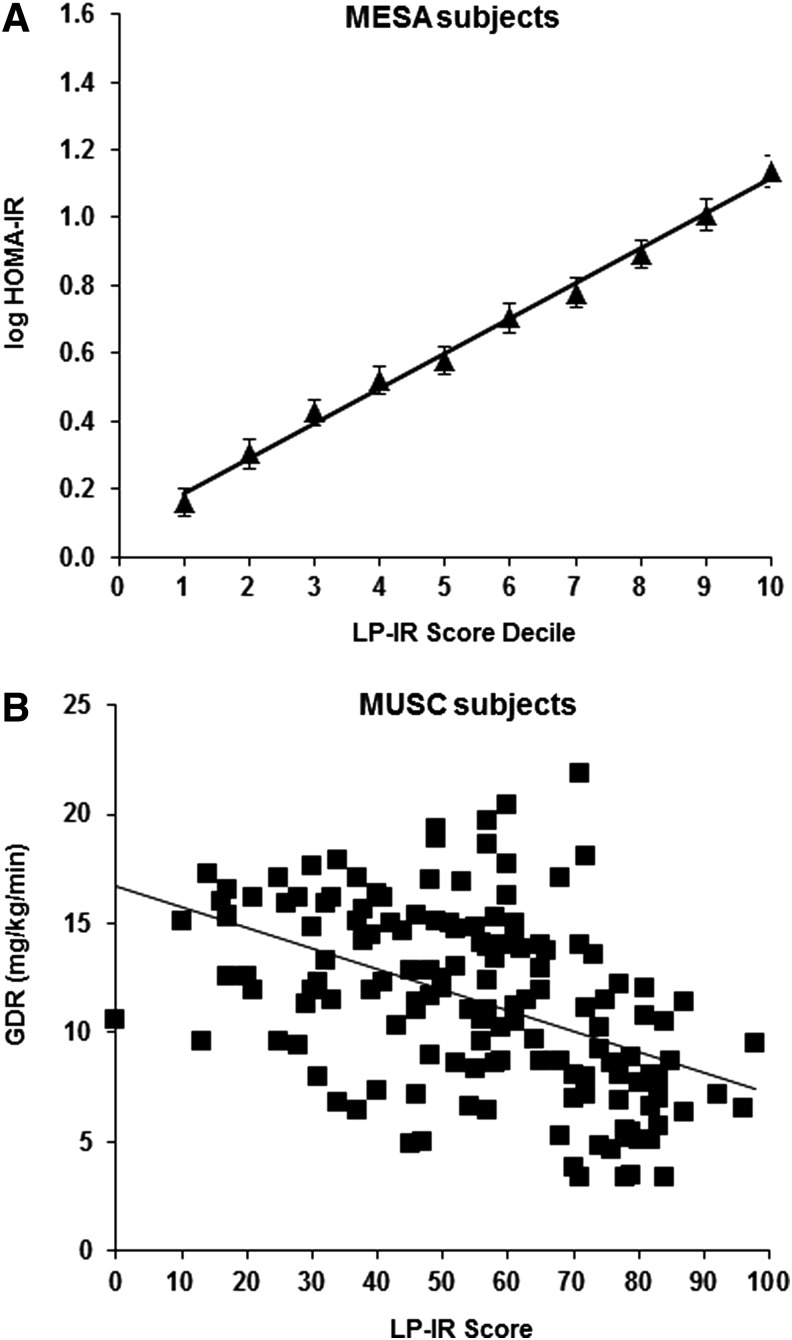
Methods: Lipoprotein subclass and size information were evaluated for strength of association with IR, as measured by homeostasis model assessment of insulin resistance (HOMA-IR) in the Multi-Ethnic Study of Atherosclerosis (MESA). To increase the likelihood of identifying subjects with IR, six lipoprotein measures were combined into a single algorithm. The resulting assay [Lipoprotein Insulin Resistance Index (LP-IR)] was developed using HOMA-IR in 4972 nondiabetic subjects from MESA and verified independently using glucose disposal rates (GDRs) measured during hyperinsulinemic-euglycemic clamps in 56 insulin-sensitive, 46 insulin-resistant, and 46 untreated subjects with T2DM.
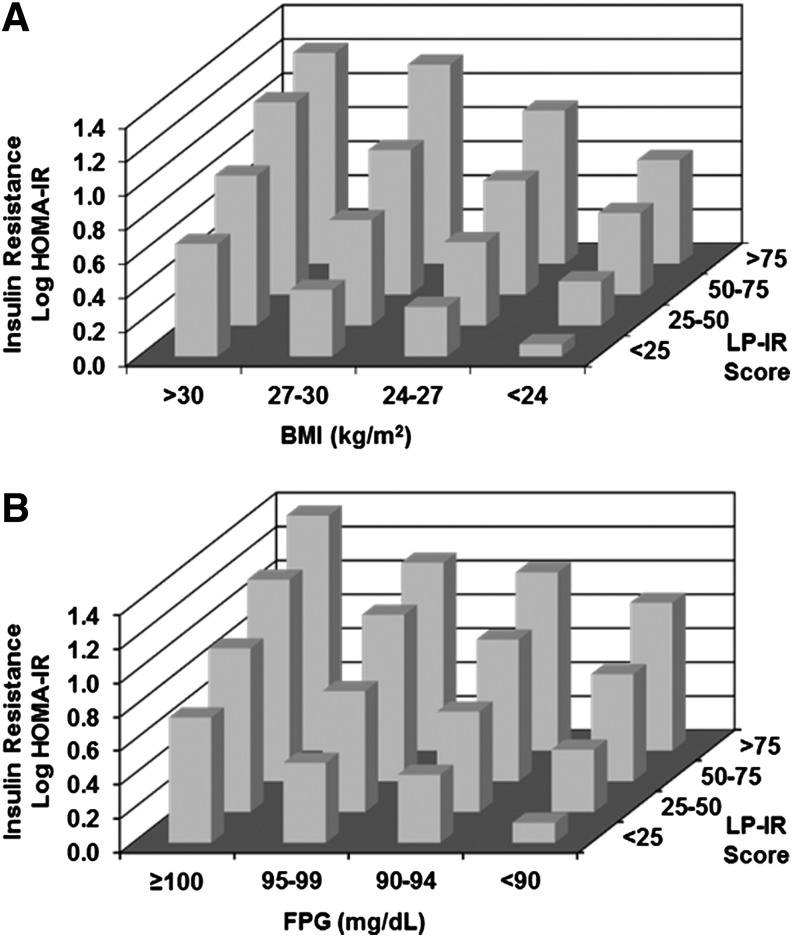
Results: LP-IR exhibited stronger associations with HOMA-IR (r=0.51) and GDR (r=-0.53) than each of the individual lipoprotein parameters as well as the triglycerides/high-density lipoprotein cholesterol (TGs/HDL-C) ratio (r=0.41 and -0.44, respectively). In MESA, associations between the LP-IR score and HOMA-IR were strong in men (r=0.51), women (r=0.52), European Americans (r=0.58), African Americans (r=0.48), Chinese Americans (r=0.49), and Hispanic Americans (r=0.45). When LP-IR was categorized by HOMA-IR and either body mass index (BMI) or fasting plasma glucose (FPG), subgroups were revealed whose LP-IR scores were high (≥ 50), despite having normal BMIs (<24 kg/m(2)) or FPG (<100 mg/dL).
Conclusions: LP-IR scores had strong associations with multiple measures, HOMA-IR, and GDR, the former being more reflective of hepatic and the latter of peripheral insulin sensitivity, and may represent a simple means to identify individuals with IR.
Figures
References
-
- Einhorn D, Reaven GM, Cobin RH, et al. . American College of Endocrinology position statement on the insulin resistance syndrome. Endocr Pract 2003;9:237–252 - PubMed
-
- Torgerson JS, Hauptman J, Boldrin MN, et al. . XENical in the prevention of diabetes in obese subjects (XENDOS) study: A randomized study of orlistat as an adjunct to lifestyle changes for the prevention of type 2 diabetes in obese patients. Diabetes Care 2004;27:155–161 - PubMed
Publication types
MeSH terms
Substances
Grants and funding
LinkOut - more resources
Full Text Sources
Other Literature Sources