


Actions of hydrogen sulfide on sodium transport processes across native distal lung epithelia (Xenopus laevis)
- PMID: 24960042
- PMCID: PMC4069190
- DOI: 10.1371/journal.pone.0100971
Actions of hydrogen sulfide on sodium transport processes across native distal lung epithelia (Xenopus laevis)
Abstract
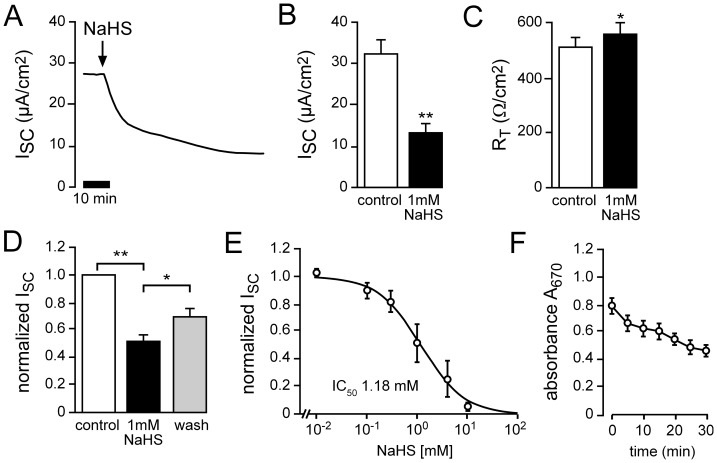
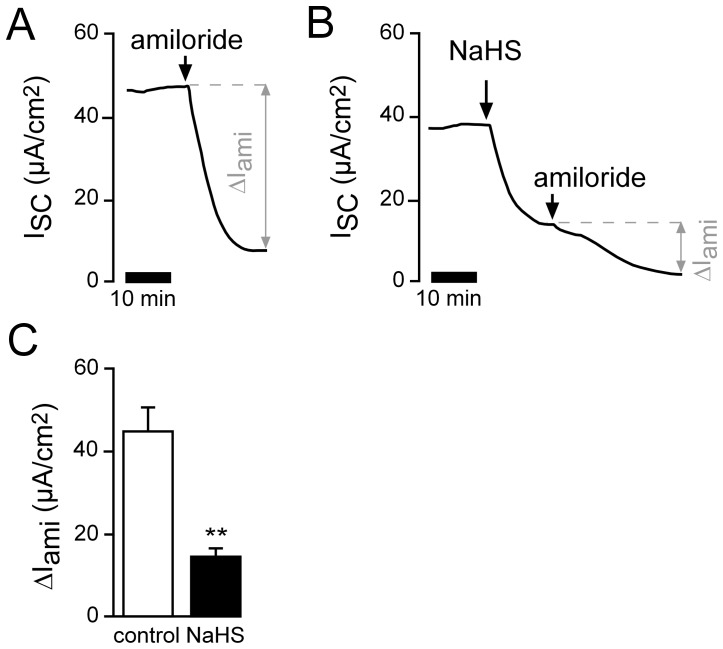
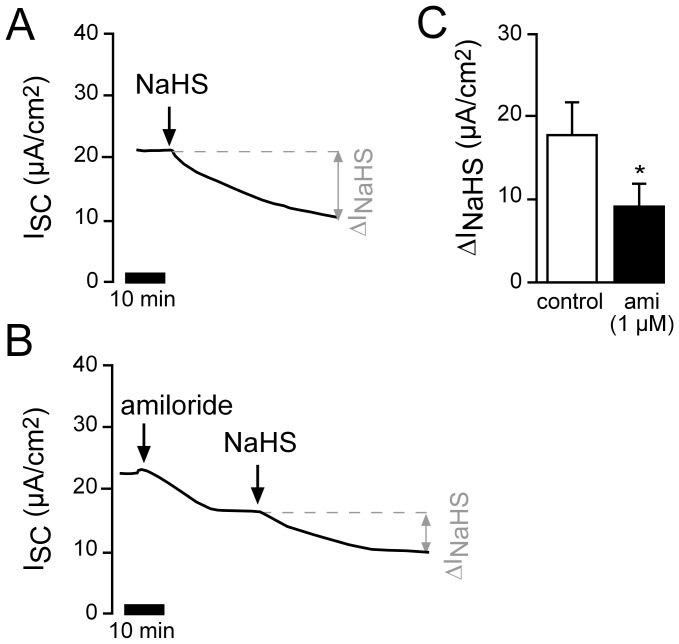
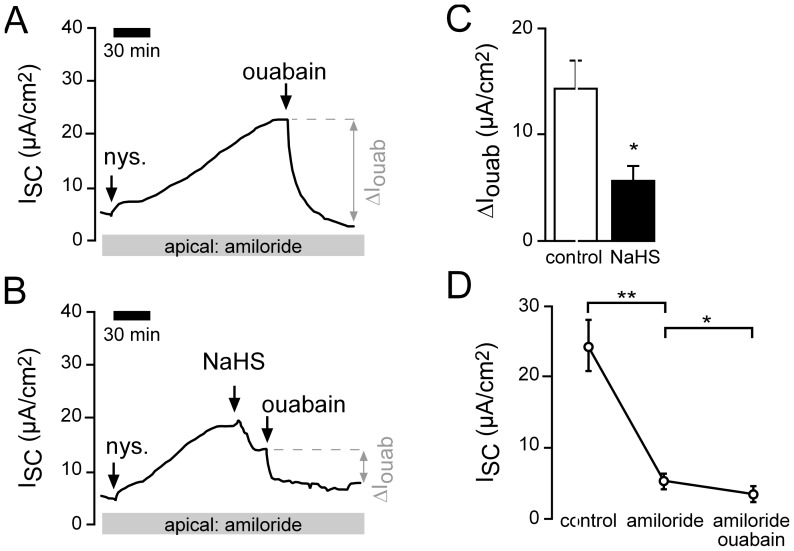
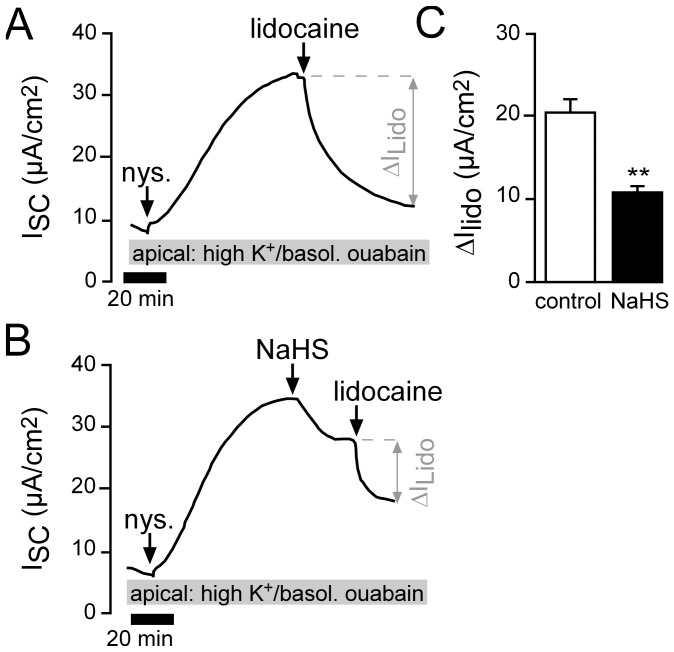
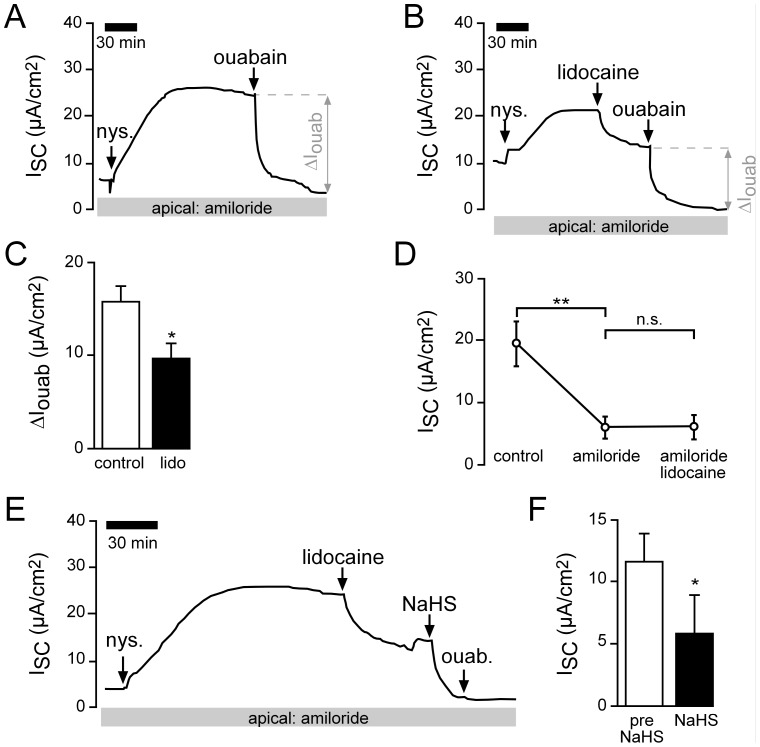
Hydrogen sulfide (H2S) is well known as a highly toxic environmental chemical threat. Prolonged exposure to H2S can lead to the formation of pulmonary edema. However, the mechanisms of how H2S facilitates edema formation are poorly understood. Since edema formation can be enhanced by an impaired clearance of electrolytes and, consequently, fluid across the alveolar epithelium, it was questioned whether H2S may interfere with transepithelial electrolyte absorption. Electrolyte absorption was electrophysiologically measured across native distal lung preparations (Xenopus laevis) in Ussing chambers. The exposure of lung epithelia to H2S decreased net transepithelial electrolyte absorption. This was due to an impairment of amiloride-sensitive sodium transport. H2S inhibited the activity of the Na+/K+-ATPase as well as lidocaine-sensitive potassium channels located in the basolateral membrane of the epithelium. Inhibition of these transport molecules diminishes the electrochemical gradient which is necessary for transepithelial sodium absorption. Since sodium absorption osmotically facilitates alveolar fluid clearance, interference of H2S with the epithelial transport machinery provides a mechanism which enhances edema formation in H2S-exposed lungs.
Conflict of interest statement
Figures
References
-
- Guidotti TL (1996) Hydrogen sulphide. Occup Med (Lond) 46 5: 367–371. - PubMed
-
- Mimoun S, Andriamihaja M, Chaumontet C, Atanasiu C, Benamouzig R, et al. (2012) Detoxification of H(2)S by differentiated colonic epithelial cells: implication of the sulfide oxidizing unit and of the cell respiratory capacity. Antioxid Redox Signal 17 1: 1–10. - PubMed
-
- Guidotti TL (2010) Hydrogen sulfide: advances in understanding human toxicity. Int J Toxicol 29 6: 569–581. - PubMed
-
- Fronius M (2013) Treatment of pulmonary edema by ENaC activators/stimulators. Curr Mol Pharmacol 6 1: 13–27. - PubMed
Publication types
MeSH terms
Substances
LinkOut - more resources
Full Text Sources
Other Literature Sources
