


Oligopeptides as biomarkers of cyanobacterial subpopulations. Toward an understanding of their biological role
- PMID: 24960202
- PMCID: PMC4073138
- DOI: 10.3390/toxins6061929
Oligopeptides as biomarkers of cyanobacterial subpopulations. Toward an understanding of their biological role
Abstract
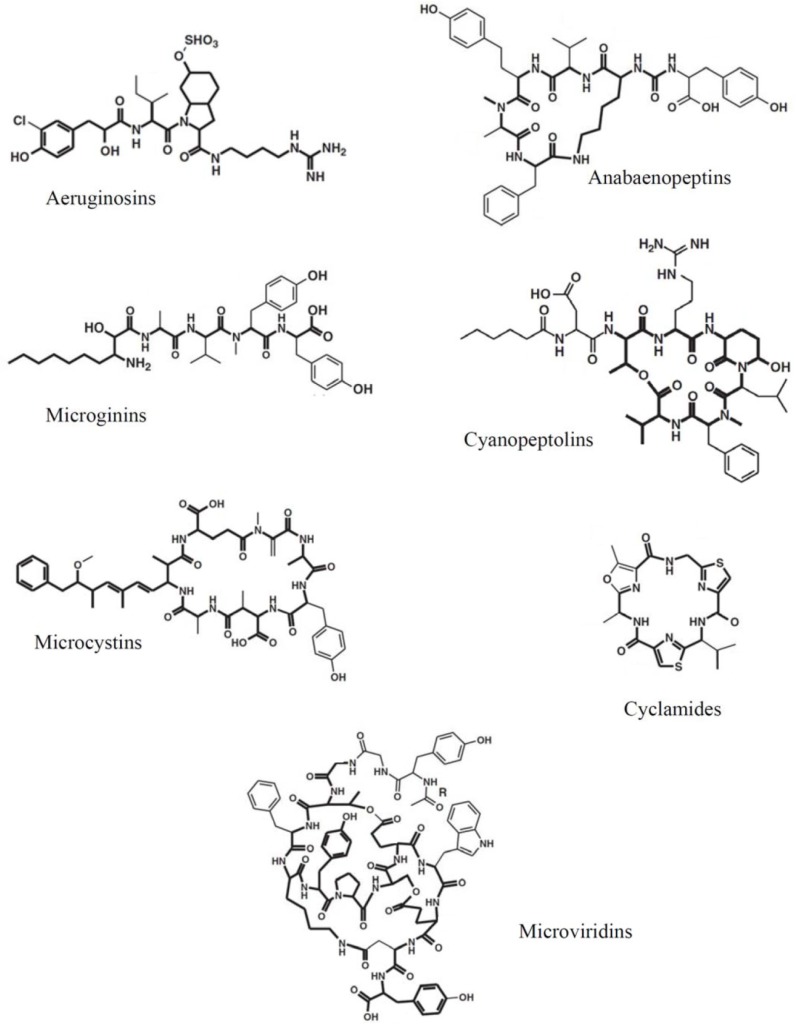
Cyanobacterial oligopeptides comprise a wide range of bioactive and/or toxic compounds. While current research is strongly focused on exploring new oligopeptide variants and their bioactive properties, the biological role of these compounds remains elusive. Oligopeptides production abilities show a remarkably patchy distribution among conspecific strains. This observation has prompted alternative approaches to unveil their adaptive value, based on the use of cellular oligopeptide compositions as biomarkers of intraspecific subpopulations or chemotypes in freshwater cyanobacteria. Studies addressing the diversity, distribution, and dynamics of chemotypes in natural systems have provided important insights into the structure and ecology of cyanobacterial populations and the adaptive value of oligopeptides. This review presents an overview of the fundamentals of this emerging approach and its most relevant findings, and discusses our current understanding of the role of oligopeptides in the ecology of cyanobacteria.
Figures
References
-
- Sivonen K., Borner T. Bioactive Compounds Produced by Cyanobacteria. In: Herrero A., Flores E., editors. The Cyanobacteria: Molecular Biology, Genomics and Evolution. Caister Academic Press; Norfolk, UK: 2008. pp. 159–197.
Publication types
MeSH terms
Substances
LinkOut - more resources
Full Text Sources
Other Literature Sources
