. 2014 Jun 26;510(7506):503-6.
doi: 10.1038/nature13445.

Aspergillomarasmine A overcomes metallo-β-lactamase antibiotic resistance

Affiliations

Aspergillomarasmine A overcomes metallo-β-lactamase antibiotic resistance

Andrew M King et al. Nature. .

Abstract

The emergence and spread of carbapenem-resistant Gram-negative pathogens is a global public health problem. The acquisition of metallo-β-lactamases (MBLs) such as NDM-1 is a principle contributor to the emergence of carbapenem-resistant Gram-negative pathogens that threatens the use of penicillin, cephalosporin and carbapenem antibiotics to treat infections. To date, a clinical inhibitor of MBLs that could reverse resistance and re-sensitize resistant Gram-negative pathogens to carbapenems has not been found. Here we have identified a fungal natural product, aspergillomarasmine A (AMA), that is a rapid and potent inhibitor of the NDM-1 enzyme and another clinically relevant MBL, VIM-2. AMA also fully restored the activity of meropenem against Enterobacteriaceae, Acinetobacter spp. and Pseudomonas spp. possessing either VIM or NDM-type alleles. In mice infected with NDM-1-expressing Klebsiella pneumoniae, AMA efficiently restored meropenem activity, demonstrating that a combination of AMA and a carbapenem antibiotic has therapeutic potential to address the clinical challenge of MBL-positive carbapenem-resistant Gram-negative pathogens.


Figures
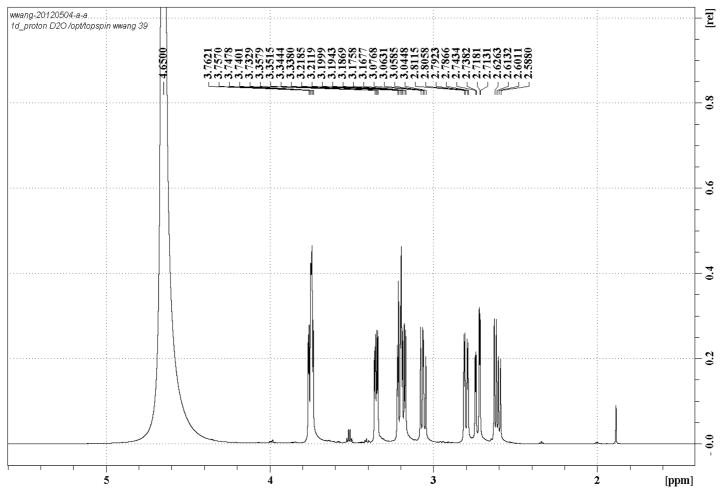
Extended Data Figure 1
1H NMR spectrum of AMA in D2O
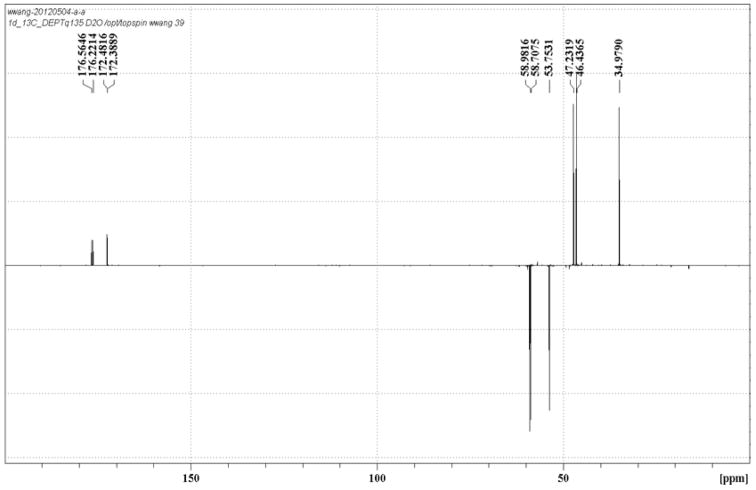
Extended Data Figure 2
13C NMR spectrum of AMA in D2O
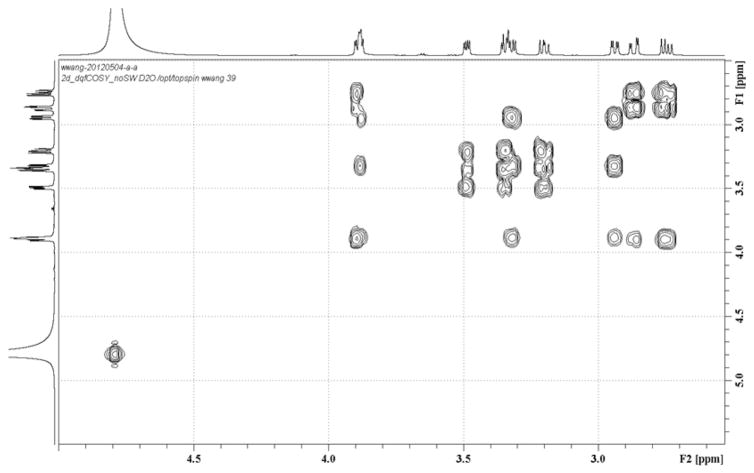
Extended Data Figure 3
1H-1H COSY NMR spectrum of AMA in D2O
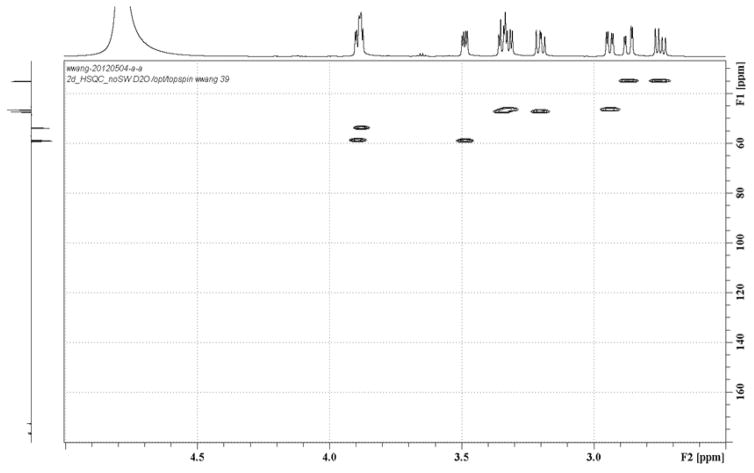
Extended Data Figure 4
1H-13C HSQC NMR spectrum of AMA in D2O
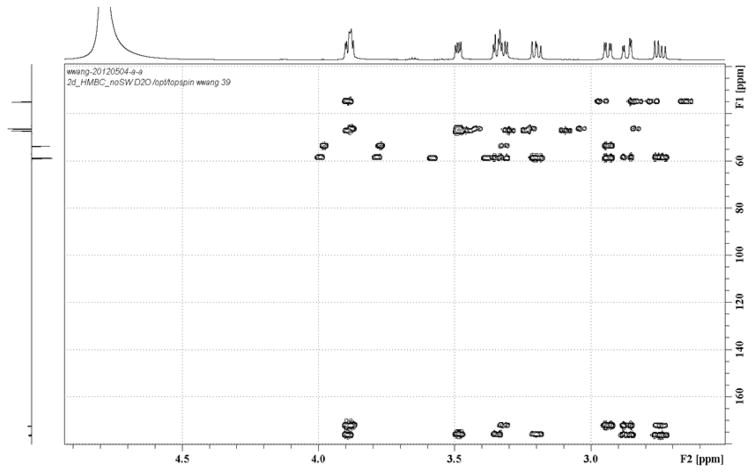
Extended Data Figure 5
1H-13C HMBC NMR spectrum of AMA in D2O
Extended Data Figure 6
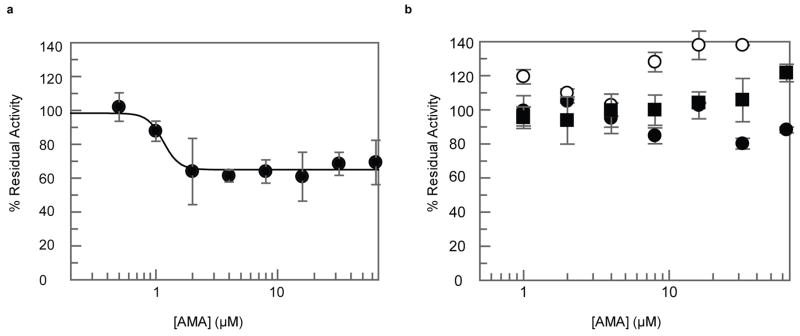
Extended Data Figure 6. IC50 inhibition profiles for select SBLs and ACE
Experiments were done as in Fig. 1b for (a) ACE and (b) CTX-M-15 (●), KPC-2 (○), and TEM-1 (■). Error bars denote standard deviation of at least two replicates.
Extended Data Figure 7
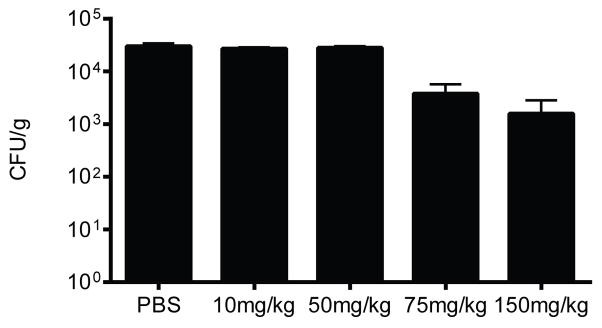
Extended Data Figure 7. Effects of meropenem dosage on spleen burden
CD-1 mice were infected with K. pneumoniae N11-2218 by i.p. injection. Mice were treated with either PBS (n=6), or various doses of meropenem (n=3 per group) by s.c. injection. Mice were euthanized 48 h after infection, and the bacterial load in the spleen was determined by selective plating. Data are the means with standard error.
Fig. 1
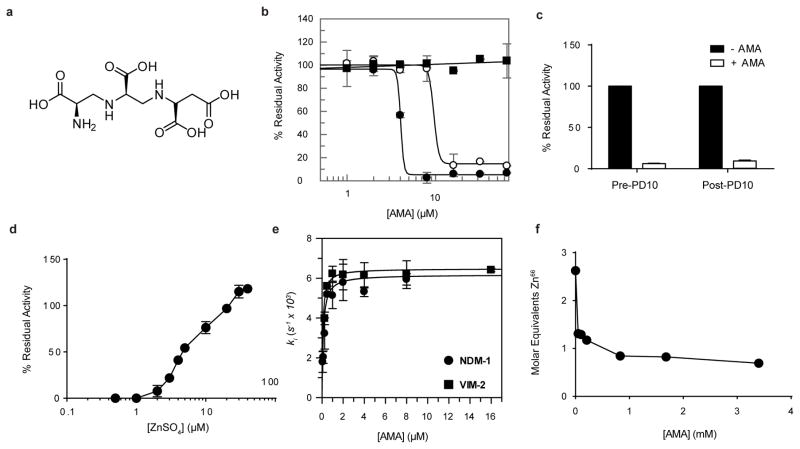
Fig. 1. AMA inactivates MBLs
(a) Chemical structure of AMA. (b) AMA inhibits NDM-1 (●) (IC50 4.0 ± 1.0 μM) and VIM-2 (○) (IC50 of 9.6 ± 2.4 μM). Activity of OXA-48 (■) was unaffected by AMA. (c) Removal of AMA via PD10 column does not restore NDM-1 activity, confirming irreversible inactivation. (d) Addition of excess ZnSO4 restores activity post5 inactivation. (e) The rate of inactivation of NDM-1 and VIM-2 is saturable with [AMA]. (f) ICP-MS confirms depletion of Zn from NDM-1. For all experiments error bars denote standard deviation of three technical replicates.
Fig. 2
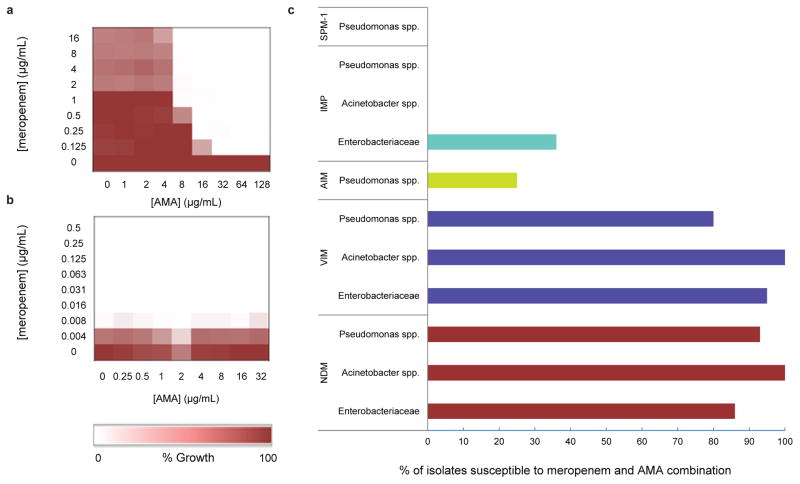
Fig. 2. AMA potentiates the activity of meropenem against CRGNP
(a, b) Microdilution checkerboard analysis showing the combined effect of AMA and meropenem selectively against CRE (a, K. pneumoniae N11-2218 MIC meropenem = 32 μg/ml) but not a carbapenem sensitive strain (b, E. coli BW25113 MIC = 0.008–0.016 μg/ml). Heat plots shows the average of two technical replicates. (c) VIM- and NDM-expressing Gram negative pathogens were highly susceptible to meropenem/AMA combination (respectively 2μg/ml and 8 μg/ml) while AIM-, IMP-, and SPM-1-expressing isolates remained resistant.
Fig. 3
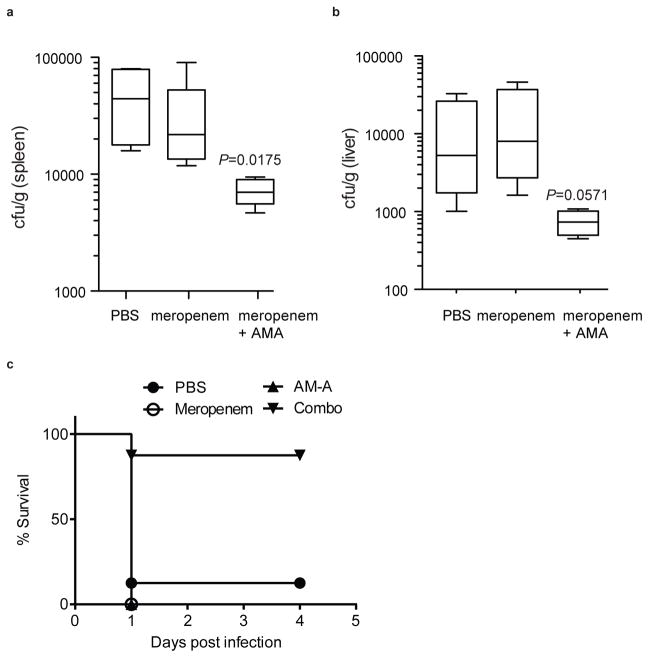
Fig. 3. AMA rescues meropenem activity in vivo
CD-1 mice were given a sub-lethal dose of K. pneumoniae N11-2218 (meropenem MIC 32 μg/mL) by i.p. injection. (a, b) Groups of mice were treated with a single dose of meropenem (10 mg/kg), a combination of meropenem (10 mg/kg) + AMA (10 mg/kg), or PBS by s.c. injection. Bacterial load in the spleen (a) and liver (b) was determined by selective plating. Data are the means with standard error from two separate experiments (n=7 per group). (c) For survival experiments, CD-1 mice were given a lethal dose of K. pneumoniae N11-2218, and treated with a single dose of meropenem (10 mg/kg), a combination of meropenem (10 mg/kg) + AMA (30 mg/kg), AMA alone (30 mg/kg), or PBS by s.c. injection. Data are the means with standard error from four separate experiments (n=12 per group, except AMA only treatment where n=13). Groups were analyzed using a non-parametric Mann-Whitney t-test. P-values <0.05 were considered statistically significant.

Comment in

References

    1. Frère JM. Beta-Lactamases. Nova Science Publishers; New York: 2011.
    1. Pitout JD, Laupland KB. Extended-spectrum beta-lactamase-producing Enterobacteriaceae: an emerging public-health concern. The Lancet infectious diseases. 2008;8:159–166. doi: 10.1016/S1473-3099(08)70041-0. - DOI - PubMed
    1. Centers for Disease Control and Prevention. Antibiotic Resistance Threats in the United States. Atlanta, GA: 2013.
    1. Edelstein MV, et al. Spread of extensively resistant VIM-2-positive ST235 Pseudomonas aeruginosa in Belarus, Kazakhstan, and Russia: a longitudinal epidemiological and clinical study. The Lancet infectious diseases. 2013;13:867–876. doi: 10.1016/S1473-3099(13)70168-3. - DOI - PubMed
    1. Patel G, Bonomo RA. “Stormy waters ahead”: global emergence of carbapenemases. Frontiers in microbiology. 2013;4:48. doi: 10.3389/fmicb.2013.00048. - DOI - PMC - PubMed

Publication types

MeSH terms