


Sex-based biology and the rational design of influenza vaccination strategies
- PMID: 24966191
- PMCID: PMC4157517
- DOI: 10.1093/infdis/jiu066
Sex-based biology and the rational design of influenza vaccination strategies
Abstract
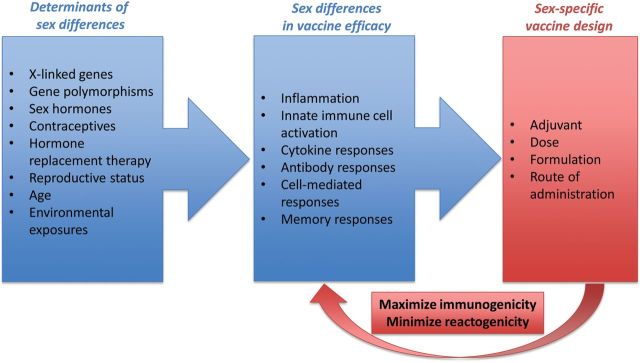
Biological (ie, sex) differences as well as cultural (ie, gender) norms influence the acceptance and efficacy of vaccines for males and females. These differences are often overlooked in the design and implementation of vaccination strategies. Using seasonal and pandemic influenza vaccines, we document profound differences between the sexes in the acceptance, correlates of protection, and adverse reactions following vaccination in both young and older adults. Females develop higher antibody responses, experience more adverse reactions to influenza vaccines, and show greater vaccine efficacy than males. Despite greater vaccine efficacy in females, both young and older females are often less likely to accept influenza vaccines than their male counterparts. Identification of the biological mechanisms, including the hormones and genes, that underlie differential responses to vaccination is necessary. We propose that vaccines should be matched to an individual's biological sex, which could involve systematically tailoring diverse types of FDA-approved influenza vaccines separately for males and females. One goal for vaccines designed to protect against influenza and even other infectious diseases should be to increase the correlates of protection in males and reduce adverse reactions in females in an effort to increase acceptance and vaccine-induced protection in both sexes.
Keywords: aging; gender; immunogenicity; influenza; reactogenicity; sex difference; sex hormone; vaccine.
© The Author 2014. Published by Oxford University Press on behalf of the Infectious Diseases Society of America. All rights reserved. For Permissions, please e-mail: journals.permissions@oup.com.
Figures
References
-
- Pulcini C, Massin S, Launay O, Verger P. Factors associated with vaccination for hepatitis B, pertussis, seasonal and pandemic influenza among French general practitioners: a 2010 survey. Vaccine. 2013;31:3943–9. - PubMed
Publication types
MeSH terms
Substances
Grants and funding
LinkOut - more resources
Full Text Sources
Other Literature Sources
Medical
