Oral health: How much do you know? - A study on knowledge, attitude and practices of patients visiting a North Indian dental school
- PMID: 24966748
- PMCID: PMC4054034
- DOI: 10.4103/1305-7456.126244
Oral health: How much do you know? - A study on knowledge, attitude and practices of patients visiting a North Indian dental school
Abstract
Objective: This study was carried out to assess the knowledge, attitude and behavior among patients visiting the out-patient department (OPD) of Gian Sagar Dental College and Hospital, Rajpura.
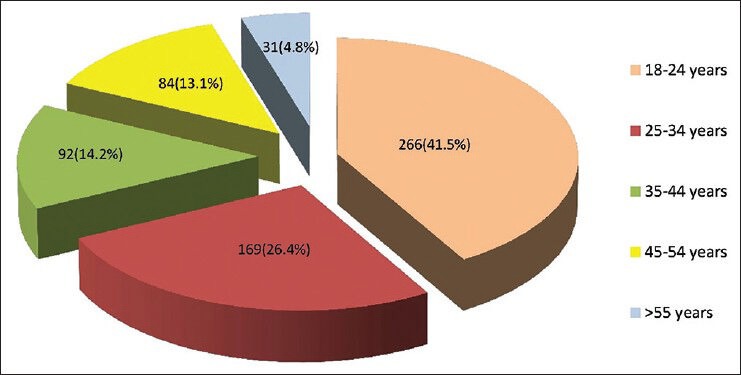
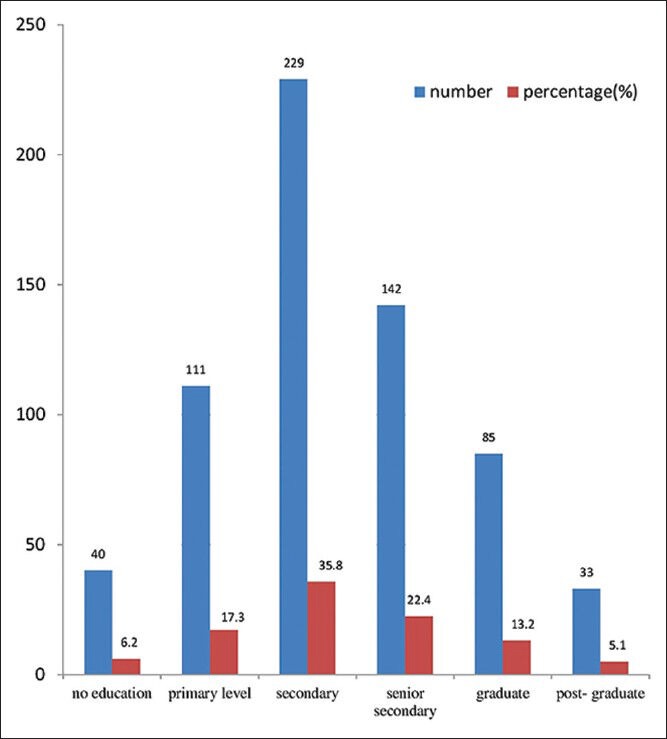
Materials and methods: A cross-sectional study was conducted on 642 subjects who visited the OPD of Gian Sagar Dental College and Hospital. A self-constructed questionnaire was given to each of the participant. Responses from the subjects were calculated in terms of numbers and percentages.
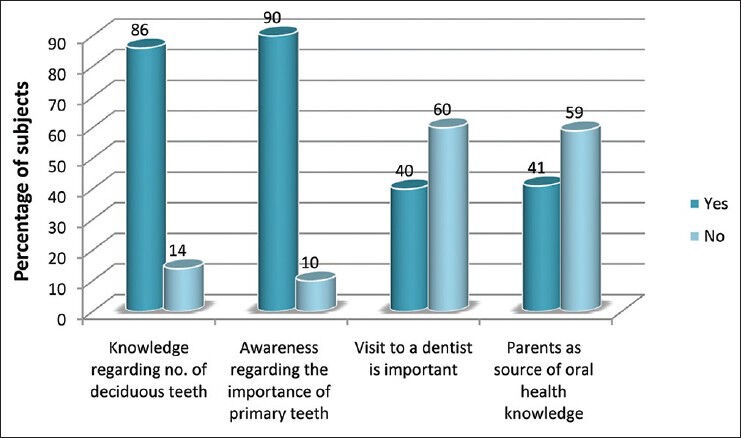
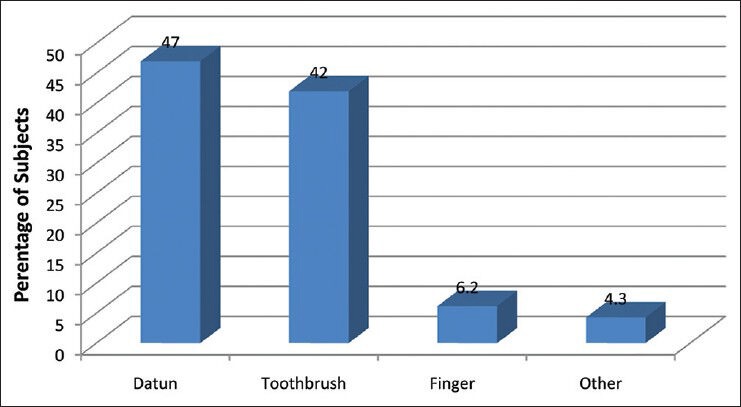
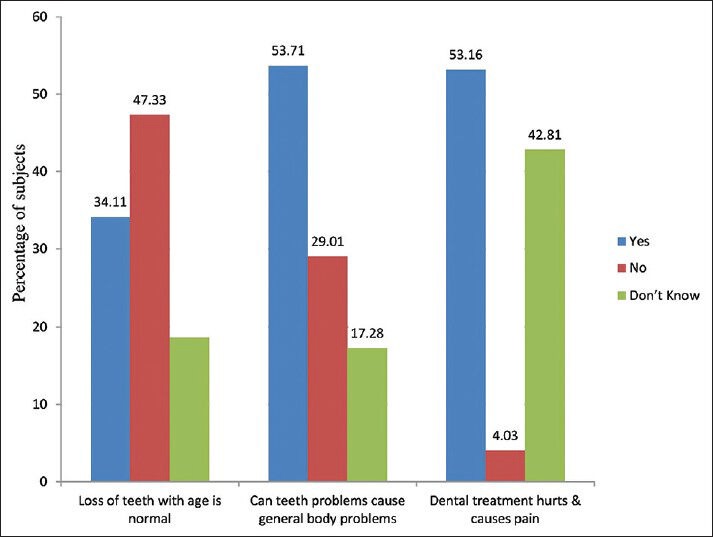
Result: Three hundred six (48%) of the subjects had never visited a dentist before. 304 (47%) of the subjects still prefer other cleaning aids over toothbrush. 207 (32%) subjects were of the view that dental health has no effect on general health, whereas 219 (34%) subjects were of the opinion that tooth loss is a natural sequel of the aging process.
Conclusion: There is a dearth of knowledge and careless attitude among people in regard to dental health. People need to be motivated and their concepts regarding the importance of dental health should be made clear through various campaigns and personal counseling.
Keywords: Dental school; knowledge; oral health; patients.
Conflict of interest statement
Figures
References
-
- Udoye C, Aguwa E. Oral health related knowledge and behaviour among nursing students in a Nigerian tertiary hospital. Int J Dent Sci. 2009;7:2.
-
- Dagli RJ, Tadakamadla S, Dhanni C, Duraiswamy P, Kulkarni S. Self-reported dental health attitude and behavior of dental students in India. J Oral Sci. 2008;50:267–72. - PubMed
-
- Ashley FP. Role of dental health education in preventive dentistry. In: Murray JJ, editor. Prevention of Dental Disease. 3rd ed. Oxford: Oxford University Press; 1996. pp. 406–14.
-
- Petersen PE. The World Oral Health Report 2003: Continuous improvement of oral health in the 21st century – The approach of the WHO global oral health programme. Community Dent Oral Epidemiol. 2003;31(Suppl 1):3–23. - PubMed
LinkOut - more resources
Full Text Sources
Other Literature Sources