


Notch-1 and Ki-67 receptor as predictors for the recurrence and prognosis of Kimura's disease
- PMID: 24966950
- PMCID: PMC4069944
Notch-1 and Ki-67 receptor as predictors for the recurrence and prognosis of Kimura's disease
Abstract
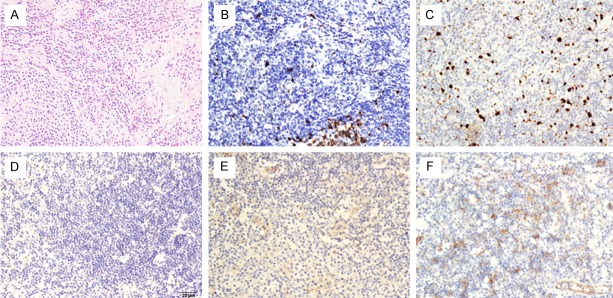
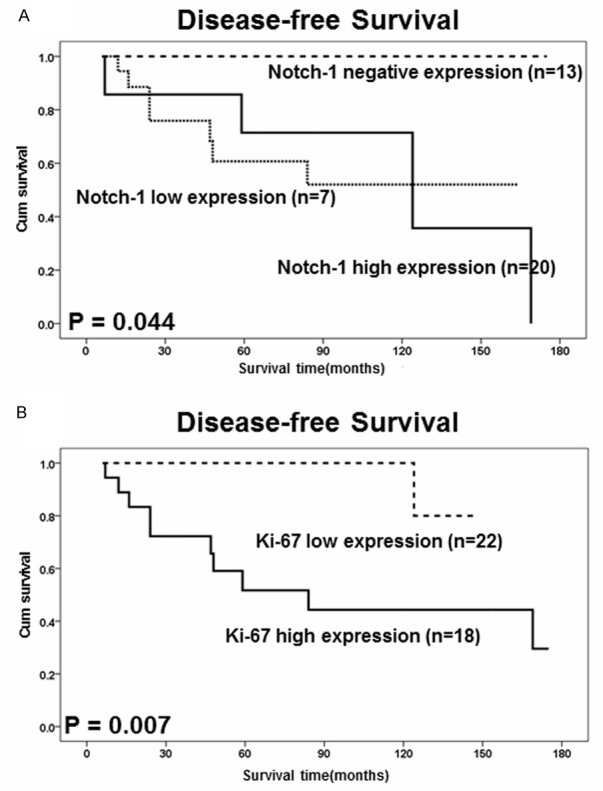
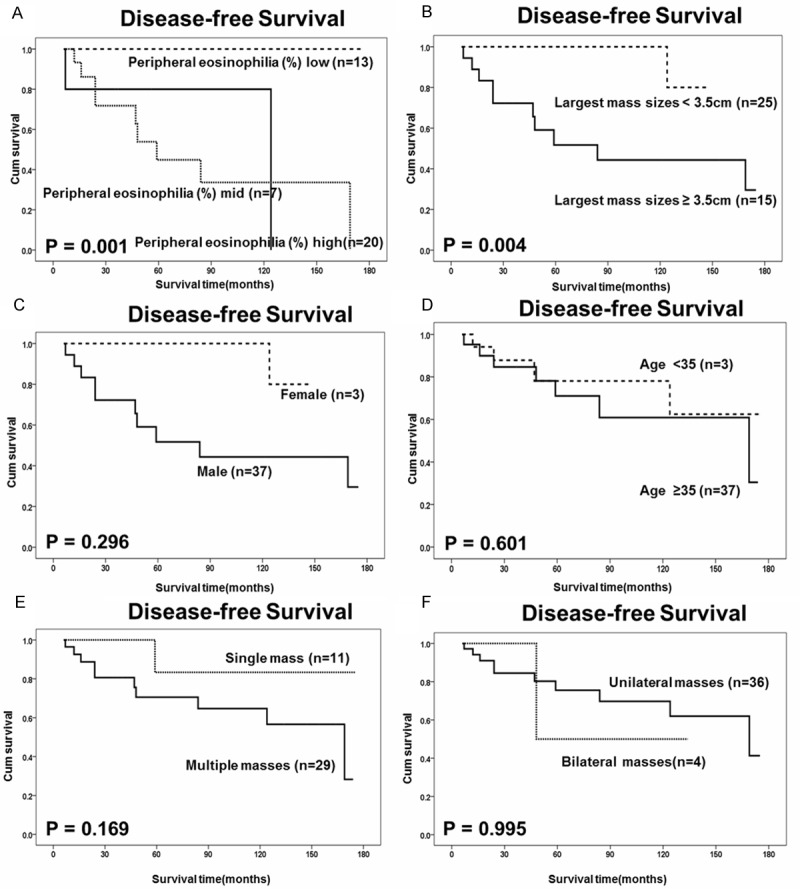
Kimura's disease (KD) is a rare chronic disease with unknown origin. It remains controversial in KD's diagnosis, treatment, transformation and need further research. The aim of this study is to investigate the clinicopathologic features of KD and the relationship between the expression of Notch-1, Ki-67 receptor and the recurrence of KD. The hematoxylin and eosin sections and clinical data of 40 patients diagnosed with KD were examined retrospectively. Specimens were available in these 40 cases. Notch-1 and Ki-67 expression were examined using IHC (immunohistochemistry staining) analysis. Of 40 cases of KD (average age, 38.4 years; median age, 36.0 years), 34 cases (85.0%) were clinically seen to involve swelling of the head and neck region. Notch-1 and Ki-67 have a high expression in recurrent patients. High expression of Notch-1 receptor and Ki-67 tended to be found in patients who relapsed. This is the first study to discuss the correlation among Notch-1, Ki-67 and recurrent KD. These results suggest both of the markers may act as promising predictors for the recurrence and prognosis of KD. However, Notch-1 immunoexpression had no statistically significant association with the Ki-67 proliferation index.
Keywords: Ki-67 proliferation index; Kimura’s disease (KD); Notch-1 receptor; recurrence.
Figures
References
-
- Chen H, Thompson LD, Aguilera NS, Abbondanzo SL. Kimura disease: a clinicopathologic study of 21 cases. Am J Surg Pathol. 2004;28:505–513. - PubMed
-
- Abuel-Haija M, Hurford MT. Kimura disease. Arch Pathol Lab Med. 2007;131:650–651. - PubMed
-
- Yamada A, Mitsuhashi K, Miyakawa Y, Kosaka K, Takehara K, Iijima M, Tanaka K, Shibata S. Membranous glomerulonephritis associated with eosinophilic lymphfolliculosis of the skin (Kimura’s disease): report of a case and review of the literature. Clin Nephrol. 1982;18:211–215. - PubMed
-
- Saxe N, Kahn LB. Angiolymphoid hyperplasia with eosinophilia: report of 3 cases. S Afr Med J. 1977;52:454–7. - PubMed
-
- Zhang R, Ban XH, Mo YX, Lv MM, Duan XH, Shen J, Li JP, Liu XW, Xie CM. Kimura’s disease: the CT and MRI characteristics in fifteen cases. Eur J Radiol. 2011;80:489–97. - PubMed
Publication types
MeSH terms
Substances
LinkOut - more resources
Full Text Sources