


Primary small cell neuroendocrine carcinoma of the tonsil: a case report and review of the literature
- PMID: 24966986
- PMCID: PMC4069905
Primary small cell neuroendocrine carcinoma of the tonsil: a case report and review of the literature
Abstract
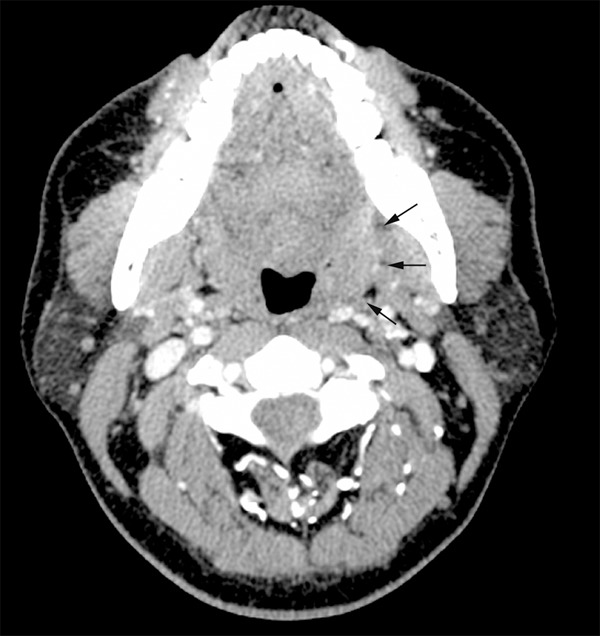
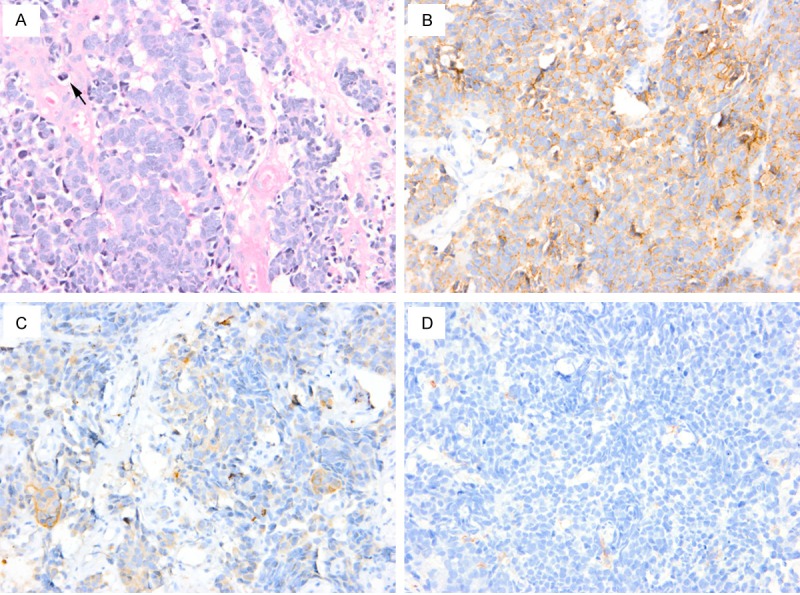
Small cell neuroendocrine carcinoma (NEC) that originates in the tonsil is extremely rare and carries a poor prognosis. Only a few cases of this tumor have been reported so far and the standard treatment protocol remains uncertain. Here we describe a 74-year-old woman presented with throat pain for about 2 months. Computed tomography (CT) scan revealed a 3.4×1.8 cm tumor with moderate enhancement in the left tonsil and a 1.3×1.0 cm neck mass in left level II. A biopsy of the tonsillar mass was performed and histologic examination revealed small round to oval tumor cells were arranged in cords or nests, containing hyperchromatic nuclei and scant cytoplasm. Mitotic figures were readily identified. Immunohistochemical staining showed that tumor cells were strongly positive for CD56, focally positive for PCK and negative for LCA. A diagnosis of primary small cell NEC of the left tonsil was obtained. The patient was treated by six cycles of cisplatin combined with etoposide and the masses showed initial complete response. But recurrence in the left neck was found 9 months after initial diagnosis and the patient refused any further treatment. With a review of the literature, the nomenclature, clinicopathological characteristics and treatment modalities of this rare tumor are discussed.
Keywords: Neuroendocrine carcinoma; immunohistochemistry; oropharynx; small cell carcinoma; tonsil.
Figures
References
-
- Stambuk HE, Karimi S, Lee N, Patel SG. Oral cavity and oropharynx tumors. Radiol Clin North Am. 2007;45:1–20. - PubMed
-
- Renner G. Small cell carcinoma of the head and neck: a review. Semin Oncol. 2007;34:3–14. - PubMed
-
- Koss LG, Spiro RH, Hajdu S. Small cell (oat cell) carcinoma of minor salivary gland origin. Cancer. 1972;30:737–741. - PubMed
-
- Barnes L. Neuroendocrine Tumors. In: Barnes L, Eveson JW, Reichart P, Sidransky D, editors. Pathology and Genetics of Head and Neck Tumors (World Health Organization Classification of Tumors) Lyon: IARC; 2005. pp. 135–139.
Publication types
MeSH terms
Substances
LinkOut - more resources
Full Text Sources
Research Materials