


Qualitative and quantitative analysis for facial complexion in traditional Chinese medicine
- PMID: 24967342
- PMCID: PMC4054802
- DOI: 10.1155/2014/207589
Qualitative and quantitative analysis for facial complexion in traditional Chinese medicine
Abstract
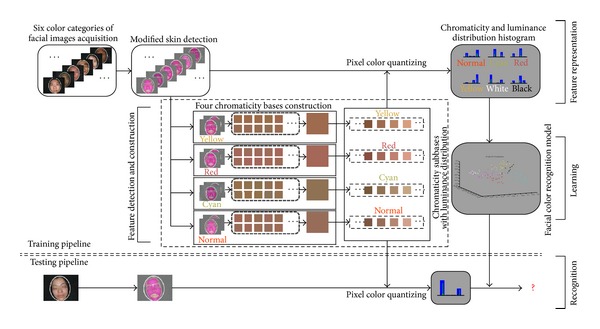
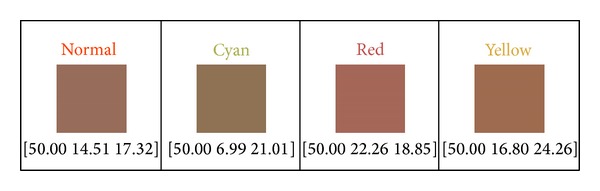
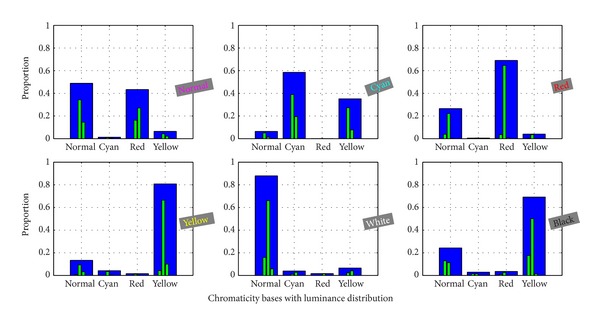
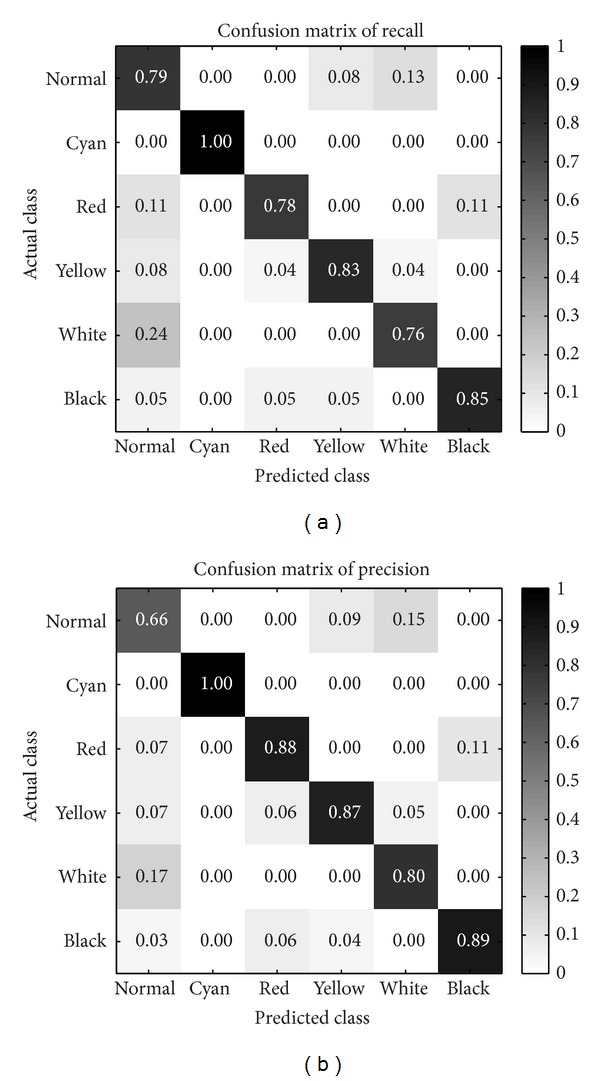
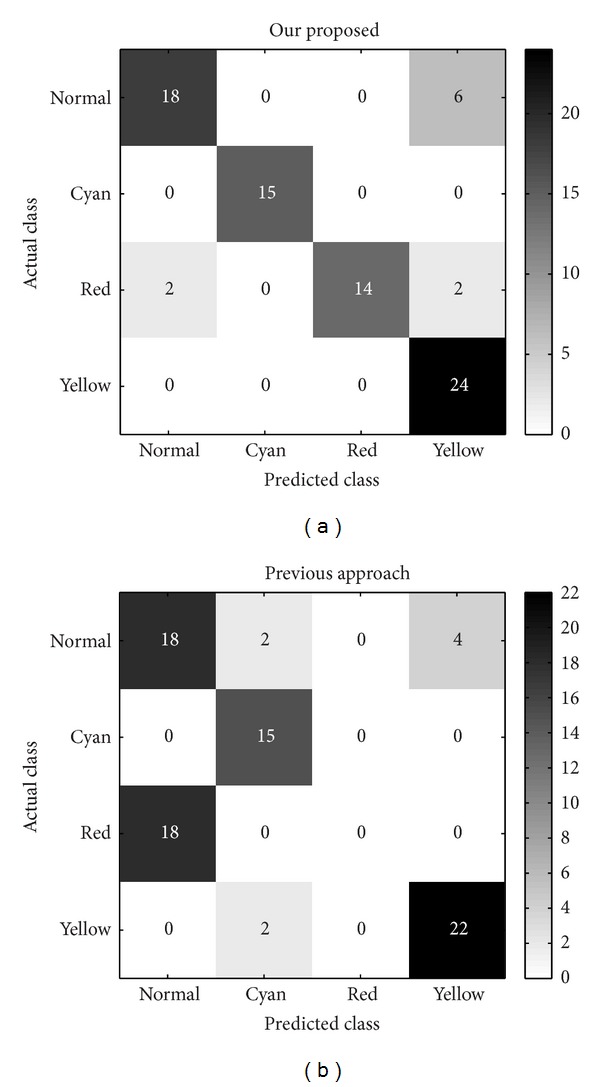
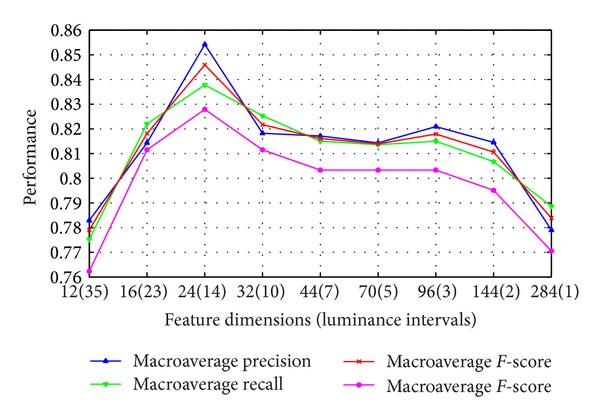
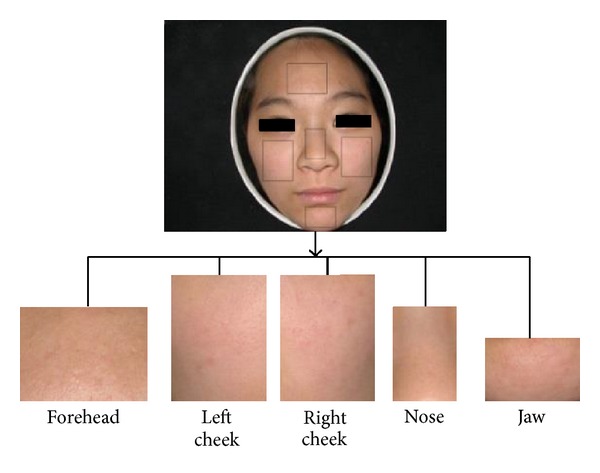
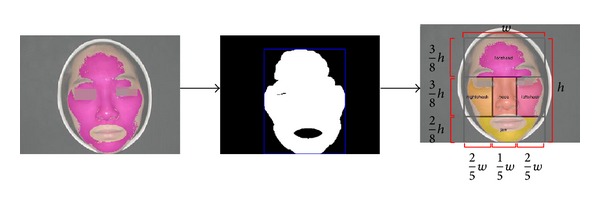
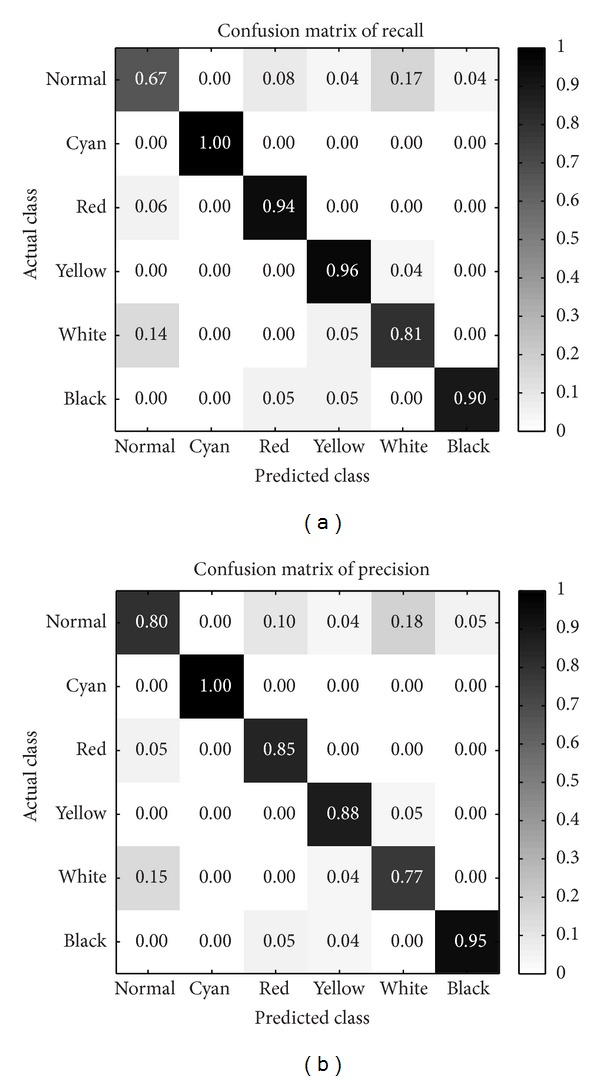
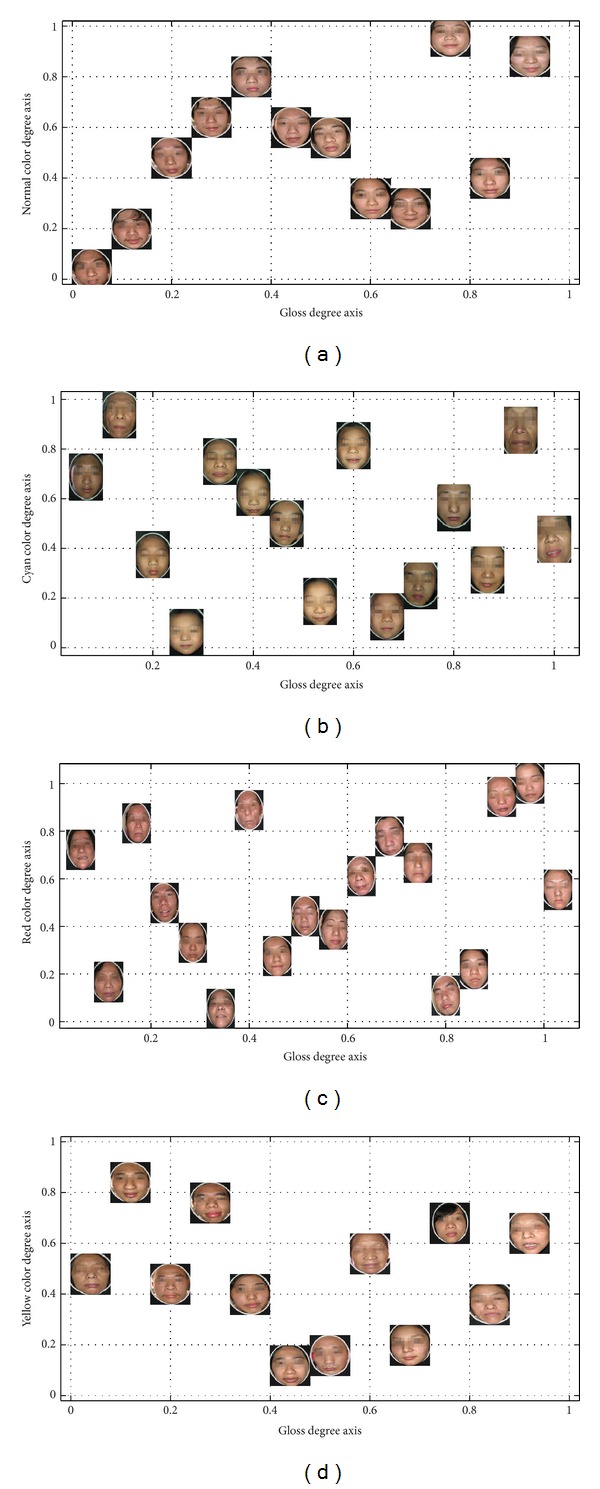
Facial diagnosis is an important and very intuitive diagnostic method in Traditional Chinese Medicine (TCM). However, due to its qualitative and experience-based subjective property, traditional facial diagnosis has a certain limitation in clinical medicine. The computerized inspection method provides classification models to recognize facial complexion (including color and gloss). However, the previous works only study the classification problems of facial complexion, which is considered as qualitative analysis in our perspective. For quantitative analysis expectation, the severity or degree of facial complexion has not been reported yet. This paper aims to make both qualitative and quantitative analysis for facial complexion. We propose a novel feature representation of facial complexion from the whole face of patients. The features are established with four chromaticity bases splitting up by luminance distribution on CIELAB color space. Chromaticity bases are constructed from facial dominant color using two-level clustering; the optimal luminance distribution is simply implemented with experimental comparisons. The features are proved to be more distinctive than the previous facial complexion feature representation. Complexion recognition proceeds by training an SVM classifier with the optimal model parameters. In addition, further improved features are more developed by the weighted fusion of five local regions. Extensive experimental results show that the proposed features achieve highest facial color recognition performance with a total accuracy of 86.89%. And, furthermore, the proposed recognition framework could analyze both color and gloss degrees of facial complexion by learning a ranking function.
Figures
References
-
- Li X, Li F, Wang Y, Qian P. Computer-aided disease diagnosis system in TCM based on facial image analysis. International Journal of Functional Informatics and Personalised Medicine. 2(3):303–314.
-
- Zhang B, Wang X, Karray F, Yang Z, Zhang D. Computerized facial diagnosis using both color and texture features. Information Sciences. 2013:49–59.
-
- Inspection of complexion in TCM. http://tcmdiscovery.com.
-
- You M, Zhao R-W, Li GZ, Hu X. MAPLSC: a novel multi-class classifier for medical diagnosis. International Journal of Data Mining and Bioinformatics. 2011;5(4):383–401. - PubMed
Publication types
MeSH terms
LinkOut - more resources
Full Text Sources
Other Literature Sources
