Integrating diverse datasets improves developmental enhancer prediction
- PMID: 24967590
- PMCID: PMC4072507
- DOI: 10.1371/journal.pcbi.1003677
Integrating diverse datasets improves developmental enhancer prediction
Abstract
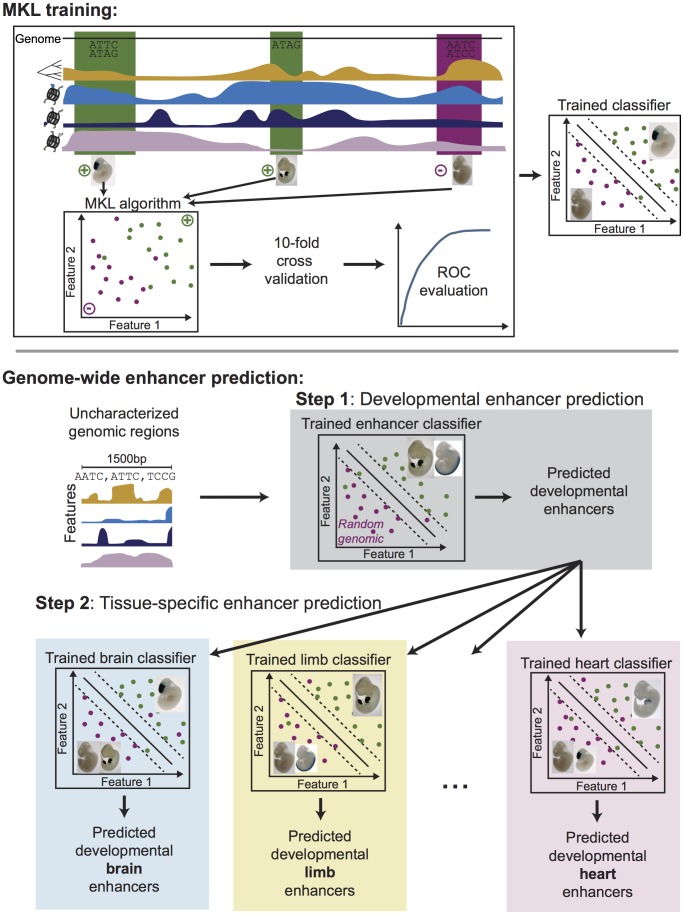
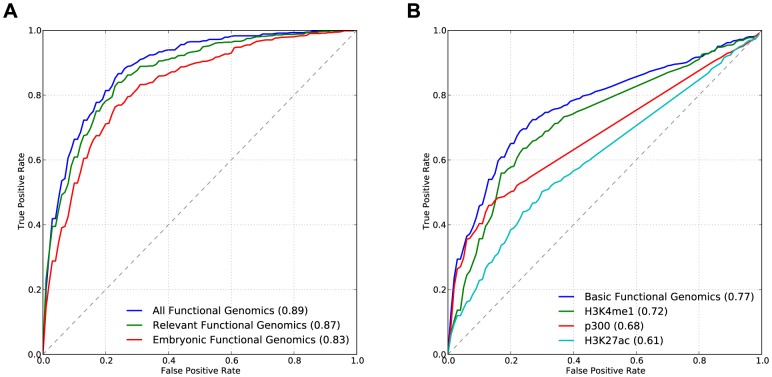
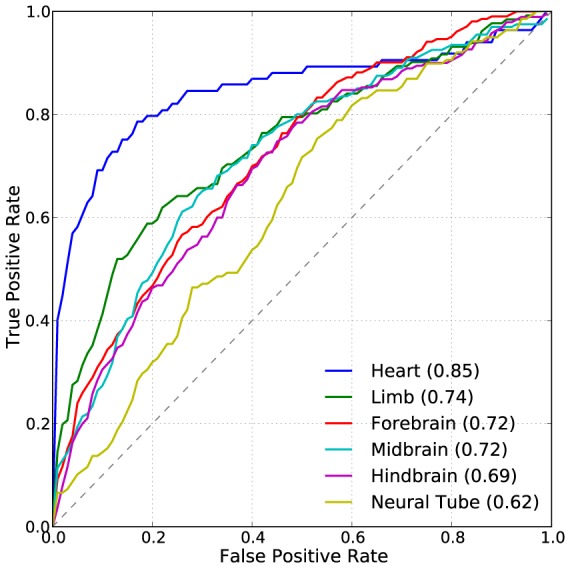
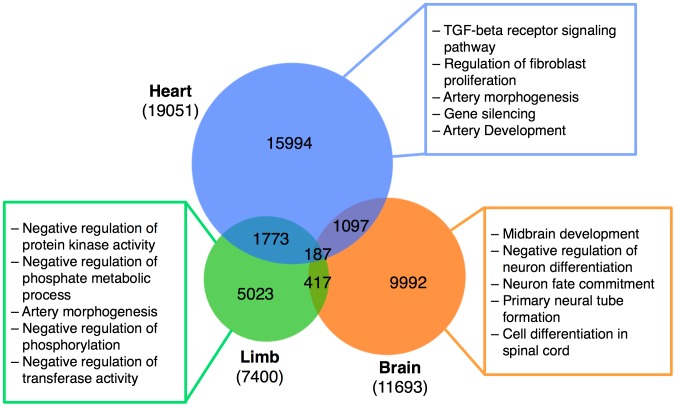
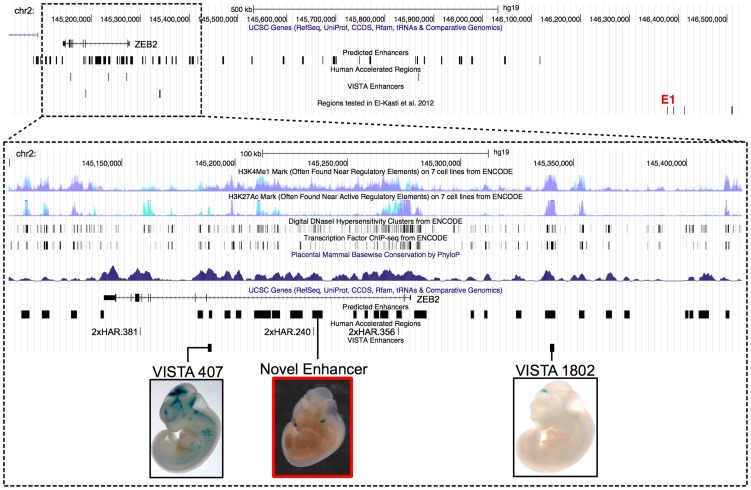
Gene-regulatory enhancers have been identified using various approaches, including evolutionary conservation, regulatory protein binding, chromatin modifications, and DNA sequence motifs. To integrate these different approaches, we developed EnhancerFinder, a two-step method for distinguishing developmental enhancers from the genomic background and then predicting their tissue specificity. EnhancerFinder uses a multiple kernel learning approach to integrate DNA sequence motifs, evolutionary patterns, and diverse functional genomics datasets from a variety of cell types. In contrast with prediction approaches that define enhancers based on histone marks or p300 sites from a single cell line, we trained EnhancerFinder on hundreds of experimentally verified human developmental enhancers from the VISTA Enhancer Browser. We comprehensively evaluated EnhancerFinder using cross validation and found that our integrative method improves the identification of enhancers over approaches that consider a single type of data, such as sequence motifs, evolutionary conservation, or the binding of enhancer-associated proteins. We find that VISTA enhancers active in embryonic heart are easier to identify than enhancers active in several other embryonic tissues, likely due to their uniquely high GC content. We applied EnhancerFinder to the entire human genome and predicted 84,301 developmental enhancers and their tissue specificity. These predictions provide specific functional annotations for large amounts of human non-coding DNA, and are significantly enriched near genes with annotated roles in their predicted tissues and lead SNPs from genome-wide association studies. We demonstrate the utility of EnhancerFinder predictions through in vivo validation of novel embryonic gene regulatory enhancers from three developmental transcription factor loci. Our genome-wide developmental enhancer predictions are freely available as a UCSC Genome Browser track, which we hope will enable researchers to further investigate questions in developmental biology.
Conflict of interest statement
The authors have declared that no competing interests exist.
Figures


References
-
- Ahituv N (2012) Gene regulatory sequences and human disease. New York: Springer. x, 283 pages p.
Publication types
MeSH terms
Substances
Grants and funding
- U01 HL098179/HL/NHLBI NIH HHS/United States
- HL098179/HL/NHLBI NIH HHS/United States
- HD059862/HD/NICHD NIH HHS/United States
- R01 GM082901/GM/NIGMS NIH HHS/United States
- U01 HL098188/HL/NHLBI NIH HHS/United States
- UM1 HL098179/HL/NHLBI NIH HHS/United States
- R01 HD059862/HD/NICHD NIH HHS/United States
- DK090382/DK/NIDDK NIH HHS/United States
- GM61390/GM/NIGMS NIH HHS/United States
- R01 NS079231/NS/NINDS NIH HHS/United States
- R01 HG006768/HG/NHGRI NIH HHS/United States
- U19 GM061390/GM/NIGMS NIH HHS/United States
- NS079231/NS/NINDS NIH HHS/United States
- R01 HG005058/HG/NHGRI NIH HHS/United States
- HG005058/HG/NHGRI NIH HHS/United States
- T32 GM067547/GM/NIGMS NIH HHS/United States
- HG006768/HG/NHGRI NIH HHS/United States
- U01 GM061390/GM/NIGMS NIH HHS/United States
- R01 DK090382/DK/NIDDK NIH HHS/United States
- GM082901/GM/NIGMS NIH HHS/United States
LinkOut - more resources
Full Text Sources
Other Literature Sources
Research Materials
Miscellaneous