


Multivariate analysis of factors affecting presence and/or agenesis of third molar tooth
- PMID: 24967595
- PMCID: PMC4072760
- DOI: 10.1371/journal.pone.0101157
Multivariate analysis of factors affecting presence and/or agenesis of third molar tooth
Abstract
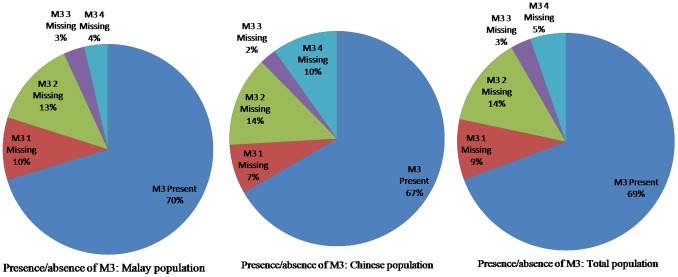
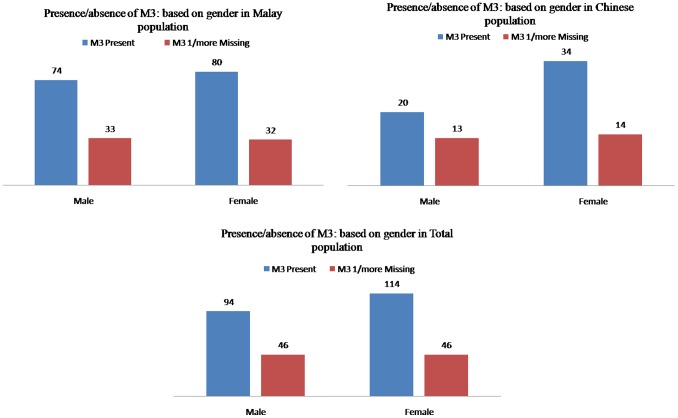
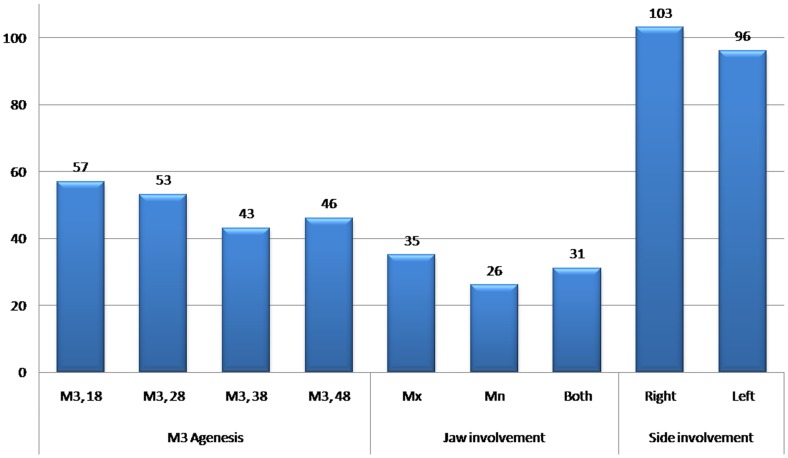
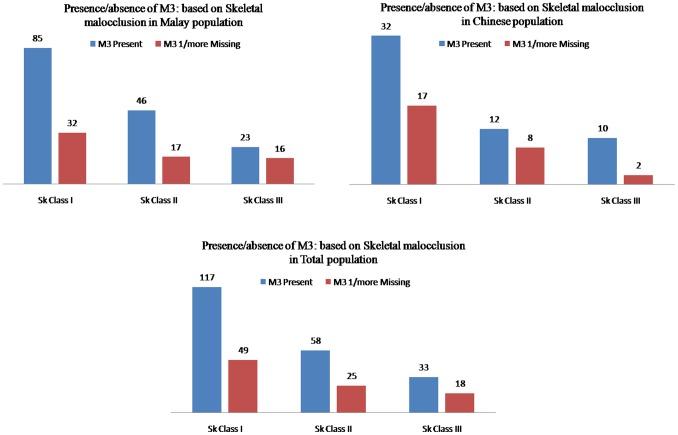
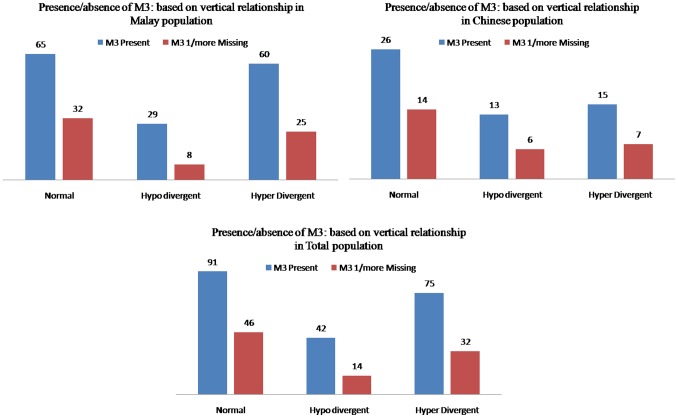
To investigate the presence and/or agenesis of third molar (M3) tooth germs in orthodontics patients in Malaysian Malay and Chinese population and evaluate the relationship between presence and/or agenesis of M3 with different skeletal malocclusion patterns and sagittal maxillomandibular jaw dimensions. Pretreatment records of 300 orthodontic patients (140 males and 160 females, 219 Malaysian Malay and 81 Chinese, average age was 16.27±4.59) were used. Third-molar agenesis was calculated with respect to race, genders, number of missing teeth, jaws, skeletal malocclusion patterns and sagittal maxillomandibular jaw dimensions. The Pearson chi-square test and ANOVA was performed to determine potential differences. Associations between various factors and M3 presence/agenesis groups were assessed using logistic regression analysis. The percentages of subjects with 1 or more M3 agenesis were 30%, 33% and 31% in the Malaysian Malay, Chinese and total population, respectively. Overall prevalence of M3 agenesis in male and female was equal (P>0.05). The frequency of the agenesis of M3s is greater in maxilla as well in the right side (P>0.05). The prevalence of M3 agenesis in those with a Class III and Class II malocclusion was relatively higher in Malaysian Malay and Malaysian Chinese population respectively. Using stepwise regression analyses, significant associations were found between Mx (P<0.05) and ANB (P<0.05) and M3 agenesis. This multivariate analysis suggested that Mx and ANB were significantly correlated with the M3 presence/agenesis.
Conflict of interest statement
Figures
References
-
- Cameron J, Sampson WJ (1996) Hypodontia of the parmanent dentition. Case reports. Aust Dent J 41(1): 1–5. - PubMed
-
- Gravely JF (1965) A radiographic survey of third molar development. Br Dent J 119: 397–401. - PubMed
-
- Nanda RS (1954) Agenesis of the third molar in man. Am J Orthod 40: 698–706.
-
- Harris EF, Clark LL (2008) Hypodontia: an epidemiologic study of American black and white people. Am J Orthod Dentofacial Orthop 134: 761–7. - PubMed
-
- Keene HJ (1965) The relationship between third molar agenesis and the morphologic variability of the molar teeth. Angle Orthod 35: 289–298. - PubMed
MeSH terms
LinkOut - more resources
Full Text Sources
Other Literature Sources
