


Defining immune engagement thresholds for in vivo control of virus-driven lymphoproliferation
- PMID: 24967892
- PMCID: PMC4072806
- DOI: 10.1371/journal.ppat.1004220
Defining immune engagement thresholds for in vivo control of virus-driven lymphoproliferation
Abstract
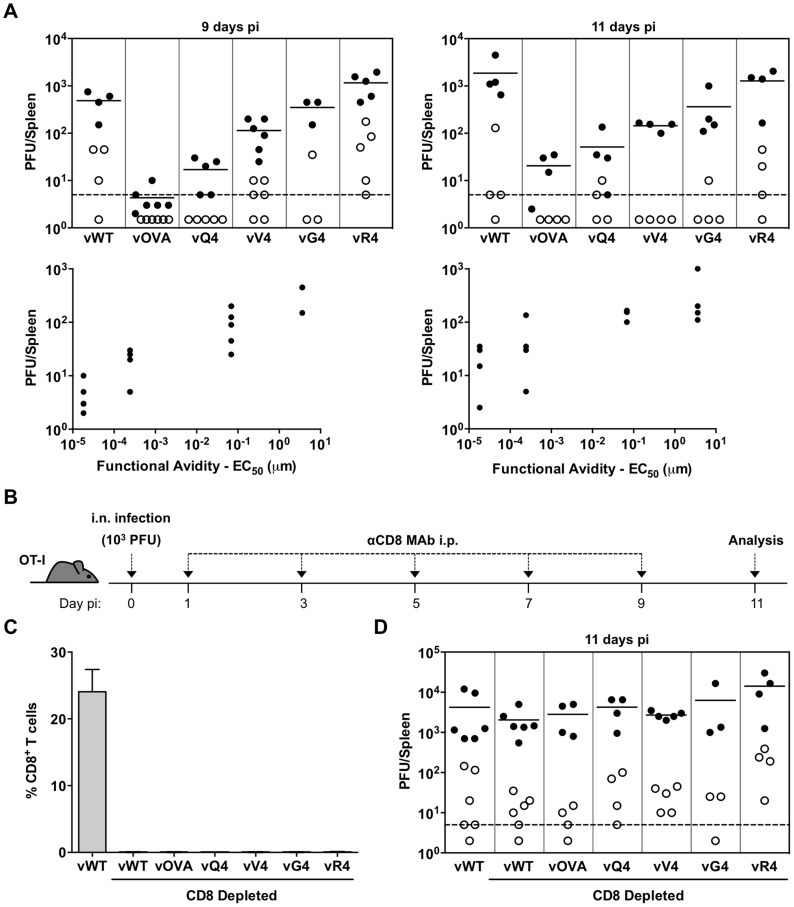
Persistent infections are subject to constant surveillance by CD8+ cytotoxic T cells (CTL). Their control should therefore depend on MHC class I-restricted epitope presentation. Many epitopes are described for γ-herpesviruses and form a basis for prospective immunotherapies and vaccines. However the quantitative requirements of in vivo immune control for epitope presentation and recognition remain poorly defined. We used Murid Herpesvirus-4 (MuHV-4) to determine for a latently expressed viral epitope how MHC class-I binding and CTL functional avidity impact on host colonization. Tracking MuHV-4 recombinants that differed only in epitope presentation, we found little latitude for sub-optimal MHC class I binding before immune control failed. By contrast, control remained effective across a wide range of T cell functional avidities. Thus, we could define critical engagement thresholds for the in vivo immune control of virus-driven B cell proliferation.
Conflict of interest statement
The authors have declared that no competing interests exist.
Figures




References
-
- Stevenson PG, Simas JP, Efstathiou S (2009) Immune control of mammalian gamma-herpesviruses: lessons from murid herpesvirus-4. J Gen Virol 90: 2317–2330. - PubMed
-
- Thorley-Lawson DA (2001) Epstein-Barr virus: exploiting the immune system. Nat Rev Immunol 1: 75–82. - PubMed
-
- Simas JP, Efstathiou S (1998) Murine gammaherpesvirus 68: a model for the study of gammaherpesvirus pathogenesis. Trends Microbiol 6: 276–282. - PubMed
Publication types
MeSH terms
Substances
LinkOut - more resources
Full Text Sources
Other Literature Sources
Molecular Biology Databases
Research Materials
