Growth factor and Th2 cytokine signaling pathways converge at STAT6 to promote arginase expression in progressive experimental visceral leishmaniasis
- PMID: 24967908
- PMCID: PMC4072777
- DOI: 10.1371/journal.ppat.1004165
Growth factor and Th2 cytokine signaling pathways converge at STAT6 to promote arginase expression in progressive experimental visceral leishmaniasis
Abstract
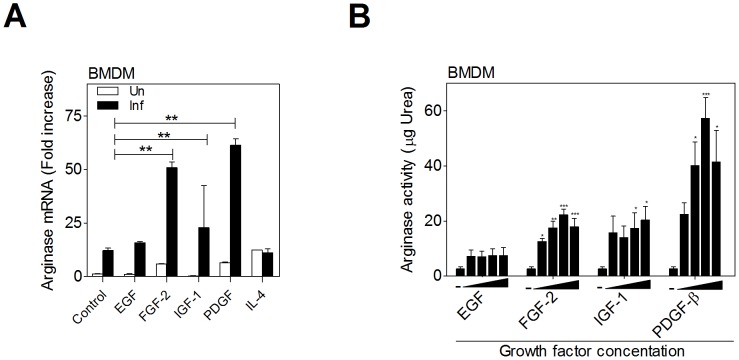
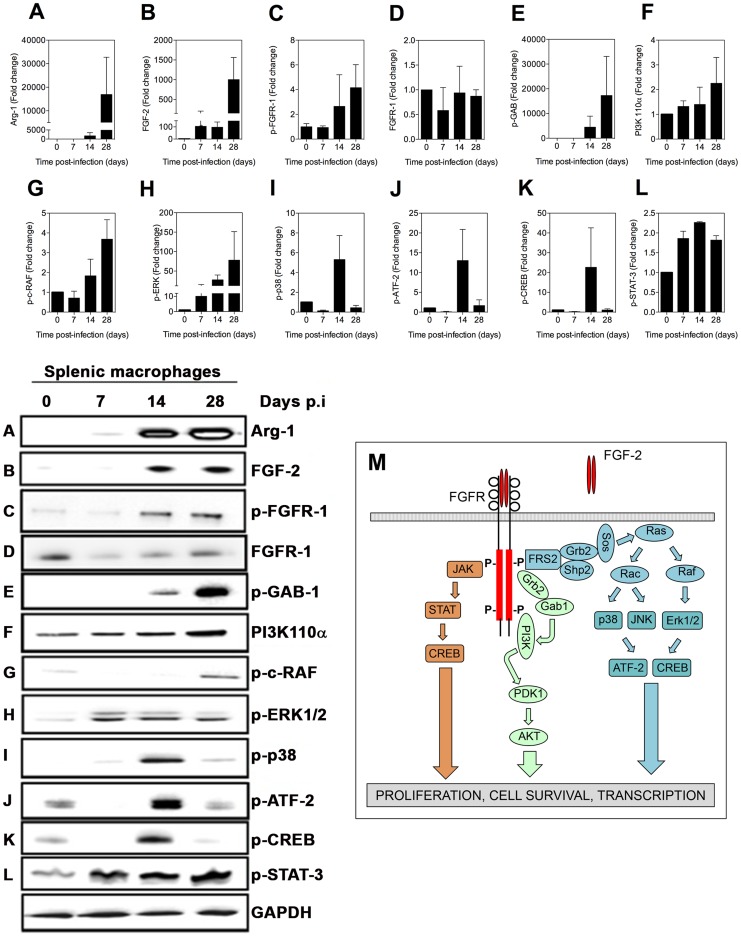
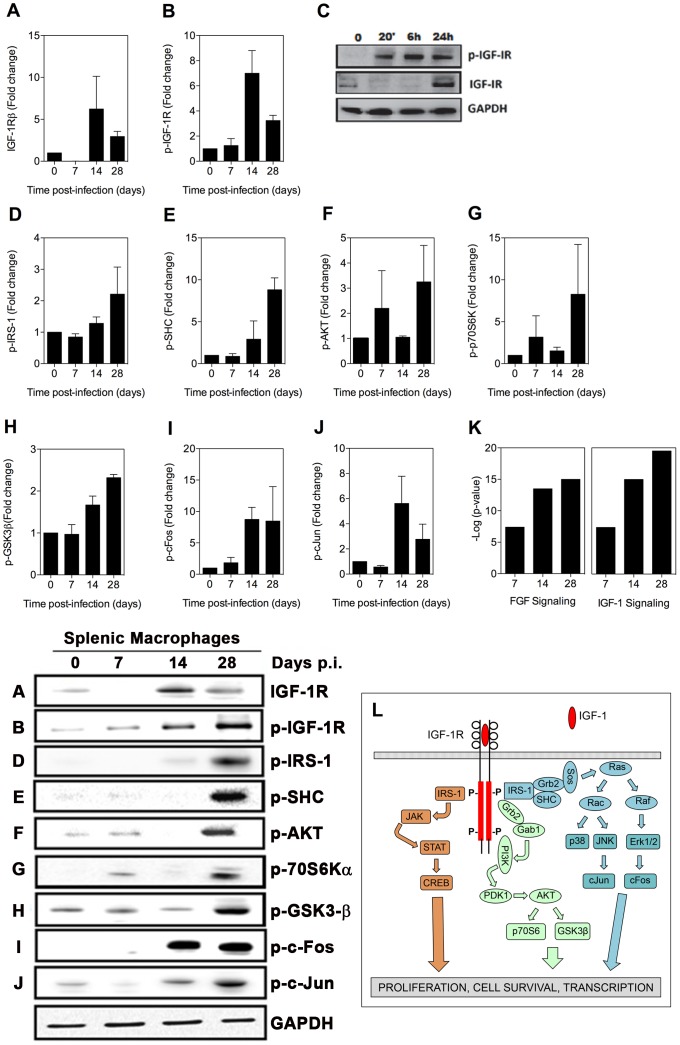
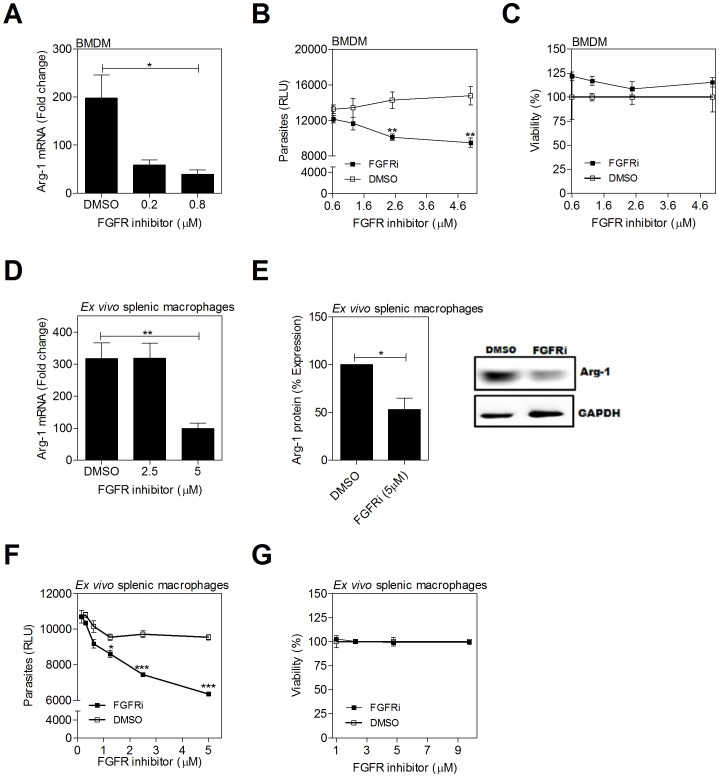
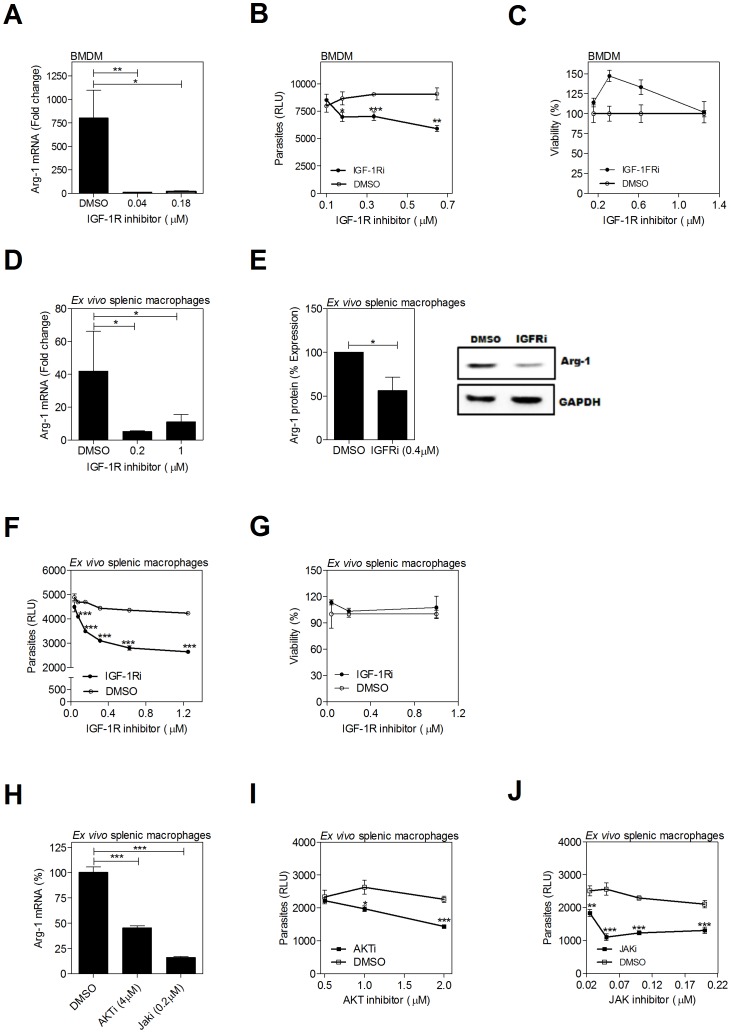
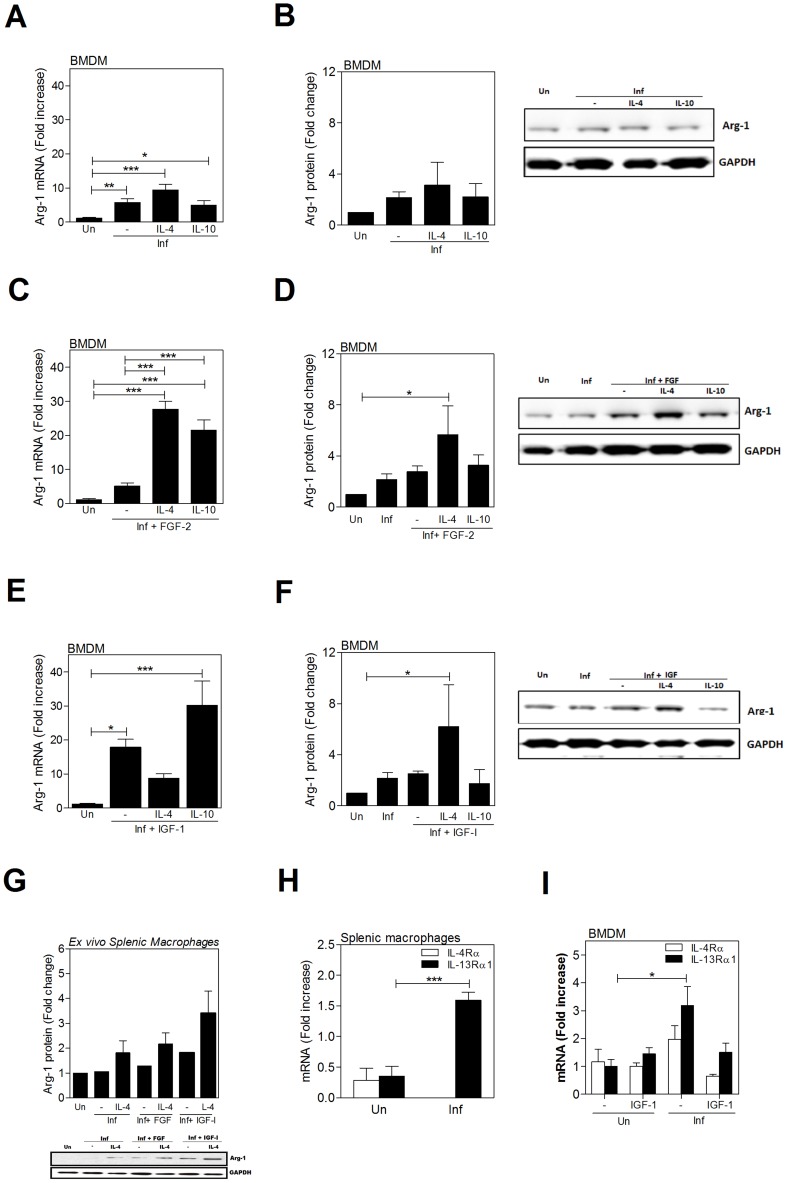
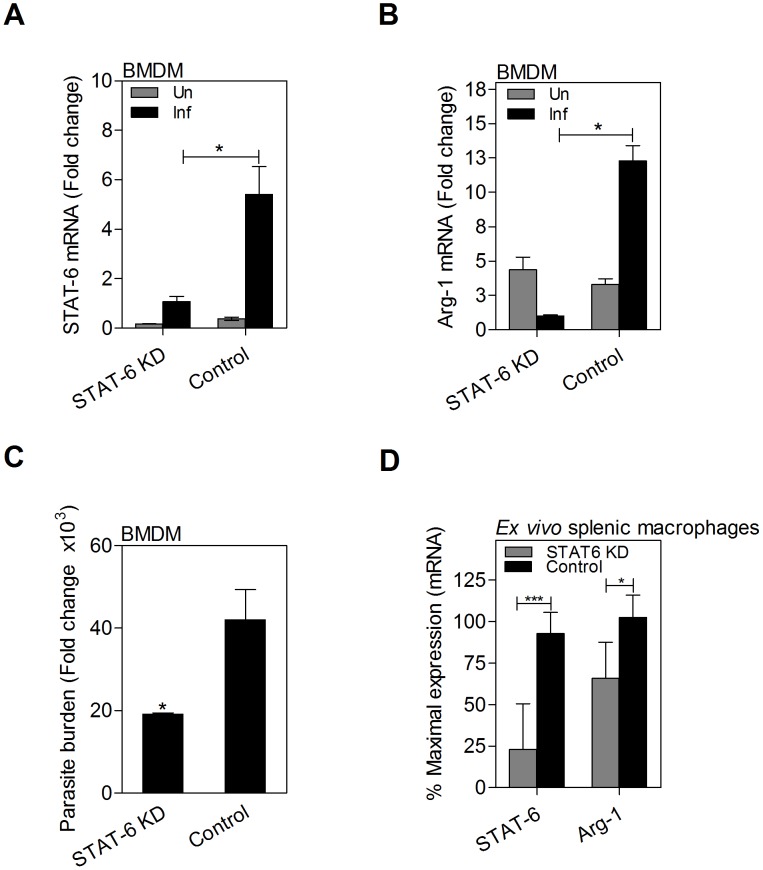
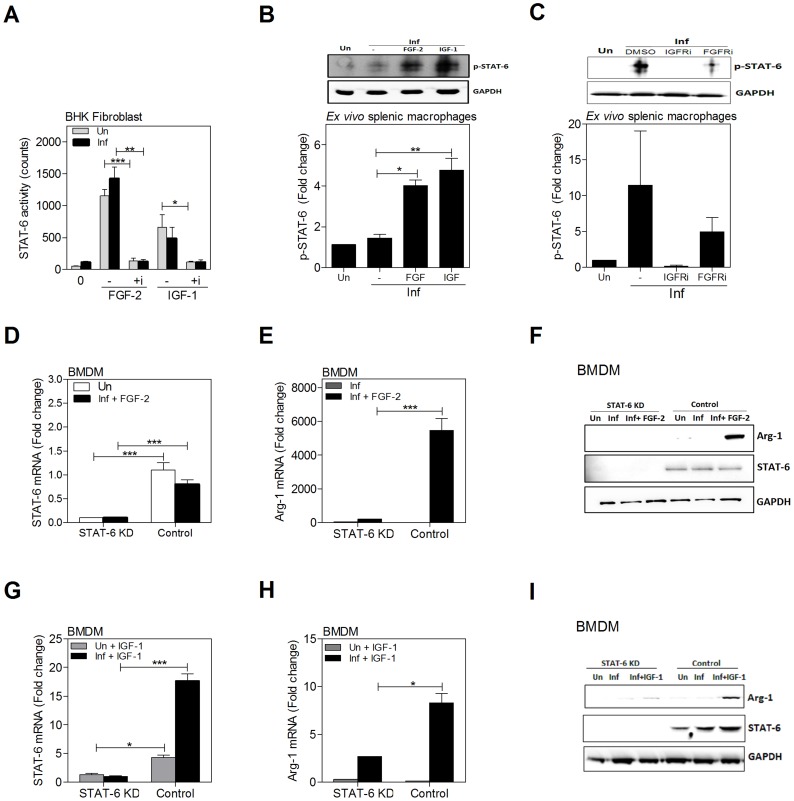
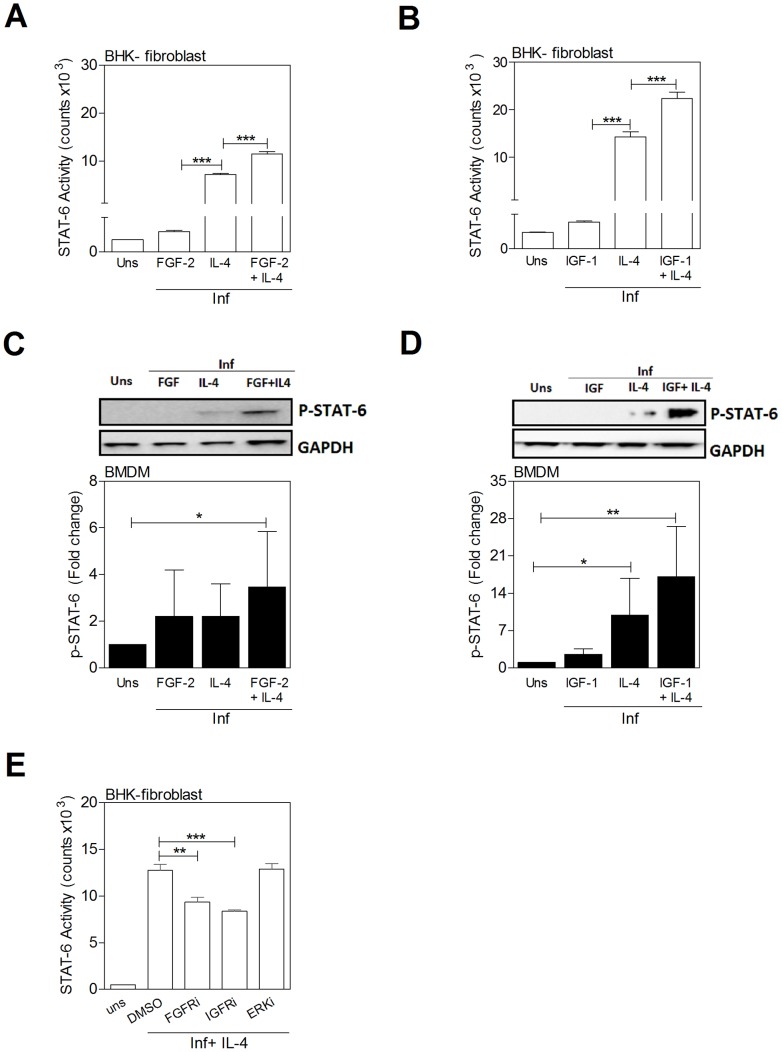
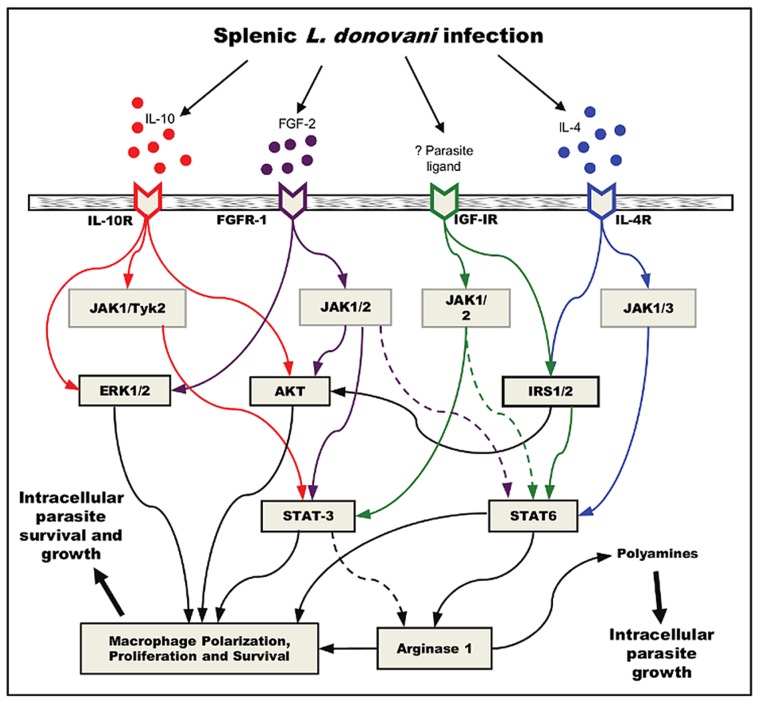
Host arginase 1 (arg1) expression is a significant contributor to the pathogenesis of progressive visceral leishmaniasis (VL), a neglected tropical disease caused by the intracellular protozoan Leishmania donovani. Previously we found that parasite-induced arg1 expression in macrophages was dependent on STAT6 activation. Arg1 expression was amplified by, but did not require, IL-4, and required de novo synthesis of unknown protein(s). To further explore the mechanisms involved in arg1 regulation in VL, we screened a panel of kinase inhibitors and found that inhibitors of growth factor signaling reduced arg1 expression in splenic macrophages from hamsters with VL. Analysis of growth factors and their signaling pathways revealed that the Fibroblast Growth Factor Receptor 1 (FGFR-1) and Insulin-like Growth Factor 1 Receptor (IGF-1R) and a number of downstream signaling proteins were activated in splenic macrophages isolated from hamsters infected with L. donovani. Recombinant FGF-2 and IGF-1 increased the expression of arg1 in L. donovani infected hamster macrophages, and this induction was augmented by IL-4. Inhibition of FGFR-1 and IGF-1R decreased arg1 expression and restricted L. donovani replication in both in vitro and ex vivo models of infection. Inhibition of the downstream signaling molecules JAK and AKT also reduced the expression of arg1 in infected macrophages. STAT6 was activated in infected macrophages exposed to either FGF-2 or IGF-1, and STAT6 was critical to the FGFR-1- and IGF-1R-mediated expression of arg1. The converse was also true as inhibition of FGFR-1 and IGF-1R reduced the activation of STAT6 in infected macrophages. Collectively, these data indicate that the FGFR/IGF-1R and IL-4 signaling pathways converge at STAT6 to promote pathologic arg1 expression and intracellular parasite survival in VL. Targeted interruption of these pathological processes offers an approach to restrain this relentlessly progressive disease.
Conflict of interest statement
The authors have declared that no competing interests exist.
Figures
References
-
- Green SJ, Nacy CA, Meltzer MS (1991) Cytokine-induced synthesis of nitrogen oxides in macrophages: a protective host response to Leishmania and other intracellular pathogens. J Leukoc Biol 50: 93–103. - PubMed
-
- Liew FY, Li Y, Moss D, Parkinson C, Rogers MV, et al. (1991) Resistance to Leishmania major infection correlates with the induction of nitric oxide synthase in murine macrophages. Eur J Immunol 21: 3009–3014. - PubMed
-
- Gordon S, Martinez FO (2010) Alternative activation of macrophages: mechanism and functions. Immunity 32: 593–604. - PubMed
MeSH terms
Substances
Grants and funding
LinkOut - more resources
Full Text Sources
Other Literature Sources
Research Materials
Miscellaneous