


Patient-centeredness in the design of clinical trials
- PMID: 24969009
- PMCID: PMC4497570
- DOI: 10.1016/j.jval.2014.02.012
Patient-centeredness in the design of clinical trials
Abstract
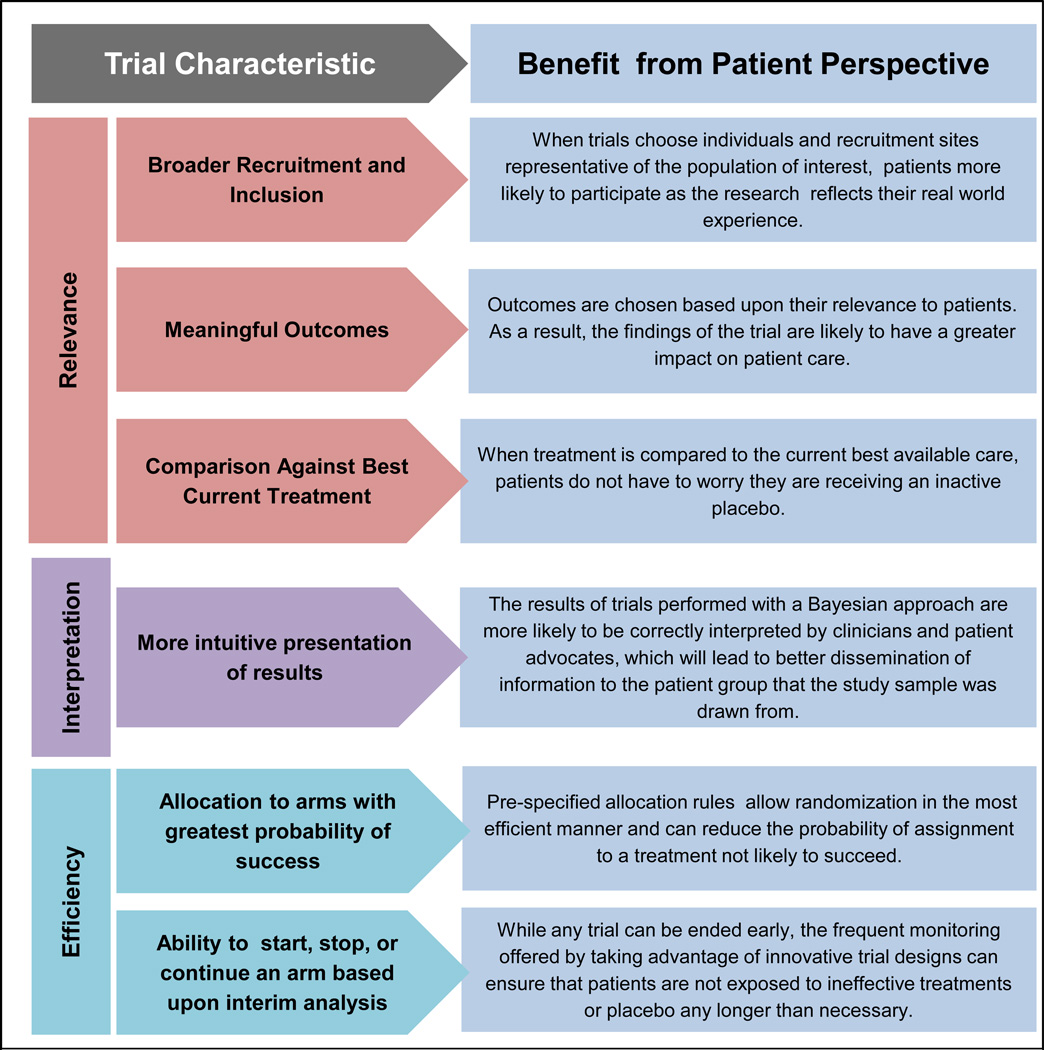
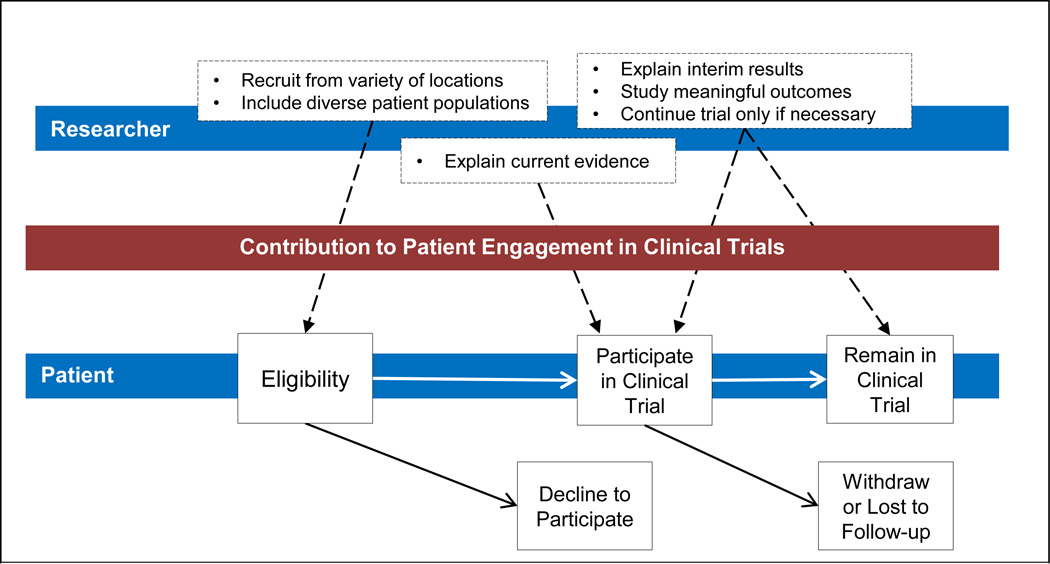
Evidence from clinical trials should contribute to informed decision making and a learning health care system. People frequently, however, find participating in clinical trials meaningless or disempowering. Moreover, people often do not incorporate trial results directly into their decision making. The lack of patient centeredness in clinical trials may be partially addressed through trial design. For example, Bayesian adaptive trials designed to adjust in a prespecified manner to changes in clinical practice could motivate people and their health care providers to view clinical trials as more applicable to real-world clinical decisions. The way in which clinical trials are designed can transform the evidence generation process to be more patient centered, providing people with an incentive to participate or continue participating in clinical trials. To achieve the transformation to patient-centeredness in clinical trial decisions, however, there is a need for transparent and reliable methods and education of trial investigators and site personnel.
Keywords: Bayesian; adaptive; patient-centered; pragmatic; trial design.
Copyright © 2014 International Society for Pharmacoeconomics and Outcomes Research (ISPOR). Published by Elsevier Inc. All rights reserved.
Figures
References
-
- A New Definition of Patient Engagement: What is Engagement and Why is it Important? [Internet] Washington DC: Center for Advancing Health; 2010. [cited 2012 Oct 14]. Available from: http://www.cfah.org/pdfs/CFAH_Engagement_Behavior_Framework_current.pdf. [Accessed Month day, year].
-
- Mullins CD, Abdulhalim AM, Lavallee DC. Continuous patient engagement in comparative effectiveness research. JAMA. 2012;307:1587–1588. - PubMed
-
- Verheggen FW, Nieman FH, Reerink E, Kok GJ. Patient satisfaction with clinical trial participation. Int J Qual Health Care. 1998;10:319–330. - PubMed
-
- Gul RB, Ali PA. Clinical trials: the challenge of recruitment and retention of participants. J Clin Nurs. 2010;19:227–233. - PubMed
Publication types
MeSH terms
Grants and funding
LinkOut - more resources
Full Text Sources
Other Literature Sources
Medical
