


Effects of a psychosocial couple-based prevention program on adverse birth outcomes
- PMID: 24969352
- PMCID: PMC4321726
- DOI: 10.1007/s10995-014-1500-5
Effects of a psychosocial couple-based prevention program on adverse birth outcomes
Abstract
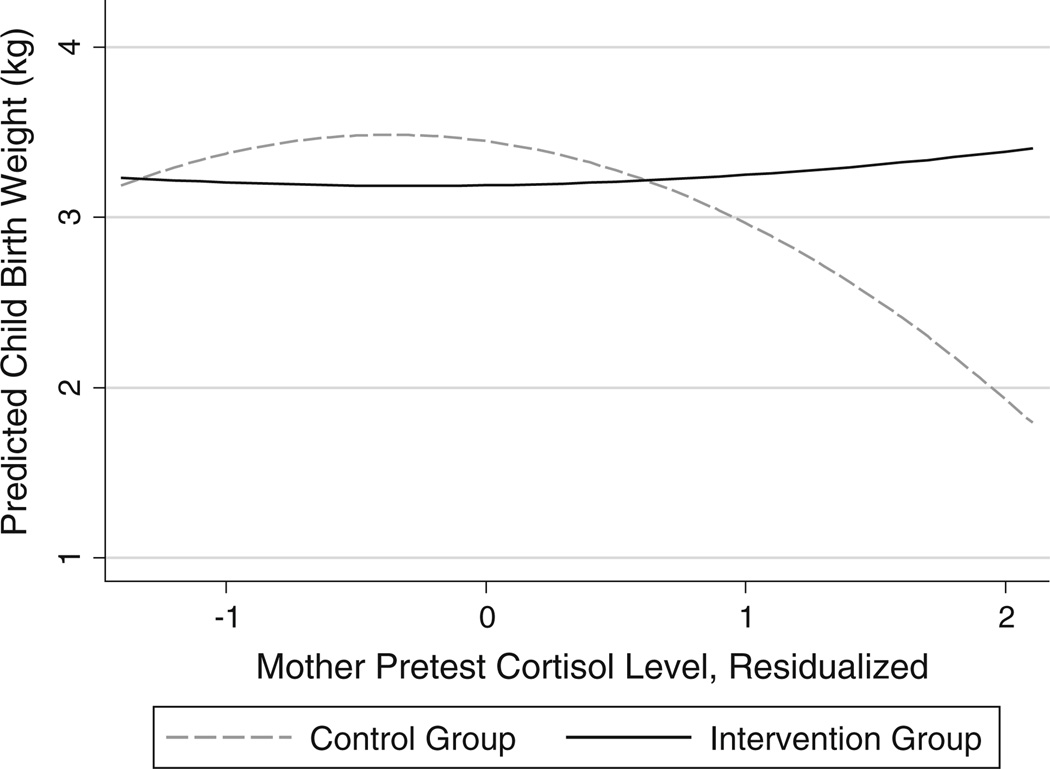
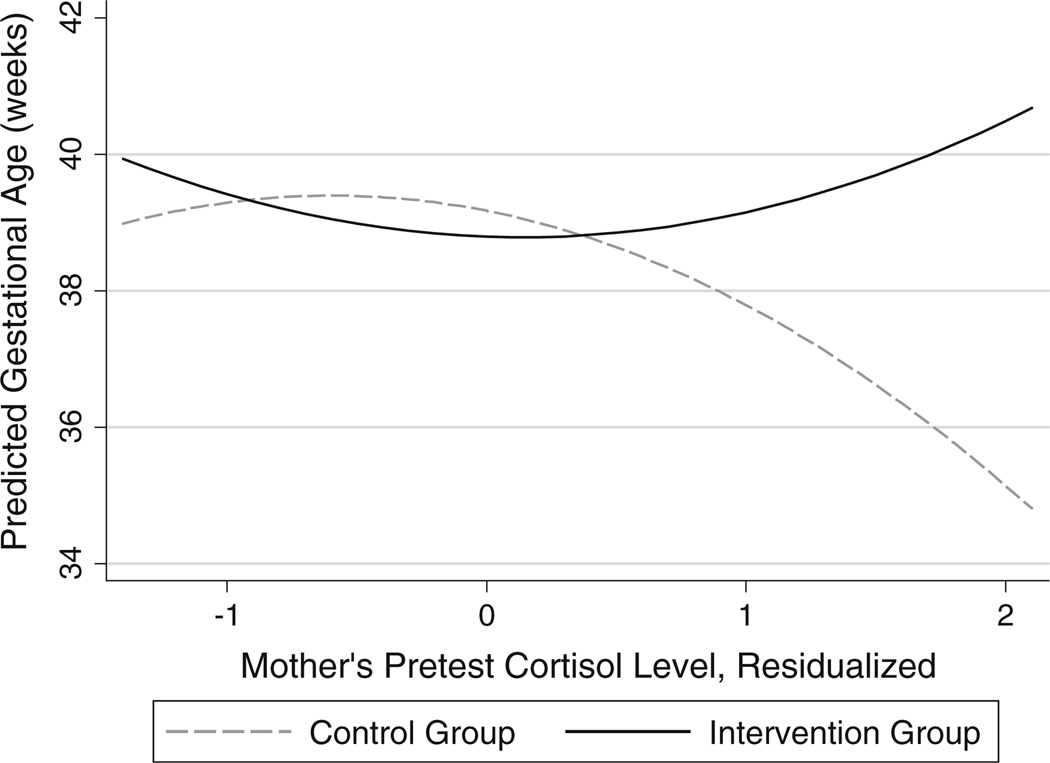
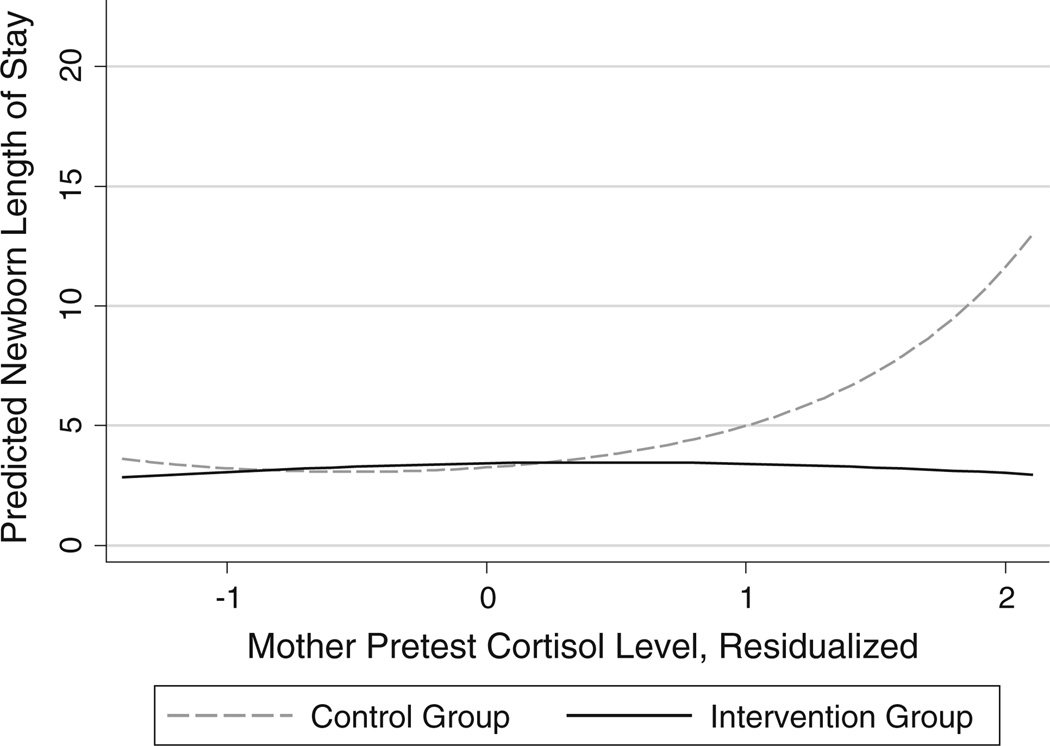
Although maternal stress and depression have been linked to adverse birth outcomes (ABOs), few studies have investigated preventive interventions targeting maternal mental health as a means of reducing ABOs. This randomized controlled study examines the impact of Family Foundations (FF)-a transition to parenthood program for couples focused on promoting coparenting quality, with previously documented impact on maternal stress and depression-on ABOs. We also examine whether intervention buffers birth outcomes from the negative effect of elevated salivary cortisol levels. We use intent-to-treat analyses to assess the main effects of the FF intervention on ABOs (prematurity, birth weight, pregnancy complications, Cesarean section, and days in hospital for mothers and infants) among 148 expectant mothers. We also test the interaction of cortisol with intervention condition status in predicting ABOs. FF participation was associated with reduced risk of C-section (OR .357, p < 0.05, 95 % CI 0.149, 0.862), but did not have main effects on other ABOs. FF significantly buffered (p < 0.05) the negative impact of maternal cortisol on birth weight, gestational age, and days in hospital for infants; that is, among women with relatively higher levels of prenatal cortisol, the intervention reduced ABOs. These results demonstrate that a psycho-educational program for couples reduces incidence of ABOs among higher risk women. Future work should test whether reduced maternal stress and depression mediate these intervention effects.
Figures
References
-
- Blencowe H, Cousens S, Oestergaard M, et al. National, regional, and worldwide estimates of preterm birth rates in the year 2010 with time trends since 1990 for selected countries: A systematic analysis and implications. Lancet. 2012;379(9832):2162–2172. - PubMed
-
- Clements K, Barfield W, Ayadi M, et al. Preterm birth-associated cost of early intervention services: An analysis by gestational age. Pediatrics. 2007;119(4):866–874. - PubMed
-
- St John E, Nelson K, Cliver S, et al. Cost of neonatal care according to gestational age at birth and survival status. American Journal of Obstetrics and Gynecology. 2000;182(pt1):170–175. - PubMed
-
- Bhutta AT, Cleves MA, Casey PH, et al. Cognitive and behavioral outcomes of school-aged children who were born preterm. JAMA. 2002;288(6):728–737. - PubMed
Publication types
MeSH terms
Substances
Grants and funding
LinkOut - more resources
Full Text Sources
Other Literature Sources
Medical
