


GABA, resting-state connectivity and the developing brain
- PMID: 24970028
- PMCID: PMC4134402
- DOI: 10.1159/000362433
GABA, resting-state connectivity and the developing brain
Abstract
Background: Preclinical data demonstrate that gamma-aminobutyric acid (GABA) interneurons initiate connectivity in the developing brain.
Objectives: The goal of this study was to compare GABA concentration and its relationship to functional connectivity in the brains of term and preterm infants at term-equivalent age.
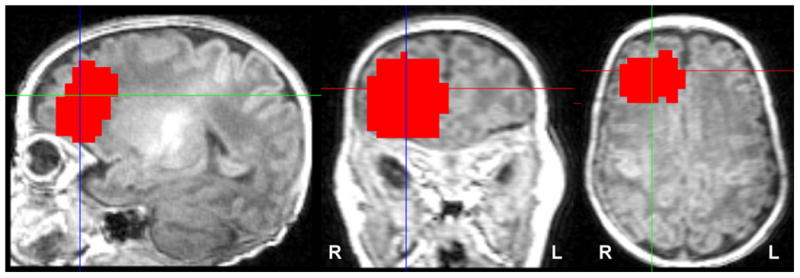
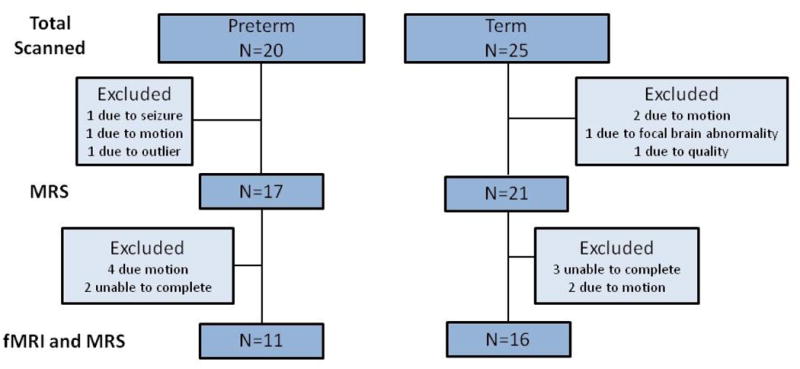
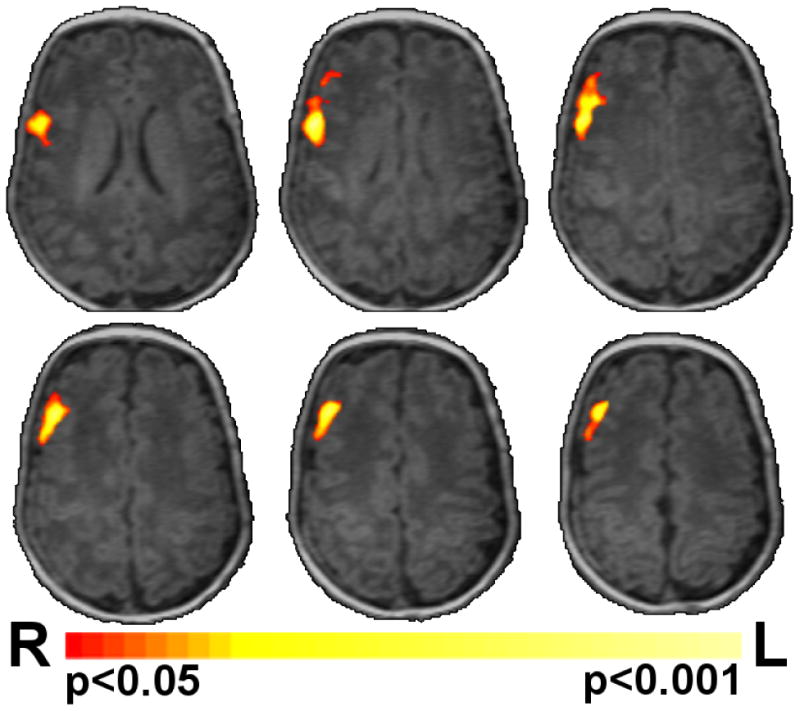
Methods: Infants received both magnetic resonance spectroscopy (MRS) and functional magnetic resonance imaging (fMRI) scans at term-equivalent age. Whole brain functional connectivity MRI data using intrinsic connectivity distribution maps were compared to identify areas with differences in resting-state functional connectivity between the preterm and term control groups. MRS measured concentrations of GABA, glutamate, N-acetyl-aspartate (NAA) and choline; NAA/choline was then calculated for comparison between the 2 groups.
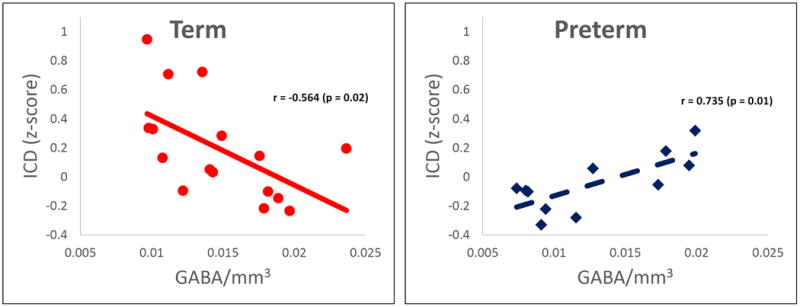
Results: Preterm infants had lower right frontal GABA and glutamate concentrations than term controls and showed a significantly different relationship between connectivity and GABA concentration in the right frontal lobe. Preterm infants had a positive correlation between GABA concentration and connectivity, while term controls demonstrated a negative correlation between these two developmentally regulated parameters.
Conclusion: These results suggest that regional GABA concentrations are associated with normal and altered neonatal resting-state connectivity.
© 2014 S. Karger AG, Basel.
Figures
References
Publication types
MeSH terms
Substances
Grants and funding
LinkOut - more resources
Full Text Sources
Other Literature Sources
Medical
