Review
. 2014 Dec;162(2 Pt A):54-61.
doi: 10.1016/j.imlet.2014.05.014. Epub 2014 Jun 24.

Fusobacterium and Enterobacteriaceae: important players for CRC?

Affiliations
Review

Fusobacterium and Enterobacteriaceae: important players for CRC?

Emma Allen-Vercoe et al. Immunol Lett. 2014 Dec.

Abstract

The gut microbiota plays an essential role in regulating intestinal homeostasis through its capacity to modulate various biological activities ranging from barrier, immunity and metabolic function. Not surprisingly, microbial dysbiosis is associated with numerous intestinal disorders including inflammatory bowel diseases (IBD) and colorectal cancer (CRC). In this piece, we will review recent evidence that gut microbial dysbiosis can influence intestinal disease, including colitis and CRC. We will discuss the biological events implicated in the development of microbial dysbiosis and the emergence of CRC-associated microorganisms, focusing on Escherichia coli and Fusobacterium nucleatum. Finally, the mechanisms by which E. coli and F. nucleatum exert potentially carcinogenic effects on the host will be reviewed.

Keywords: Cancer; Inflammation; Intestine; Microbiome.


Figures

Figure 1
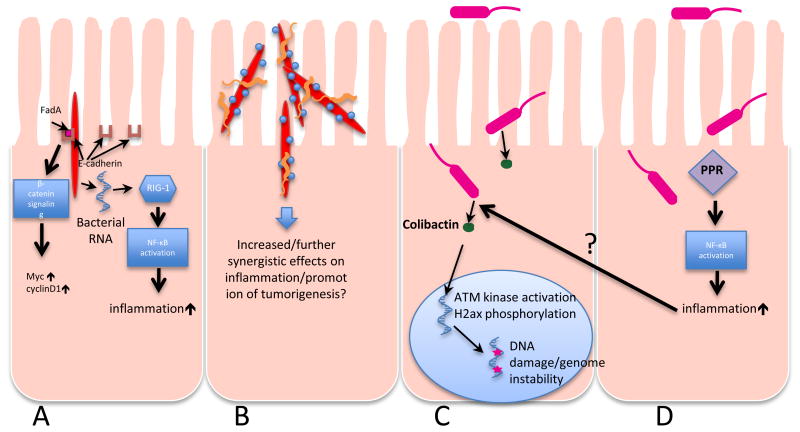
Figure 1. Schematic overview of the mechanisms by which E.coli and F. nucleatum can promote carcinogenesis
A: F.nucleatum (red) is an invasive organism that utilizes a surface adhesin, FadA, to gain entry to host cells. FadA binds to E-cadherin on the epithelial cell surface and activates β-catenin signaling pathways that can in turn up-regulate oncogene expression. As an invasive organism that can survive inside host cells, F.nucleatum is also capable of releasing RNA into the host cell cytoplasm that is detected by cytosolic RIG-1, triggering NF-kB activation and upregulation of inflammation. B: F.nucleatum is notable for its aggregation with other, unrelated microbes, in particular Streptococcus (blue) and Campylobacter (orange) spp., either of which may have pro-inflammatory activity themselves. F.nucleatum can also shuttle otherwise non-invasive bacteria into the host cell cytoplasm. There is thus great potential for synergism in mixed species associations with F.nucleatum as a foundation. C: AIEC E.coli producing genotoxins such as colibactin cause damage to double-stranded DNA which can lead to neoplastic transformation. D: AIEC induce an inflammatory response through various pattern recognition receptors (PRRs), a process that enhances neoplastic progression, possibly by regulating host and microbial gene expression.
Figure 2
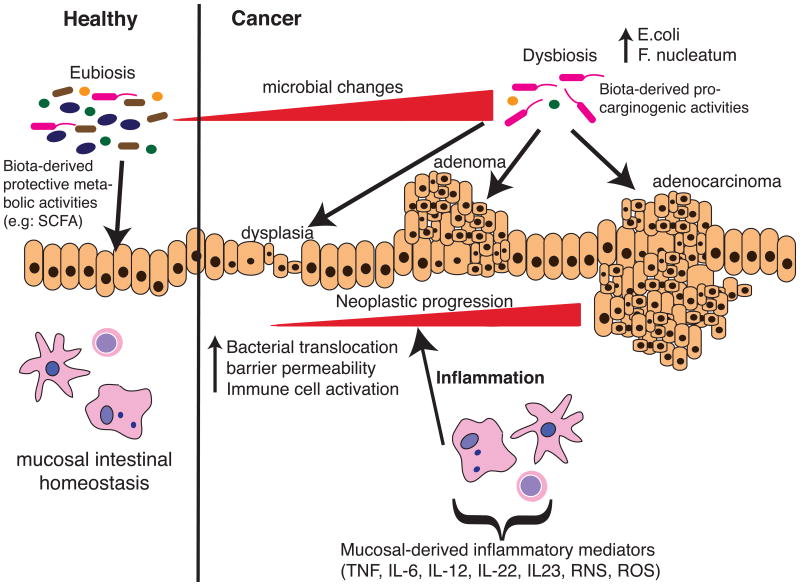
Figure 2. Schematic overview of the interplay between the microbiota and the host on tumorigenesis
At healthy state, the intestinal microbiota stands at an eubiosis stage, a phase which contributes to the maintenance of intestinal homeostasis through production of various metabolites and bacterial products (e.g SCFA), which promote immune balance. Various environmental factors such as diet, inflammation, stress or host genetics influence microbial composition and cause microbial dysbiosis (e.g increase abundance of AIEC and fusobacteria). This cancer-promoting biota may favour neoplastic progression through various carcinogenic activities (toxins, metabolites), which ultimately affect epithelial cell DNA integrity and cellular transformation. In conjunction with these changes, epithelial barrier integrity is compromised, further enhancing bacterial uptake and activation of mucosal immune cells (releases of inflammatory mediators), thereby contributing to neoplastic progression.

References

    1. Wang T, Cai G, Qiu Y, Fei N, Zhang M, Pang X, et al. Structural segregation of gut microbiota between colorectal cancer patients and healthy volunteers. Isme J. 2011;6:320–9. - PMC - PubMed
    1. Jobin C. Colorectal Cancer: Looking for Answers in the Microbiota. Cancer Discov. 2013;3:384–7. - PMC - PubMed
    1. Sobhani I, Tap J, Roudot-Thoraval F, Roperch JP, Letulle S, Langella P, et al. Microbial dysbiosis in colorectal cancer (CRC) patients. PLoS One. 2011;6:e16393. - PMC - PubMed
    1. Schwabe RF, jobin C. The microbiome and cancer. Nature Reviews. 2013;13:800–12. - PMC - PubMed
    1. Sears CL, Garrett WS. Microbes, Microbiota, and Colon Cancer. Cell Host and Microbe. 2014;15:317–28. - PMC - PubMed

MeSH terms