


Ragweed (Ambrosia artemisiifolia) pollen allergenicity: SuperSAGE transcriptomic analysis upon elevated CO2 and drought stress
- PMID: 24972689
- PMCID: PMC4084800
- DOI: 10.1186/1471-2229-14-176
Ragweed (Ambrosia artemisiifolia) pollen allergenicity: SuperSAGE transcriptomic analysis upon elevated CO2 and drought stress
Abstract
Background: Pollen of common ragweed (Ambrosia artemisiifolia) is a main cause of allergic diseases in Northern America. The weed has recently become spreading as a neophyte in Europe, while climate change may also affect the growth of the plant and additionally may also influence pollen allergenicity. To gain better insight in the molecular mechanisms in the development of ragweed pollen and its allergenic proteins under global change scenarios, we generated SuperSAGE libraries to identify differentially expressed transcripts.
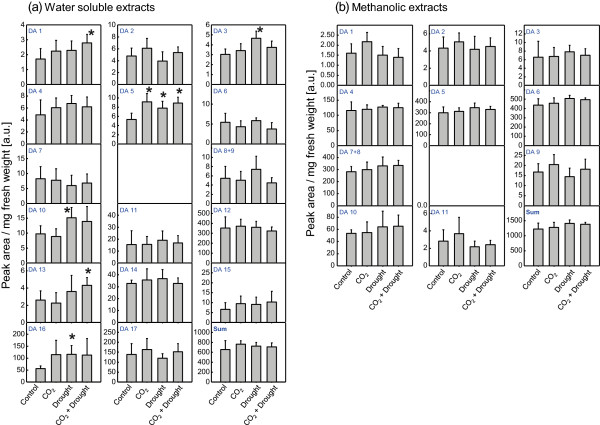
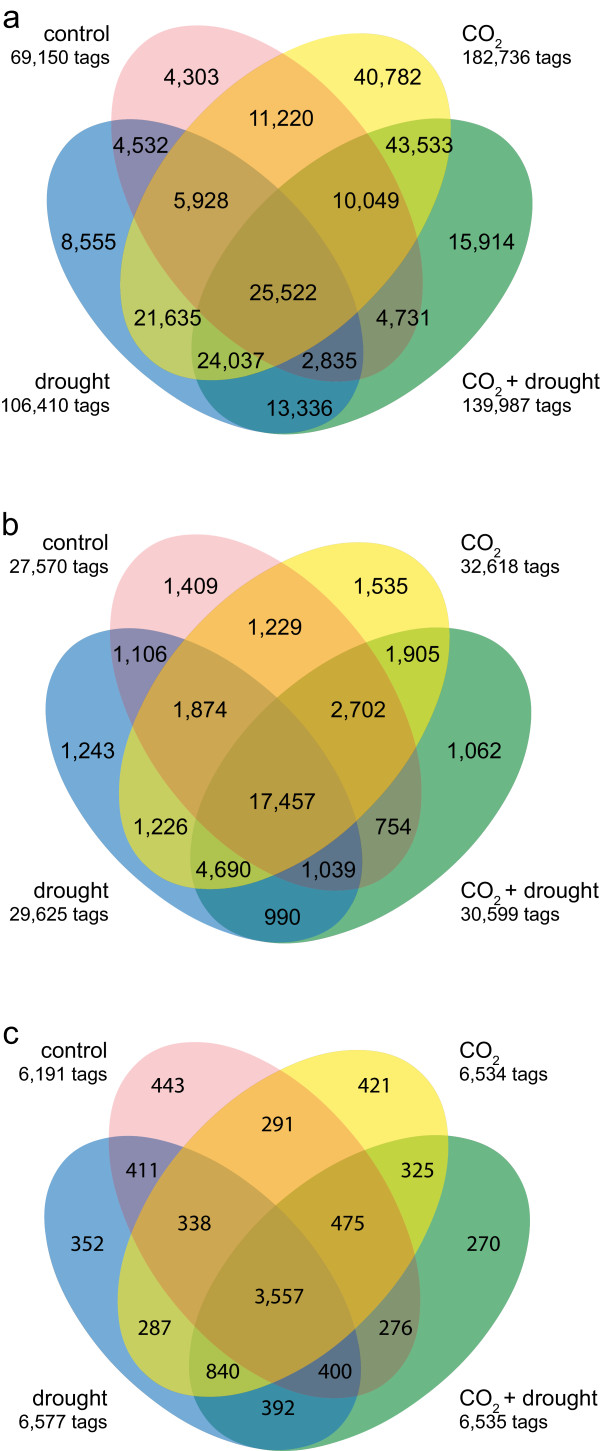
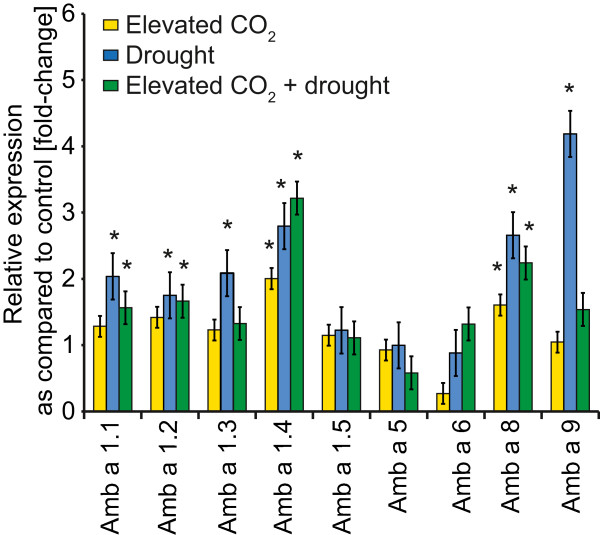
Results: Ragweed plants were grown in a greenhouse under 380 ppm CO2 and under elevated level of CO2 (700 ppm). In addition, drought experiments under both CO2 concentrations were performed. The pollen viability was not altered under elevated CO2, whereas drought stress decreased its viability. Increased levels of individual flavonoid metabolites were found under elevated CO2 and/or drought. Total RNA was isolated from ragweed pollen, exposed to the four mentioned scenarios and four SuperSAGE libraries were constructed. The library dataset included 236,942 unique sequences, showing overlapping as well as clear differently expressed sequence tags (ESTs). The analysis targeted ESTs known in Ambrosia, as well as in pollen of other plants. Among the identified ESTs, those encoding allergenic ragweed proteins (Amb a) increased under elevated CO2 and drought stress. In addition, ESTs encoding allergenic proteins in other plants were also identified.
Conclusions: The analysis of changes in the transcriptome of ragweed pollen upon CO2 and drought stress using SuperSAGE indicates that under global change scenarios the pollen transcriptome was altered, and impacts the allergenic potential of ragweed pollen.
Figures
References
-
- Gadermaier G, Wopfner N, Wallner M, Egger M, Didierlaurent A, Regl G, Aberger F, Lang R, Ferreira F, Hawranek T. Array-based profiling of ragweed and mugwort pollen allergens. Allergy. 2008;63:1543–1549. - PubMed
-
- Ziska L, Knowlton K, Rogers C, Dalan D, Tierney N, Elder MA, Filley W, Shropshire J, Ford LB, Hedberg C, Fleetwood P, Hovanky KT, Kavanaugh T, Fulford G, Vrtis RF, Patz JA, Portnoy J, Coates F, Bielory L, Frenz D. Recent warming by latitude associated with increased length of ragweed pollen season in central North America. Proc Natl Acad Sci U S A. 2011;108:4248–4251. - PMC - PubMed
-
- Wopfner N, Gadermaier G, Egger M, Asero R, Ebner C, Jahn-Schmid B, Ferreira F. The spectrum of allergens in ragweed and mugwort pollen. Int Arch Allergy Immunol. 2005;138:337–346. - PubMed
-
- Alberternst B, Nawrath S, Klingenstein F. Biology, distribution and pathways of introduction of Ambrosia artemisiifolia in Germany and assessment from a nature conservation point of view. Nachrichtenblatt des Deutschen Pflanzenschutzdienstes. 2006;58:279–285.
-
- D'Amato G, Spieksma FTM, Liccardi G, Jäger S, Russo M, Kontou-Fili K, Nikkels H, Wüthrich B, Bonini S. Pollen-related allergy in Europe. Allergy. 1998;53:567–578. - PubMed
Publication types
MeSH terms
Substances
LinkOut - more resources
Full Text Sources
Other Literature Sources
