Zebrafish models in translational research: tipping the scales toward advancements in human health
- PMID: 24973743
- PMCID: PMC4073263
- DOI: 10.1242/dmm.015545
Zebrafish models in translational research: tipping the scales toward advancements in human health
Abstract
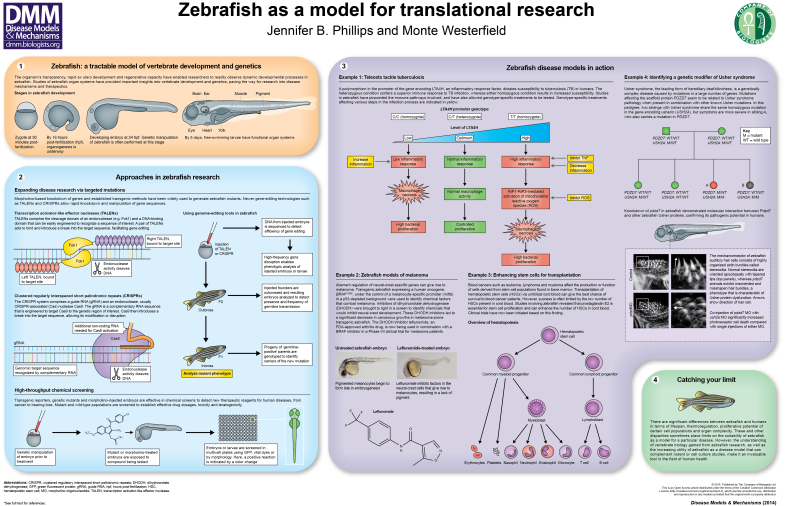
Advances in genomics and next-generation sequencing have provided clinical researchers with unprecedented opportunities to understand the molecular basis of human genetic disorders. This abundance of information places new requirements on traditional disease models, which have the potential to be used to confirm newly identified pathogenic mutations and test the efficacy of emerging therapies. The unique attributes of zebrafish are being increasingly leveraged to create functional disease models, facilitate drug discovery, and provide critical scientific bases for the development of new clinical tools for the diagnosis and treatment of human disease. In this short review and the accompanying poster, we highlight a few illustrative examples of the applications of the zebrafish model to the study of human health and disease.
Keywords: Cancer; Individualized medicine; Muscular dystrophy; Tuberculosis; Usher syndrome.
© 2014. Published by The Company of Biologists Ltd.
References
-
- Austin-Tse C., Halbritter J., Zariwala M. A., Gilberti R. M., Gee H. Y., Hellman N., Pathak N., Liu Y., Panizzi J. R., Patel-King R. S., et al. (2013). Zebrafish ciliopathy screen plus human mutational analysis identifies C21orf59 and CCDC65 defects as causing primary ciliary dyskinesia. Am. J. Hum. Genet. 93, 672–686 - PMC - PubMed
Publication types
MeSH terms
Grants and funding
LinkOut - more resources
Full Text Sources
Other Literature Sources