Review
. 2014:123:77-94.
doi: 10.1016/B978-0-12-420138-5.00005-7.

Fluorescence live cell imaging

Affiliations
Review

Fluorescence live cell imaging

Andreas Ettinger et al. Methods Cell Biol. 2014.

Abstract

Fluorescence microscopy of live cells has become an integral part of modern cell biology. Fluorescent protein (FP) tags, live cell dyes, and other methods to fluorescently label proteins of interest provide a range of tools to investigate virtually any cellular process under the microscope. The two main experimental challenges in collecting meaningful live cell microscopy data are to minimize photodamage while retaining a useful signal-to-noise ratio and to provide a suitable environment for cells or tissues to replicate physiological cell dynamics. This chapter aims to give a general overview on microscope design choices critical for fluorescence live cell imaging that apply to most fluorescence microscopy modalities and on environmental control with a focus on mammalian tissue culture cells. In addition, we provide guidance on how to design and evaluate FP constructs by spinning disk confocal microscopy.

Keywords: Environmental control; Fluorescence microscopy; Fluorescent proteins; Live cell microscopy; Photobleaching; Spinning disk confocal microscopy.


Figures

Figure 1
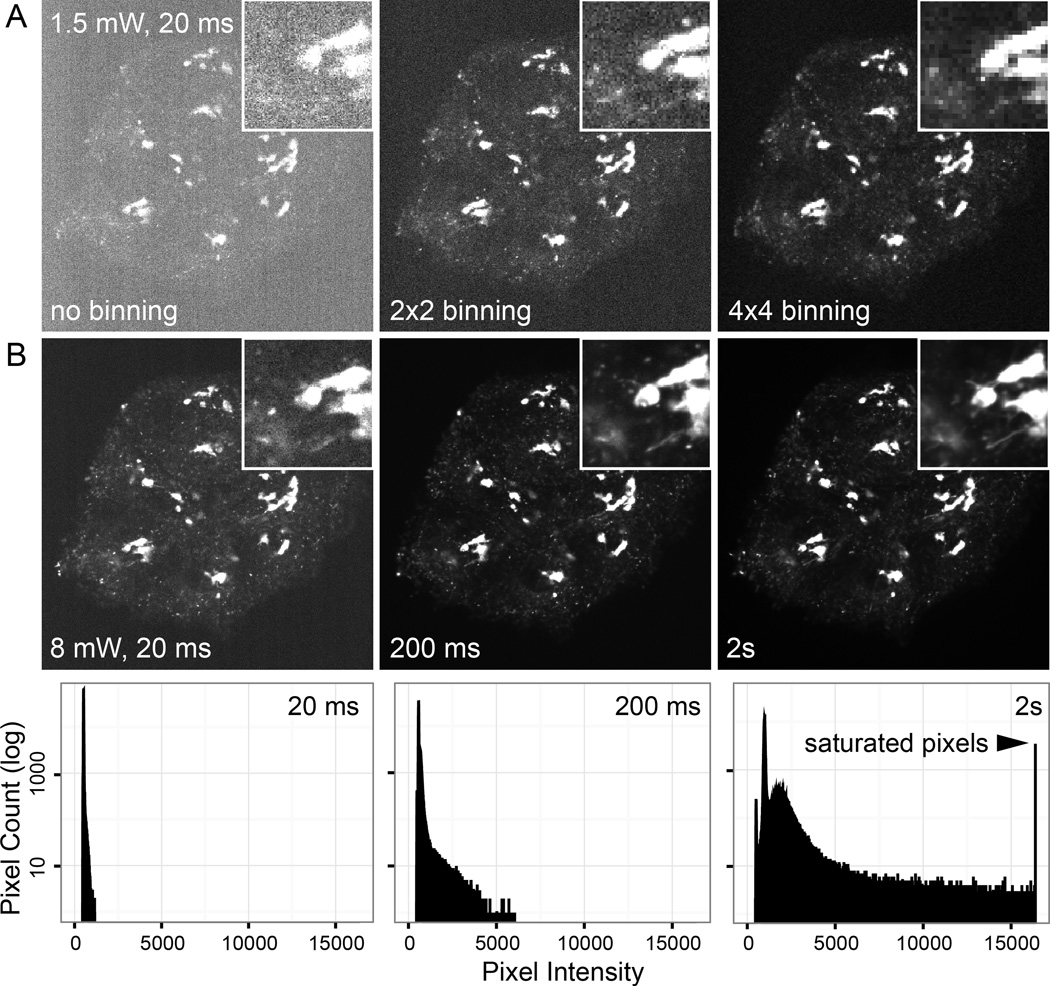
Figure 1. Dependence of signal-to-noise on effective pixel size and exposure
Spinning disk confocal images of HaCaT cells expressing EGFP-Rab6A that localizes to the Golgi apparatus and intracellular vesicles acquired with 488 nm excitation and a 525/50 nm bandpass emission filter using a Nikon 60× CFI Apo TIRF N.A. 1.49 oil immersion objective. (A) Images acquired with different camera binning, but otherwise identical exposure settings (~1.5 mW light power at the objective; 20 ms exposure time). Although binning drastically increases signal-to-noise, it also decreases resolution. (B) Images with no binning at ~8 mW light power acquired at different exposure times. The graphs below show corresponding histograms of pixel intensities. At sufficient signal-to-noise ratio (somewhere between 20 and 200 ms; magnified insets) details such as EGFP-Rab6 tubules become visible representing optimal image settings for this sample. Longer exposure times (2 s) result in unnecessary photobleaching, blurring of fast moving vesicles without a significant increase in signal-to-noise, and camera saturation.
Figure 2
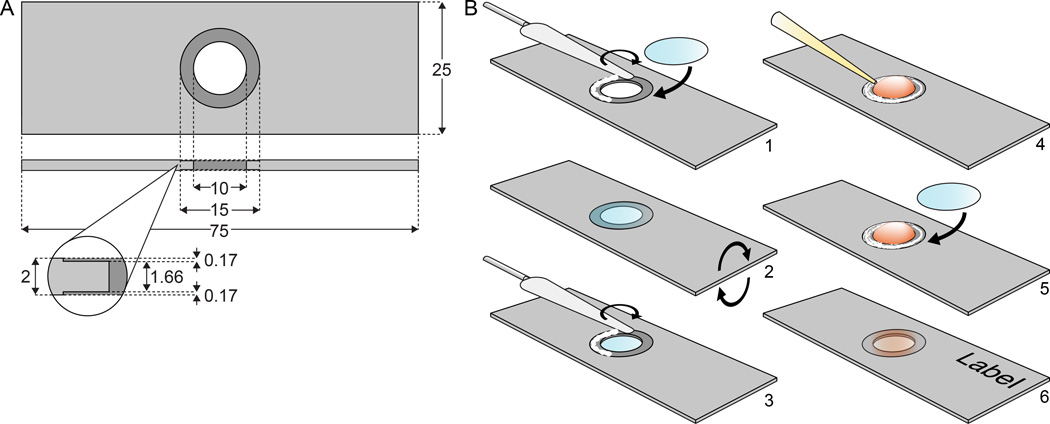
Figure 2. Diagram of reusable aluminum slides
(A) Example dimensions for a slide made to fit 15 mm round coverslips. All dimensions are in mm, and can be adapted to fit different microscope stages. (B) Assembly of metal slides: A bead of silicon grease is distributed on one side of the slide with a small spatula and a clean cover slip is attached (1); after turning the slide (2), a thin layer of silicon grease is likewise spread on the other side (3), a drop of cell culture medium is added (4) and a cover glass with cells is mounted with the cells facing inside (5). Before imaging, the outside of the coverslip needs to be cleaned thoroughly to avoid contamination of the immersion oil.
Figure 3
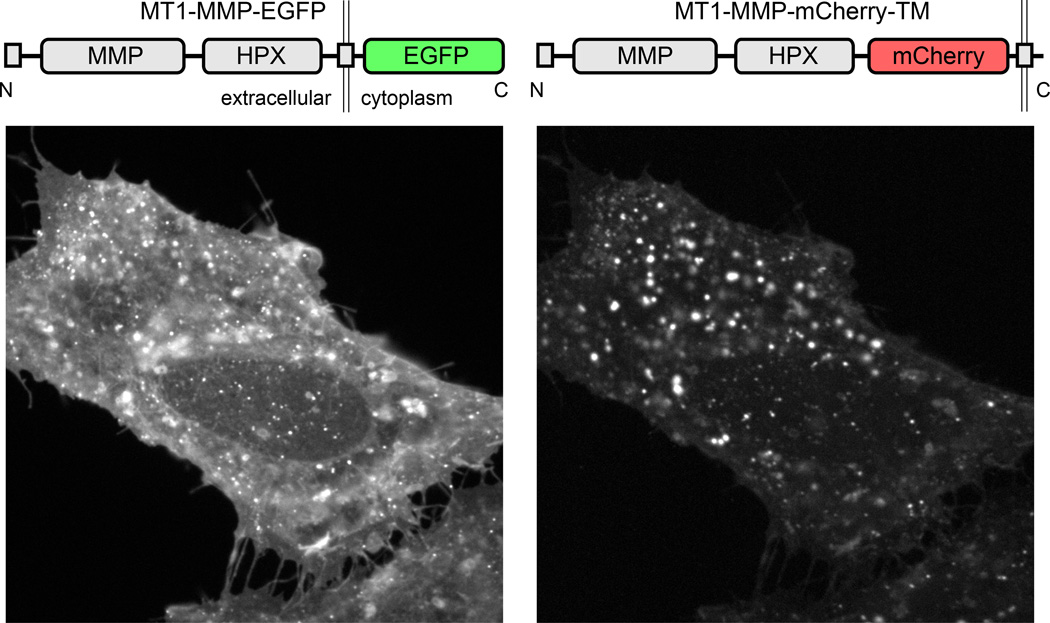
Figure 3. Influence of tagging strategy on the apparent localization of FP-tagged MT1-MMP
HeLa cells were co-transfected with the constructs indicated. The two constructs localize to mostly distinct intracellular compartments.
Figure 4
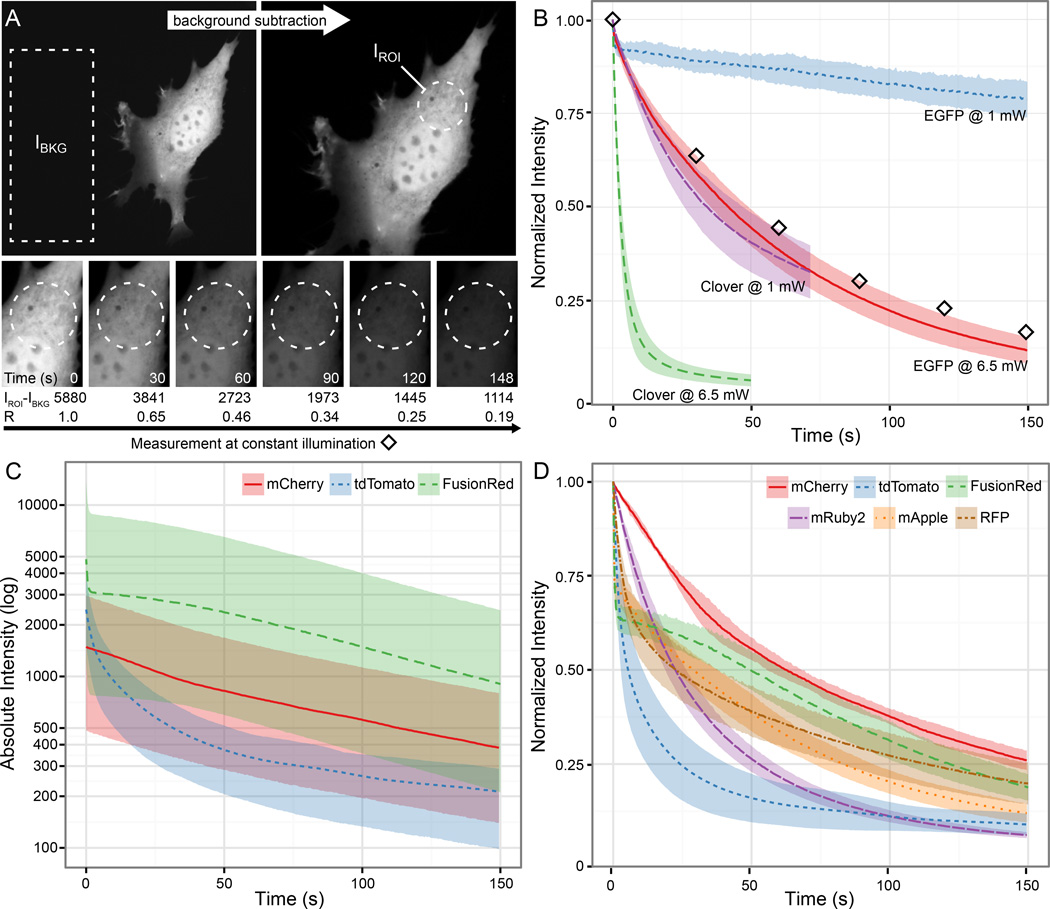
Figure 4. FP photobleaching characterization on a spinning disk confocal microscope
(A) Example time-lapse sequence of an EGFP-expressing cell illustrating calculation of normalized photobleaching curves. See text for details. (B) Normalized photobleaching curves for Clover and EGFP with continuous 488 nm excitation at two different light power settings. Diamonds correspond to panels and values in (A). (C) Absolute background-corrected fluorescence intensities measured for three different red FPs at the same ~8 mW 561 nm excitation, illustrating the large variation of absolute intensities in different cells, which is likely due to different expression levels. (D) Normalized photobleaching curves showing widely different photobleaching kinetics for five different red FPs. The normalized curves for mCherry, tdTomato and FusionRed photobleaching correspond to the absolute intensities shown in (C). Solid and dotted lines in (B–D) represent mean values of five cells. Shaded areas in (B) and (D) are 95 % confidence intervals; shaded areas in (C) represent the range of measurements.

References

    1. Attardo A, Calegari F, Haubensak W, Wilsch-Brauninger M, Huttner WB. Live imaging at the onset of cortical neurogenesis reveals differential appearance of the neuronal phenotype in apical versus basal progenitor progeny. PLoS. One. 2008;3:e2388. - PMC - PubMed
    1. Bogdanov AM, Bogdanova EA, Chudakov DM, Gorodnicheva TV, Lukyanov S, Lukyanov KA. Cell culture medium affects GFP photostability: a solution. Nat. Methods. 2009;6:859–860. - PubMed
    1. Gao L, Shao L, Higgins CD, Poulton JS, Peifer M, Davidson MW, et al. Noninvasive imaging beyond the diffraction limit of 3D dynamics in thickly fluorescent specimens. Cell. 2012;151:1370–1385. - PMC - PubMed
    1. Gierke S, Wittmann T. EB1-recruited microtubule +TIP complexes coordinate protrusion dynamics during 3D epithelial remodeling. Curr. Biol. 2012;22:753–762. - PMC - PubMed
    1. Haynes J, Srivastava J, Madson N, Wittmann T, Barber DL. Dynamic actin remodeling during epithelial-mesenchymal transition depends on increased moesin expression. Mol. Biol. Cell. 2011;22:4750–4764. - PMC - PubMed

Publication types

Substances