


HBeAg negative variants and their role in the natural history of chronic hepatitis B virus infection
- PMID: 24976702
- PMCID: PMC4069293
- DOI: 10.3748/wjg.v20.i24.7644
HBeAg negative variants and their role in the natural history of chronic hepatitis B virus infection
Abstract
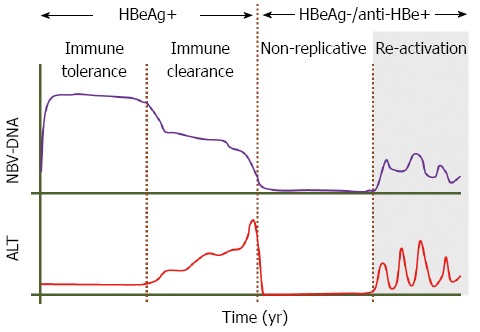
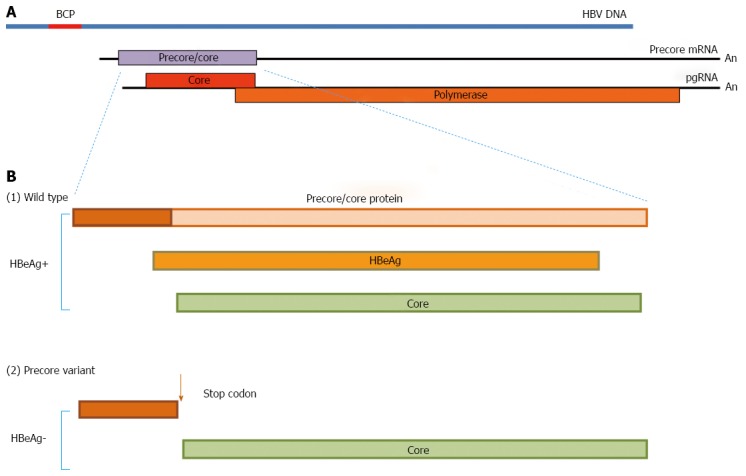
Molecular virology methods including polymerase chain reaction, cloning and sequencing have revolutionised our understanding of viral genome variation. In the case of hepatitis B virus (HBV), sequencing studies have identified a number of virus variants normally found during the natural course of chronic infection. The appearance of the precore stop codon (with G-for-A substitution at position 1896) and basal core promoter (BCP) (with A-for-T and G-for-A, at positions 1762 and 1764, respectively) variants which reduce or abrogate hepatitis B e antigen (HBeAg) production, heralds the initiation of the seroconversion phase from HBeAg to anti-HBe positivity. The gradual removal of the tolerogenic effect of HBeAg leads to the awakening of the immune response (immune clearance phase). Most patients after HBeAg seroconversion become "inactive HBsAg carriers". However during the course of infection precore and/or BCP variants may emerge and be selected leading to HBeAg negative chronic hepatitis B (CHB) with high viremia levels (reactivation phase). The prevalence of HBeAg negative CHB has been increasing over the last few decades and has become the commonest type of HBV infection in many countries of the world. This probably reflects the aging of existing HBV carriers and the effective prevention measures restricting new HBV infections. Frequent acute exacerbations accompanied by high viral replication, elevated alanine aminotransferase levels and histological activity are a common feature of HBeAg negative CHB leading to cirrhosis much faster than in HBeAg positive CHB patients.
Keywords: Hepatitis B virus-DNA replication; Precore stop codon variants, basal core promoter variants; Re-activation; hepatitis B e antigen negative chronic hepatitis B.
Figures
References
-
- Lee WM. Hepatitis B virus infection. N Engl J Med. 1997;337:1733–1745. - PubMed
-
- Perz JF, Armstrong GL, Farrington LA, Hutin YJ, Bell BP. The contributions of hepatitis B virus and hepatitis C virus infections to cirrhosis and primary liver cancer worldwide. J Hepatol. 2006;45:529–538. - PubMed
-
- Coursaget P, Yvonnet B, Chotard J, Vincelot P, Sarr M, Diouf C, Chiron JP, Diop-Mar I. Age- and sex-related study of hepatitis B virus chronic carrier state in infants from an endemic area (Senegal) J Med Virol. 1987;22:1–5. - PubMed
-
- McMahon BJ, Alward WL, Hall DB, Heyward WL, Bender TR, Francis DP, Maynard JE. Acute hepatitis B virus infection: relation of age to the clinical expression of disease and subsequent development of the carrier state. J Infect Dis. 1985;151:599–603. - PubMed
Publication types
MeSH terms
Substances
LinkOut - more resources
Full Text Sources
Other Literature Sources
