Hypericum Perforatum Decreased Hippocampus TNF-α and Corticosterone Levels with No Effect on Kynurenine/Tryptophan Ratio in Bilateral Ovariectomized Rats
- PMID: 24976763
- PMCID: PMC4071176
- DOI: 10.4196/kjpp.2014.18.3.233
Hypericum Perforatum Decreased Hippocampus TNF-α and Corticosterone Levels with No Effect on Kynurenine/Tryptophan Ratio in Bilateral Ovariectomized Rats
Abstract
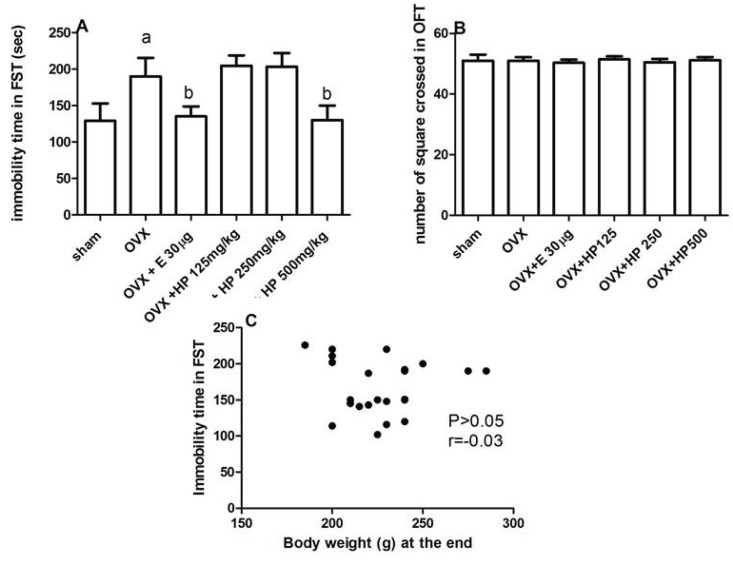
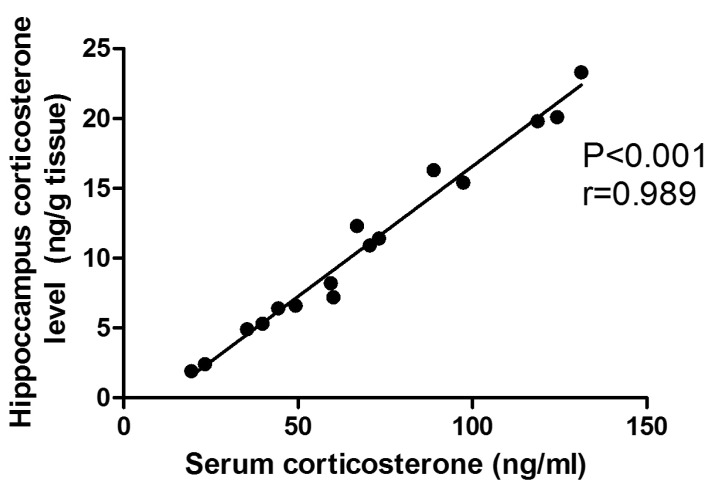
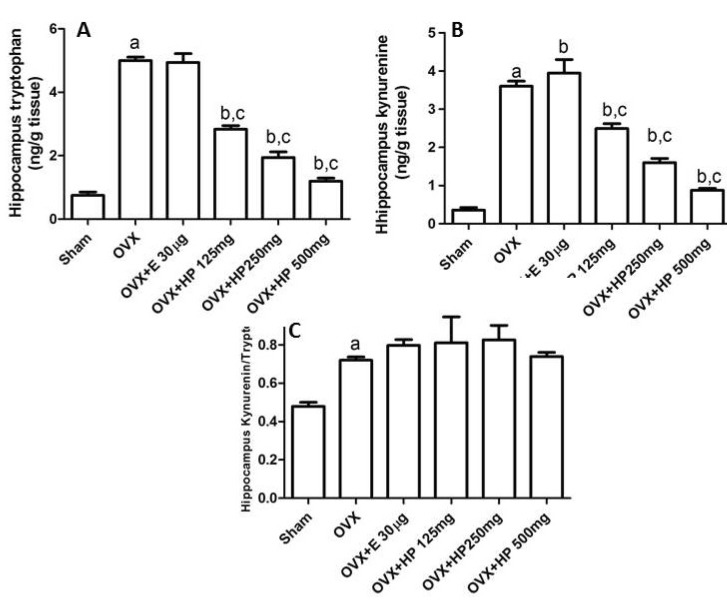
The present study was designed to investigate the effect Hypericum Perforatum (HP), on behavioral changes, corticosterone, TNF-α levels and tryptophan metabolism and disposition in bilateral ovariectomized rats compared to 17α -ethinylestradiol. Behavioral analysis by measuring immobility time in forced swimming test and open field test, serum and hippocampal corticosterone and TNF-α along with hippocampal kynurenine/tryptophan ratio were determined in mature ovariectomized rats treated orally either by HP at three different doses 125, 250, and 500 mg/kg/day or by 17α-ethinylestradiol 30 µg/kg/day for 30 days. Ovariectomized rats showed significant increase in immobility time in the forced swimming test. Along with elevation in serum and hippocampal TNF-α and corticosterone levels associated with significant increase in hippocampal kynurenine/tryptophan ratio. Immobility time in the forced swimming test was decreased in rats treated by different doses of HP in a dose dependent manner and 17α-ethinylestradiol with no concomitant changes in the open field test. Only Rats treated with HP exhibited significant decrease in the elevated serum and hippocampal TNF-α and corticosterone, which couldn't explain the associated insignificant effect on hippocampaus kynurenine/tryptophan ratio in comparison to ovariectomized untreated rats. It is concluded that increased tryptophan metabolism toward kynurenine secondary to elevated corticosterone and TNF-α might be one of the pathohphysiological mechanisms that could explain depression like state observed in this rat model. Further, the observed attenuating effect of HP on TNF-α and corticosterone could contribute in its antidepressant effect in this animal model by other ways than their effects on tryptophan-kynurenine metabolism pathway.
Keywords: Corticosterone; Hypericum perforatum; Kyninurenine; TNF-α; Tryptophan.
Figures
References
-
- Llaneza P, García-Portilla MP, Llaneza-Suárez D, Armott B, Pérez-López FR. Depressive disorders and the menopause transition. Maturitas. 2012;71:120–130. - PubMed
-
- Maes M, Smith R, Scharpe S. The monocyte-T-lymphocyte hypothesis of major depression. Psychoneuroendocrinology. 1995;20:111–116. - PubMed
-
- Simen BB, Duman CH, Simen AA, Duman RS. TNFalpha signaling in depression and anxiety: behavioral consequences of individual receptor targeting. Biol Psychiatry. 2006;59:775–785. - PubMed
LinkOut - more resources
Full Text Sources
Other Literature Sources
Research Materials
Miscellaneous