


Can we rely on the multiplex ligation-dependent probe amplification method (MLPA) for prenatal diagnosis?
- PMID: 24976821
- PMCID: PMC4071631
Can we rely on the multiplex ligation-dependent probe amplification method (MLPA) for prenatal diagnosis?
Abstract
Background: The major aneuploidies that are diagnosed prenatally involve the autosomal chromosomes 13, 18, and 21, as well as sex chromosomes, X and Y. Because multiplex ligation-dependent probe amplification (MLPA) is rapid and non-invasive, it has replaced traditional culture methods for the screening and diagnosis of common aneuploidies in some countries.
Objective: To evaluate the sensitivity and specificity of MLPA in a cross-sectional descriptive study for the detection of chromosomal aneuploidies in comparison to other methods.
Materials and methods: Genomic DNA was extracted from the peripheral blood samples of 10 normal controls and the amniotic fluid of 55 patients. Aneuploidies screening of chromosomes 13, 18, 21, X and Y were carried out using specific MLPA probe mixes (P095-A2). For comparison purposes, samples were also tested by Quantitative Fluorescent-PCR (QF-PCR) and routine chromosomal culture method.
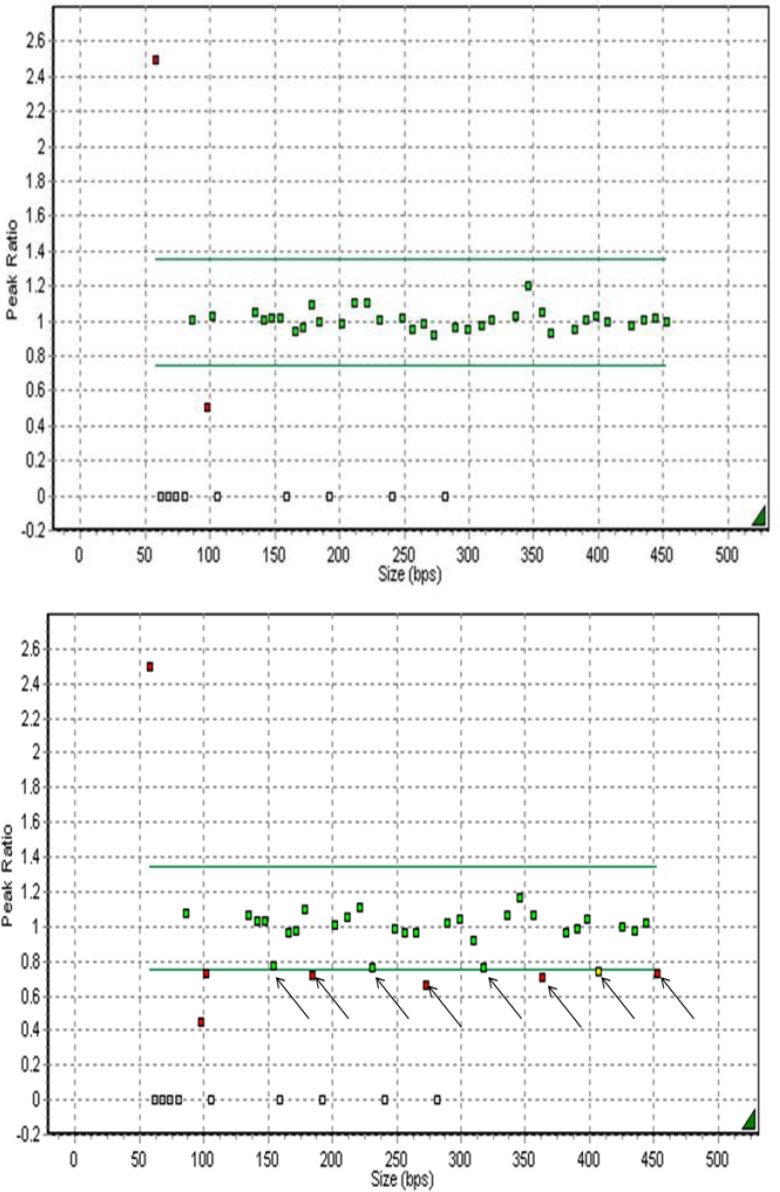
Results: Using this specific MLPA technique and data-analyzing software (Genemarker v1.85), one case was diagnosed with 45, X (e.g. Monosomy X or Turner's Syndrome), and the remaining 54 cases revealed normal karyotypes. These results were concordant with routine chromosomal culture and QF-PCR findings.
Conclusion: The experiment demonstrates that MLPA can provide a rapid and accurate clinical method for prenatal identification of common chromosomal aneuploidies with 100% sensitivity and 100% specificity.
Keywords: Common aneuploidies; MLPA; Prenatal screening.
Figures

References
-
- Yusuf RZ, Naeem R. Cytogenetic abnormalities in products of conception: a relationship revisited. Am J Reprod Immunol. 2004;52:88–96. - PubMed
-
- Hochstenbach R, Meijer J, van de Brug J, Vossebeld-Hoff I, Jansen R, van der Luijt RB, et al. Rapid detection of chromosomal aneuploidies in uncultured amniocytes by multiplex ligation-dependent probe amplification (MLPA) Prenat Diagn. 2005;25:1032–1039. - PubMed
-
- Nicolaides KH. Screening for chromosomal defects. Ultrasound Obstet Gynecol. 2003;21:313–321. - PubMed
-
- Boormans EM, Birnie E, Oepkes D, Galjaard RJ, Schuring-Blom GH, van Lith JM, et al. Comparison of multiplex ligation-dependent probe amplification and karyotyping in prenatal diagnosis. Obstet Gynecol. 2010;115:297–303. - PubMed
LinkOut - more resources
Full Text Sources