


Refeeding and metabolic syndromes: two sides of the same coin
- PMID: 24979149
- PMCID: PMC4079929
- DOI: 10.1038/nutd.2014.21
Refeeding and metabolic syndromes: two sides of the same coin
Abstract
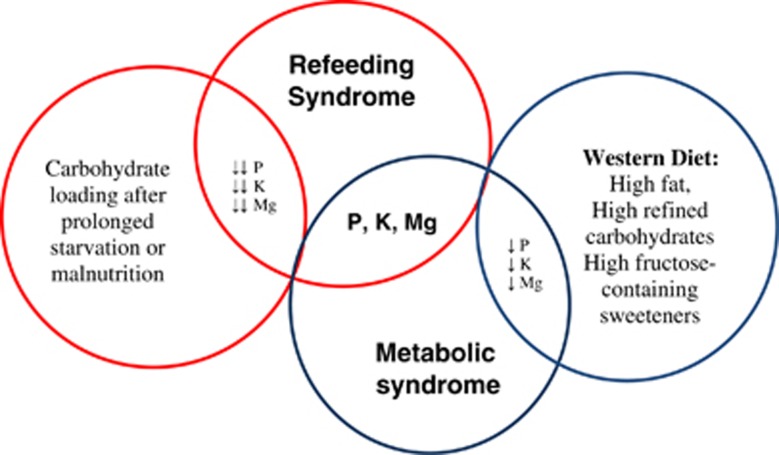
Refeeding syndrome describes the metabolic and clinical changes attributed to aggressive rehabilitation of malnourished subjects. The metabolic changes of refeeding are related to hypophosphatemia, hypokalemia, hypomagnesemia, sodium retention and hyperglycemia, and these are believed to be mainly the result of increased insulin secretion following high carbohydrate intake. In the past few decades, increased consumption of processed food (refined cereals, oils, sugar and sweeteners, and so on) lowered the intake of several macrominerals (mainly phosphorus, potassium and magnesium). This seems to have compromised the postprandial status of these macrominerals, in a manner that mimics low grade refeeding syndrome status. At the pathophysiological level, this condition favored the development of the different components of the metabolic syndrome. Thus, it is reasonable to postulate that metabolic syndrome is the result of long term exposure to a mild refeeding syndrome.
Figures
References
-
- Boateng AA, Sriram K, Meguid MM, Crook M. Refeeding syndrome: treatment considerations based on collective analysis of literature case reports. Nutrition. 2010;26:156–167. - PubMed
-
- Fuentebella J, Kerner JA. Refeeding syndrome. Pediatr Clin N Am. 2009;56:1201–1210. - PubMed
-
- National Heart Lung and Blood Institute. Third report of the National Cholesterol Education Program (NCEP) expert panel on detection, evaluation, and treatment of high blood cholesterol in adults (Adult Treatment Panel III). Final report. Circulation. 2002;106:3143–3421. - PubMed
LinkOut - more resources
Full Text Sources
Other Literature Sources
Miscellaneous
