


Volatile organic compound emissions from different stages of Cananga odorata flower development
- PMID: 24979401
- PMCID: PMC6270805
- DOI: 10.3390/molecules19078965
Volatile organic compound emissions from different stages of Cananga odorata flower development
Abstract
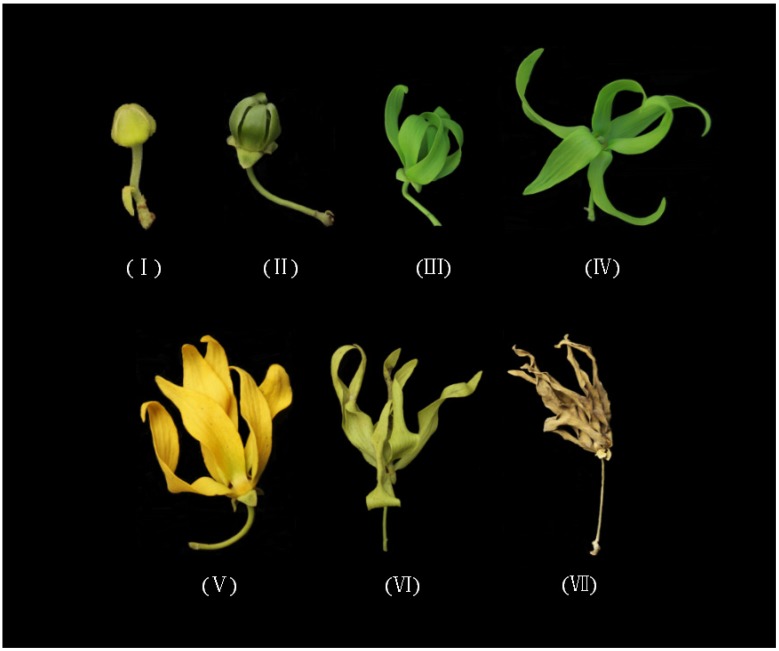
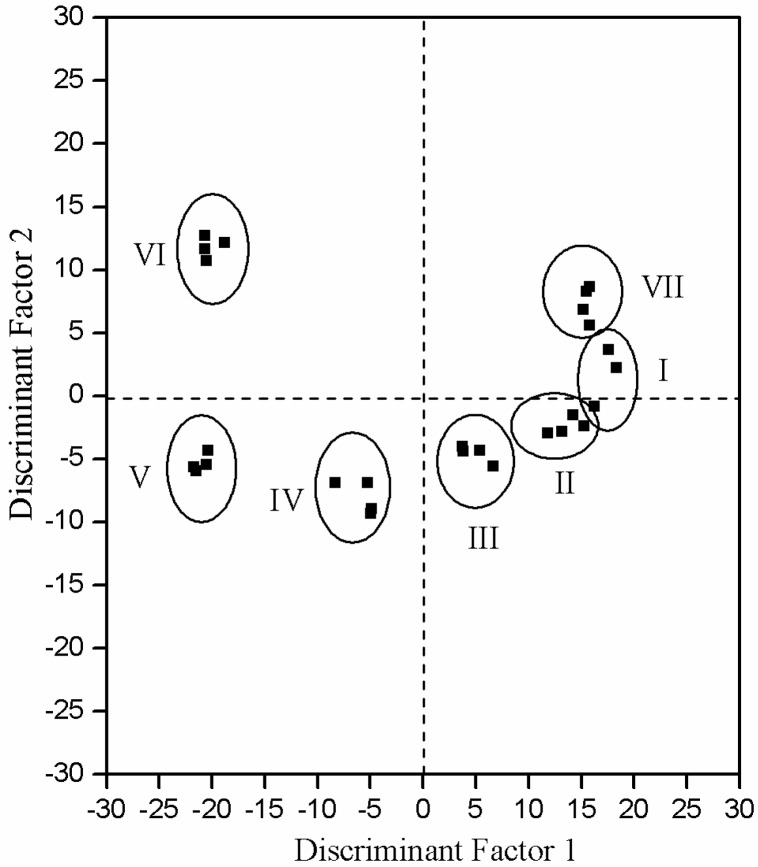
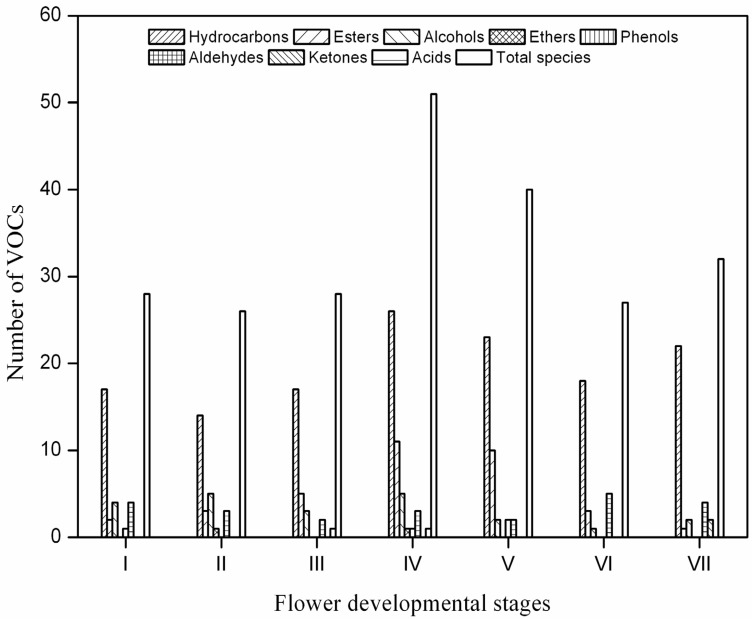
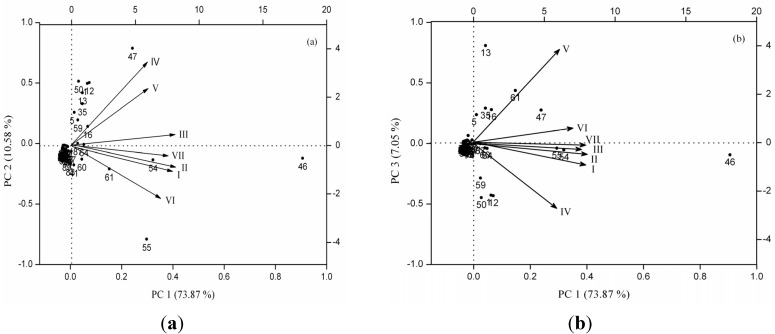
Headspace-solid phase microextraction-gas chromatography-mass spectrometry (HS-SPME-GC-MS) was used to identify the volatile organic compounds (VOCs) of the different flower development stages of Cananga odorata for the evaluation of floral volatile polymorphism as a basis to determine the best time of harvest. Electronic nose results, coupled with discriminant factor analysis, suggested that emitted odors varied in different C. odorata flower development stages, including the bud, display-petal, initial-flowering, full-flowering, end-flowering, wilted-flower, and dried flower stages. The first two discriminant factors explained 97.52% of total system variance. Ninety-two compounds were detected over the flower life, and the mean Bray-Curtis similarity value was 52.45% among different flower development stages. A high level of volatile polymorphism was observed during flower development. The VOCs were largely grouped as hydrocarbons, esters, alcohols, aldehydes, phenols, acids, ketones, and ethers, and the main compound was β-caryophyllene (15.05%-33.30%). Other identified compounds were β-cubebene, D-germacrene, benzyl benzoate, and α-cubebene. Moreover, large numbers of VOCs were detected at intermediate times of flower development, and more hydrocarbons, esters, and alcohols were identified in the full-flowering stage. The full-flowering stage may be the most suitable period for C. odorata flower harvest.
Conflict of interest statement
The authors declare no conflict of interest.
Figures
References
-
- Kristiawan M., Sobolik V., Allaf K. Isolation of Indonesian cananga oil using multi-cycle pressure drop process. J. Chromatogr. A. 2008;1192:306–318. - PubMed
-
- Benini C., Ringuet M., Wathelet J.P., Lognay G., du Jardin P., Fauconnier M.L. Variations in the essential oils from ylang-ylang (Cananga odorata [Lam.] Hook f. & Thomson forma genuina) in the Western Indian Ocean islands. Flavour Frag. J. 2012;27:356–366. doi: 10.1002/ffj.3106. - DOI
-
- Benini C., Danflous J.P., Wathelet J.P., du Jardin P., Fauconnier M.L. Ylang-ylang [Cananga odorata (Lam.) Hook. f. & Thomson]: An unknown essential oil plant in an endangered sector. Biotechnol. Agron. Soc. 2010;14:693–705.
Publication types
MeSH terms
Substances
LinkOut - more resources
Full Text Sources
Other Literature Sources
Miscellaneous
