Loss of ARID1A expression sensitizes cancer cells to PI3K- and AKT-inhibition
- PMID: 24979463
- PMCID: PMC4170604
- DOI: 10.18632/oncotarget.2092
Loss of ARID1A expression sensitizes cancer cells to PI3K- and AKT-inhibition
Abstract
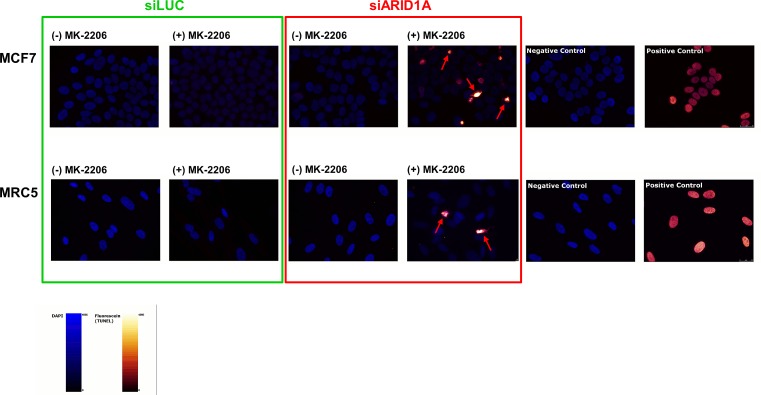
ARID1A mutations are observed in various tumors, including ovarian clear cell (OCCC) and endometrioid carcinomas, endometrial, and breast carcinomas. They commonly result in loss of ARID1A-protein expression and frequently co-occur with PI3K/AKT-pathway activating mechanisms. The aim of this study was to test the hypothesis as to whether PI3K/AKT-pathway activation is a critical mechanism in ARID1A-mutated tumors and if consequently ARID1A-deficient tumors show increased sensitivity to treatment with PI3K- and AKT-inhibitors. Upon ARID1A knockdown, MCF7 breast cancer cells and primary MRC5 cells exhibited a significantly increased sensitivity towards the AKT-inhibitors MK-2206 and perifosine, as well as the PI3K-inhibitor buparlisib. Knockdown of ARID1A in MCF7 led to an increase of pAKT-Ser473. AKT-inhibition with MK-2206 led to increased apoptosis and to a decrease of pS6K in ARID1A-depleted MCF7 cells but not in the controls. In five OCCC cell lines ARID1A-deficiency correlated with increased pAKT-Ser473 levels and with sensitivity towards treatment with the AKT-inhibitor MK-2206. In conclusion, ARID1A-deficient cancer cells demonstrate an increased sensitivity to treatment with small molecule inhibitors of the PI3K/AKT-pathway. These findings suggest a specific requirement of the PI3K/AKT pathway in ARID1A-deficient tumors and reveal a synthetic lethal interaction between loss of ARID1A expression and inhibition of the PI3K/AKT pathway.
Figures



References
-
- Wilson BG, Roberts CW. SWI/SNF nucleosome remodellers and cancer. Nat Rev Cancer. 2011;11(7):481–492. - PubMed
-
- Wiegand KC, Lee AF, Al-Agha OM, Chow C, Kalloger SE, Scott DW, Steidl C, Wiseman SM, Gascoyne RD, Gilks B, Huntsman DG. Loss of BAF250a (ARID1A) is frequent in high-grade endometrial carcinomas. J Pathol. 2011;224(3):328–333. - PubMed
Publication types
MeSH terms
Substances
LinkOut - more resources
Full Text Sources
Other Literature Sources
Molecular Biology Databases