


Treatment adherence and health outcomes in patients with bronchiectasis
- PMID: 24980161
- PMCID: PMC4090650
- DOI: 10.1186/1471-2466-14-107
Treatment adherence and health outcomes in patients with bronchiectasis
Abstract
Background: We aimed to determine adherence to inhaled antibiotics, other respiratory medicines and airway clearance and to determine the association between adherence to these treatments and health outcomes (pulmonary exacerbations, lung function and Quality of Life Questionnaire-Bronchiectasis [QOL-B]) in bronchiectasis after 12 months.
Methods: Patients with bronchiectasis prescribed inhaled antibiotics for Pseudomonas aeruginosa infection were recruited into a one-year study. Participants were categorised as "adherent" to medication (medication possession ratio ≥80% using prescription data) or airway clearance (score ≥80% in the Modified Self-Reported Medication-Taking Scale). Pulmonary exacerbations were defined as treatment with a new course of oral or intravenous antibiotics over the one-year study. Spirometry and QOL-B were completed at baseline and 12 months. Associations between adherence to treatment and pulmonary exacerbations, lung function and QOL-B were determined by regression analyses.
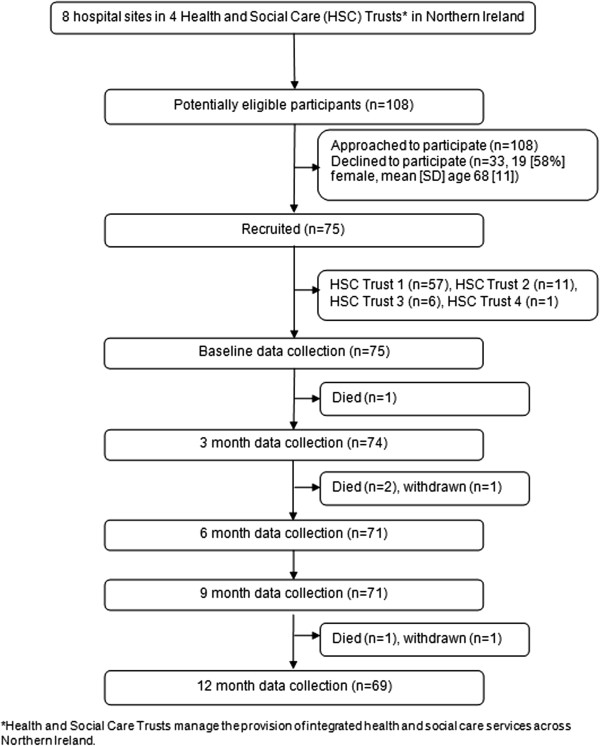
Results: Seventy-five participants were recruited. Thirty-five (53%), 39 (53%) and 31 (41%) participants were adherent to inhaled antibiotics, other respiratory medicines, and airway clearance, respectively. Twelve (16%) participants were adherent to all treatments. Participants who were adherent to inhaled antibiotics had significantly fewer exacerbations compared to non-adherent participants (2.6 vs 4, p = 0.00) and adherence to inhaled antibiotics was independently associated with having fewer pulmonary exacerbations (regression co-efficient = -0.51, 95% CI [-0.81,-0.21], p < 0.001). Adherence to airway clearance was associated with lower QOL-B Treatment Burden (regression co-efficient = -15.46, 95% CI [-26.54, -4.37], p < 0.01) and Respiratory Symptoms domain scores (regression co-efficient = -10.77, 95% CI [-21.45; -0.09], p < 0.05). There were no associations between adherence to other respiratory medicines and any of the outcomes tested. Adherence to treatment was not associated with FEV1 % predicted.
Conclusions: Treatment adherence is low in bronchiectasis and affects important health outcomes including pulmonary exacerbations. Adherence should be measured as part of bronchiectasis management and future research should evaluate bronchiectasis-specific adherence strategies.
Figures
References
-
- Gibson G, Loddenkemper R, Lundback B, Sibille Y. European Lung White Book. Sheffield, UK: European Respiratory Society; 2013. - PubMed
-
- Hill AT, Welham S, Reid K, Bucknall CE. British Thoracic Society national bronchiectasis audit 2010 and 2011. Thorax. 2012;67(10):928–930. - PubMed
-
- Martínez-García MA, Soler-Cataluña J-J, Perpiñá-Tordera M, Román-Sánchez P, Soriano J. Factors associated with lung function decline in adult patients with stable non-cystic fibrosis bronchiectasis. Chest. 2007;32(5):1565–1572. - PubMed
-
- Wilson CB, Jones PW, O’Leary CJ, Hansell DM, Cole PJ, Wilson R. Effect of sputum bacteriology on the quality of life of patients with bronchiectasis. Eur Respir J. 1997;10:1754–1760. - PubMed
-
- Pasteur MC, Bilton D, Hill AT. Guideline for non-CF bronchiectasis. Thorax. 2010;65(Suppl 1):i1–58. - PubMed
Publication types
MeSH terms
Substances
LinkOut - more resources
Full Text Sources
Other Literature Sources
Medical
