


Natural variation in dauer pheromone production and sensing supports intraspecific competition in nematodes
- PMID: 24980503
- PMCID: PMC4437242
- DOI: 10.1016/j.cub.2014.05.045
Natural variation in dauer pheromone production and sensing supports intraspecific competition in nematodes
Abstract
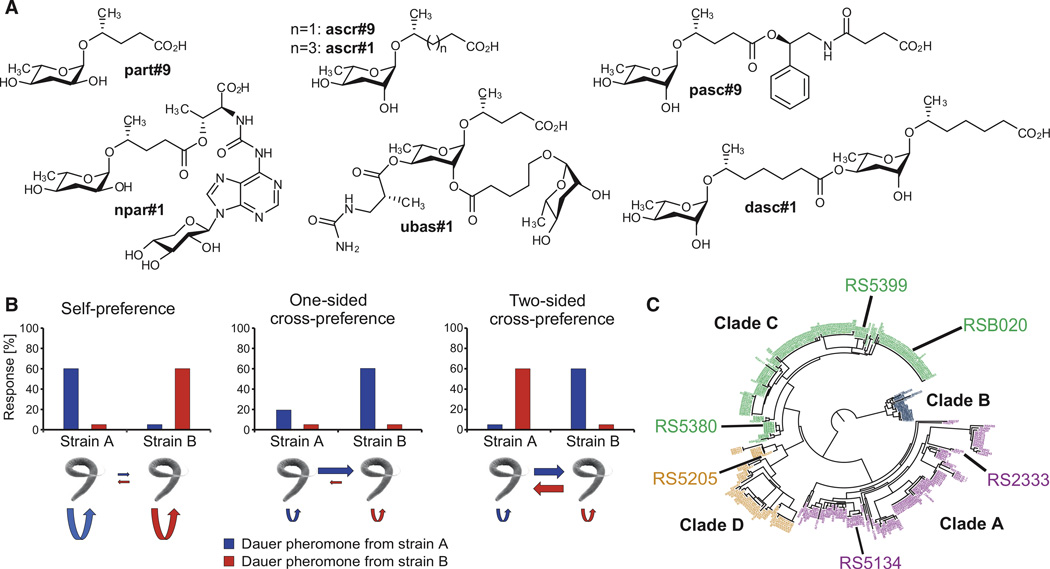
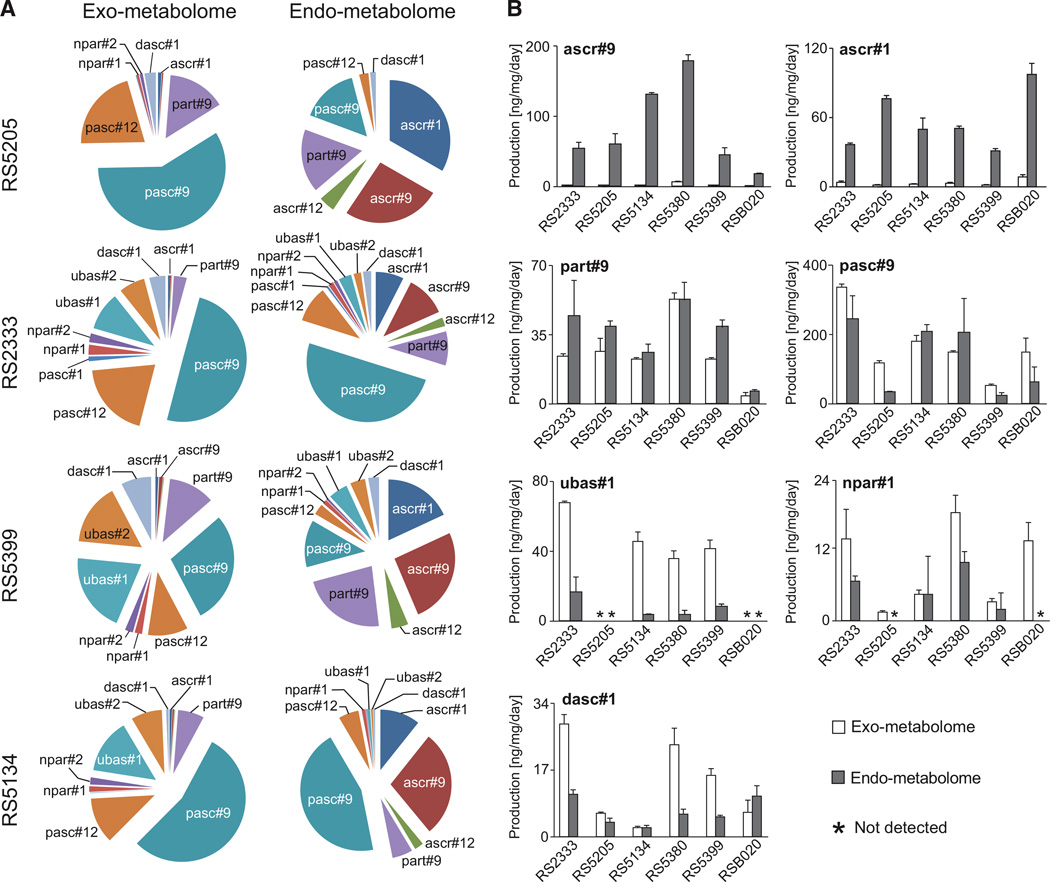
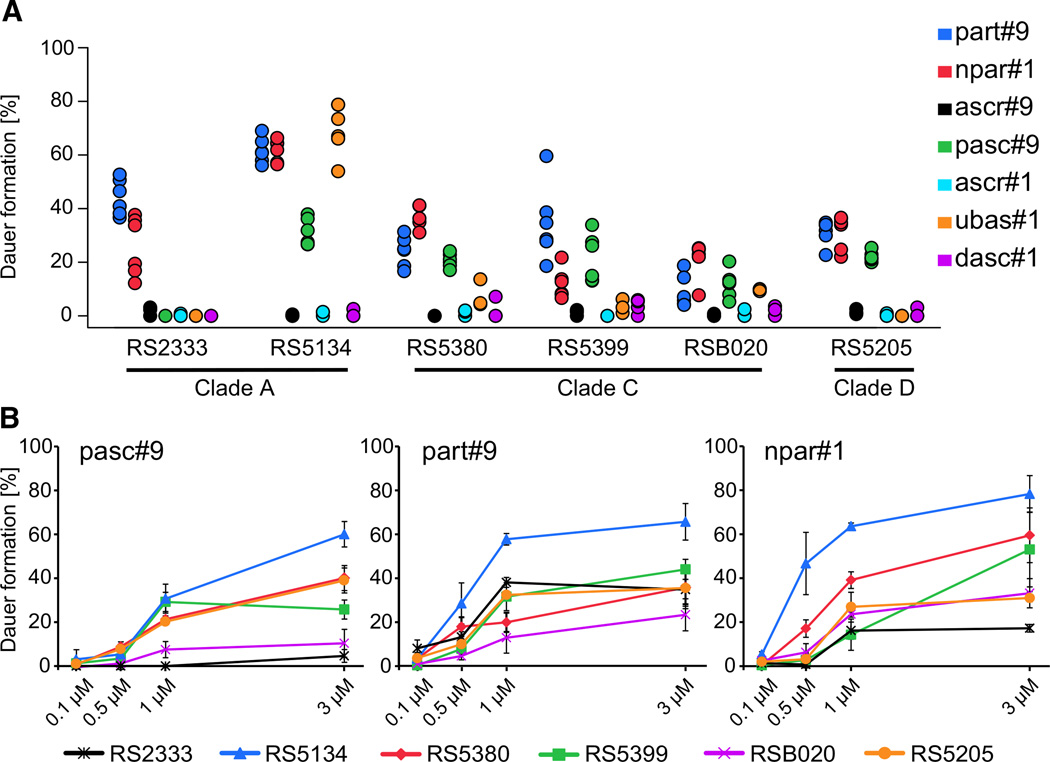
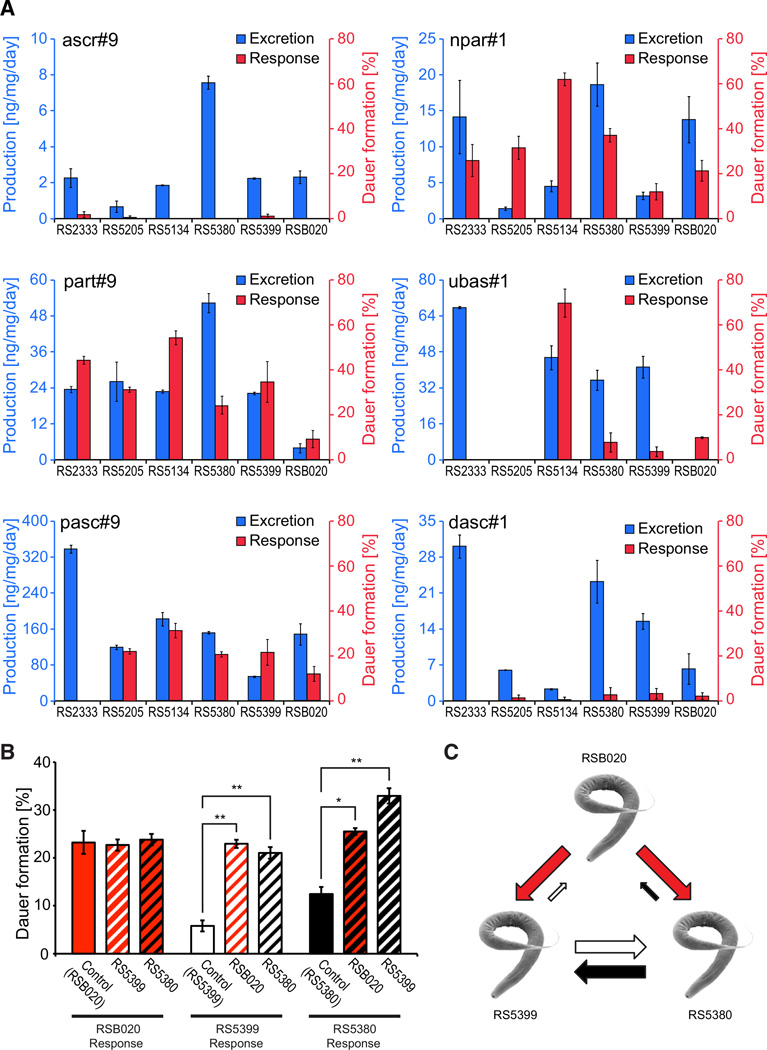
Dauer formation, a major nematode survival strategy, represents a model for small-molecule regulation of metazoan development [1-10]. Free-living nematodes excrete dauer-inducing pheromones that have been assumed to target conspecifics of the same genotype [9, 11]. However, recent studies in Pristionchus pacificus revealed that the dauer pheromone of some strains affects conspecifics of other genotypes more strongly than individuals of the same genotype [12]. To elucidate the mechanistic basis for this intriguing cross-preference, we compared six P. pacificus wild isolates to determine the chemical composition of their dauer-inducing metabolomes and responses to individual pheromone components. We found that these isolates produce dauer pheromone blends of different composition and respond differently to individual pheromone components. Strikingly, there is no correlation between production of and dauer response to a specific compound in individual strains. Specifically, pheromone components that are abundantly produced by one genotype induce dauer formation in other genotypes, but not necessarily in the abundant producer. Furthermore, some genotypes respond to pheromone components they do not produce themselves. These results support a model of intraspecific competition in nematode dauer formation. Indeed, we observed intraspecific competition among sympatric strains in a novel experimental assay, suggesting a new role of small molecules in nematode ecology.
Copyright © 2014 Elsevier Ltd. All rights reserved.
Figures
References
-
- Jeong PY, Jung M, Yim YH, Kim H, Park M, Hong E, Lee W, Kim YH, Kim K, Paik YK. Chemical structure and biological activity of the Caenorhabditis elegans dauer-inducing pheromone. Nature. 2005;433:541–545. - PubMed
Publication types
MeSH terms
Substances
Grants and funding
LinkOut - more resources
Full Text Sources
Other Literature Sources
