A comprehensive search for calcium binding sites critical for TMEM16A calcium-activated chloride channel activity
- PMID: 24980701
- PMCID: PMC4112547
- DOI: 10.7554/eLife.02772
A comprehensive search for calcium binding sites critical for TMEM16A calcium-activated chloride channel activity
Abstract
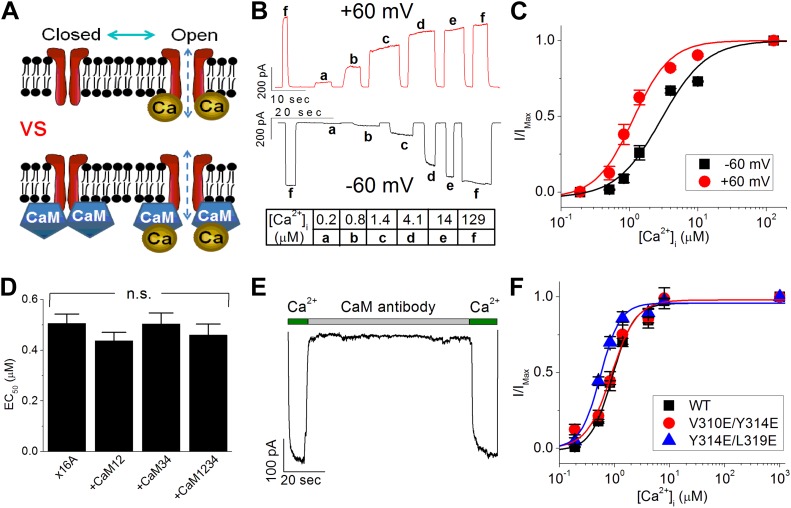
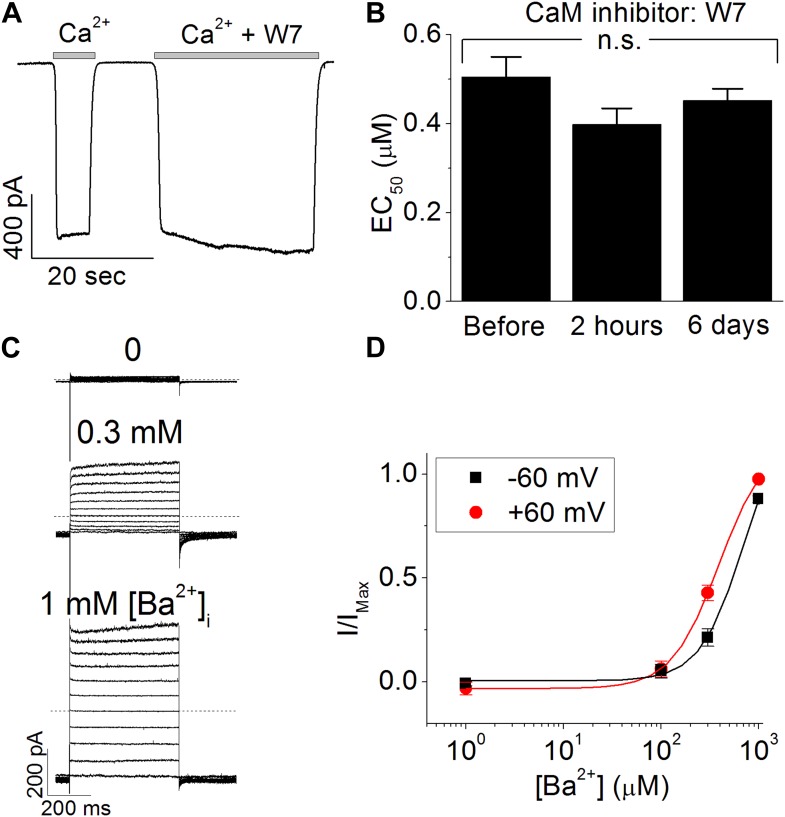
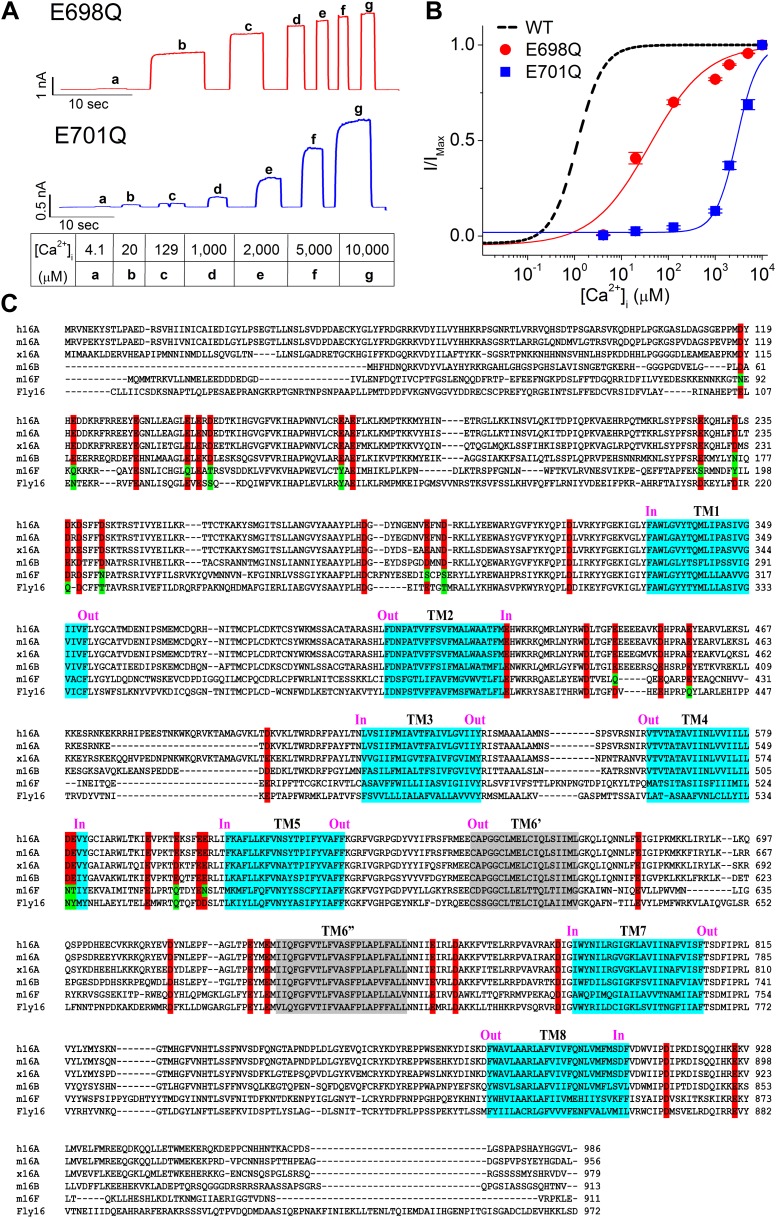
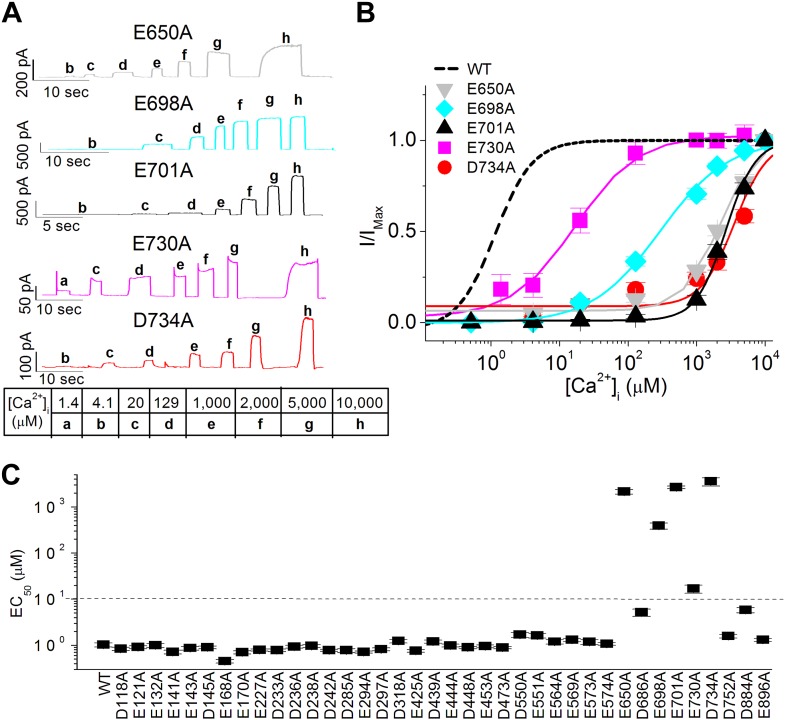
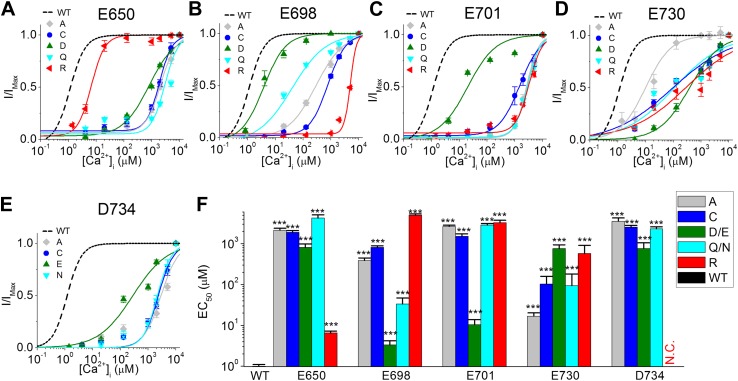
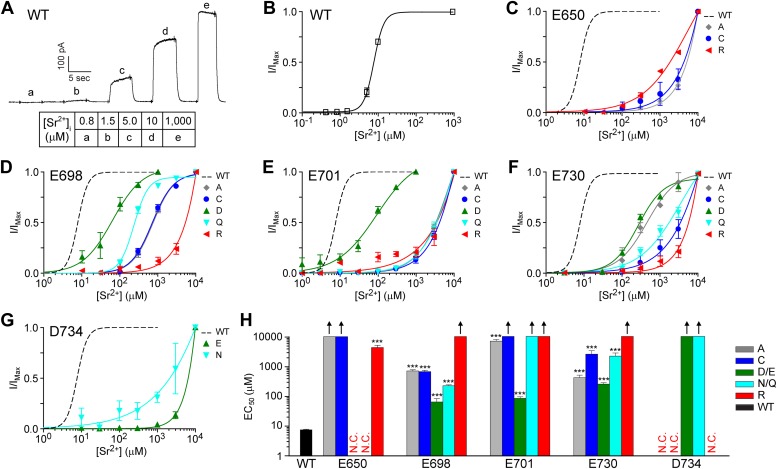
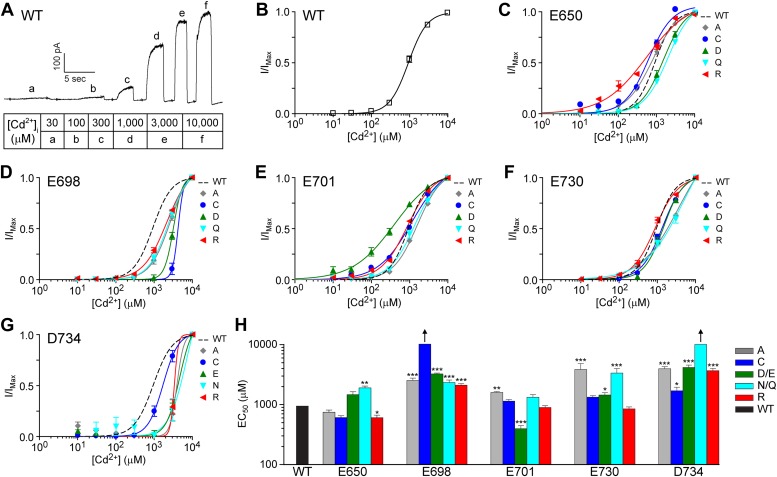
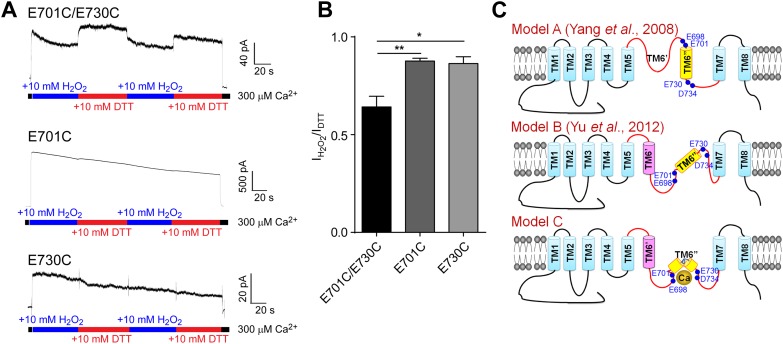
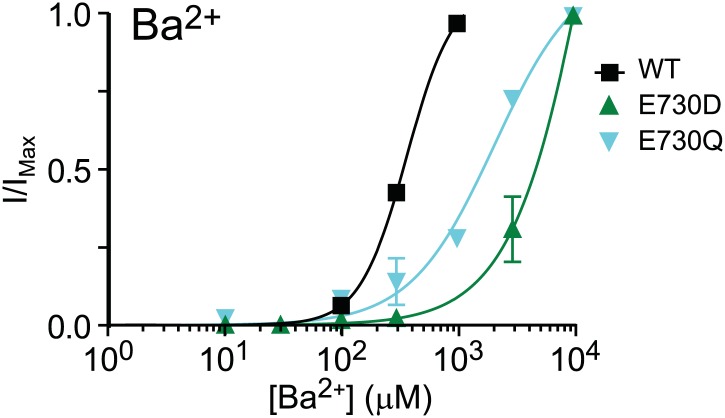
TMEM16A forms calcium-activated chloride channels (CaCCs) that regulate physiological processes such as the secretions of airway epithelia and exocrine glands, the contraction of smooth muscles, and the excitability of neurons. Notwithstanding intense interest in the mechanism behind TMEM16A-CaCC calcium-dependent gating, comprehensive surveys to identify and characterize potential calcium sensors of this channel are still lacking. By aligning distantly related calcium-activated ion channels in the TMEM16 family and conducting systematic mutagenesis of all conserved acidic residues thought to be exposed to the cytoplasm, we identify four acidic amino acids as putative calcium-binding residues. Alterations of the charge, polarity, and size of amino acid side chains at these sites alter the ability of different divalent cations to activate the channel. Furthermore, TMEM16A mutant channels containing double cysteine substitutions at these residues are sensitive to the redox potential of the internal solution, providing evidence for their physical proximity and solvent accessibility.
Keywords: ANO1 channels; TMEM16 channels; TMEM16A channels; biochemistry; biophysics; calcium activated chloride channels; calcium binding site; calcium dependent activation; frog; fruit fly; human; mouse; structural biology.
Conflict of interest statement
The authors declare that no competing interests exist.
Figures
References
-
- Chao SH, Suzuki Y, Zysk JR, Cheung WY. 1984. Activation of calmodulin by various metal cations as a function of ionic radius. Molecular Pharmacology 26:75–82 - PubMed
Publication types
MeSH terms
Substances
Grants and funding
LinkOut - more resources
Full Text Sources
Other Literature Sources