


Cohort Profile: The Applied Research Group for Kids (TARGet Kids!)
- PMID: 24982016
- PMCID: PMC4521122
- DOI: 10.1093/ije/dyu123
Cohort Profile: The Applied Research Group for Kids (TARGet Kids!)
Abstract
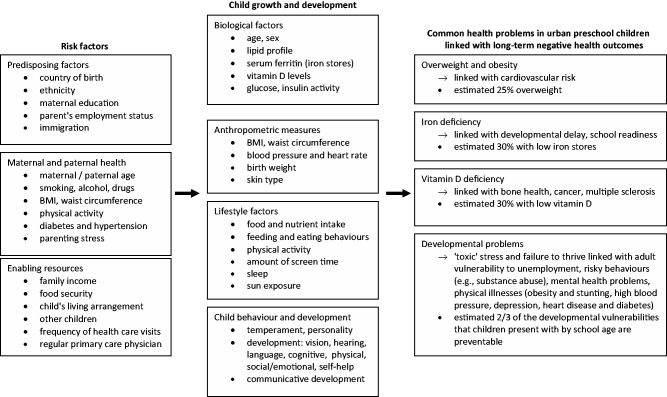
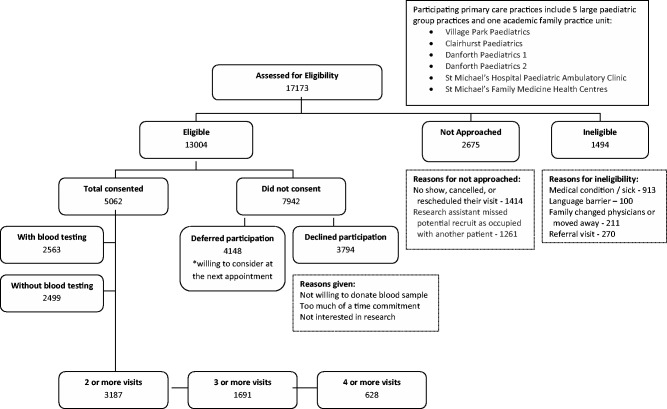
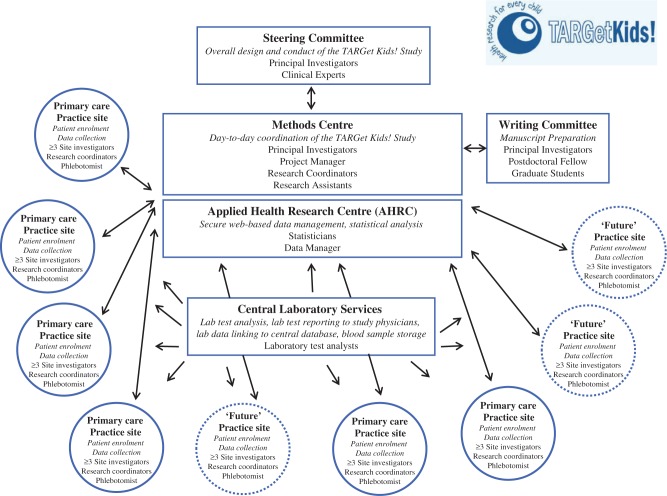
The Applied Research Group for Kids (TARGet Kids!) is an ongoing open longitudinal cohort study enrolling healthy children (from birth to 5 years of age) and following them into adolescence. The aim of the TARGet Kids! cohort is to link early life exposures to health problems including obesity, micronutrient deficiencies and developmental problems. The overarching goal is to improve the health of Canadians by optimizing growth and developmental trajectories through preventive interventions in early childhood. TARGet Kids!, the only child health research network embedded in primary care practices in Canada, leverages the unique relationship between children and families and their trusted primary care practitioners, with whom they have at least seven health supervision visits in the first 5 years of life. Children are enrolled during regularly scheduled well-child visits. To date, we have enrolled 5062 children. In addition to demographic information, we collect physical measurements (e.g. height, weight), lifestyle factors (nutrition, screen time and physical activity), child behaviour and developmental screening and a blood sample (providing measures of cardiometabolic, iron and vitamin D status, and trace metals). All data are collected at each well-child visit: twice a year until age 2 and every year until age 10. Information can be found at: http://www.targetkids.ca/contact-us/.
© The Author 2014; all rights reserved. Published by Oxford University Press on behalf of the International Epidemiological Association.
Figures
References
-
- Barker DJ, Osmond C. Infant mortality, childhood nutrition, and ischaemic heart disease in England and Wales. Lancet 1986;1:1077–81. - PubMed
-
- Hales CN, Barker DJ. The thrifty phenotype hypothesis. Br Med Bull 2001;60:5–20. - PubMed
-
- StatsCan. Canadian Health Measures Survey. Detailed information for January 2012 to December 2013 (Cycle 3). http://www23.statcan.gc.ca/imdb/p2SV.pl?Function=getSurvey&SDDS=5071&Ite... (6 December 2013, date last accessed).
-
- Roberts KC, Shields M, de Groh M, Aziz A, Gilbert J. Overweight and obesity in children and adolescents: Results from the 2009 to 2011 Canadian Health Measures Survey. Statistics Canada. Health Rep 2012;23:1–7. - PubMed
-
- Melnyk BM, Grossman DC, Chou R, et al. and the US Preventive Services Task Force. USPSTF perspective on evidence-based preventive recommendations for Children. Pediatrics 2012;130:e399–e407. - PubMed
Publication types
MeSH terms
Grants and funding
LinkOut - more resources
Full Text Sources
Other Literature Sources
Medical
