


Local genomic adaptation of coral reef-associated microbiomes to gradients of natural variability and anthropogenic stressors
- PMID: 24982156
- PMCID: PMC4104888
- DOI: 10.1073/pnas.1403319111
Local genomic adaptation of coral reef-associated microbiomes to gradients of natural variability and anthropogenic stressors
Abstract
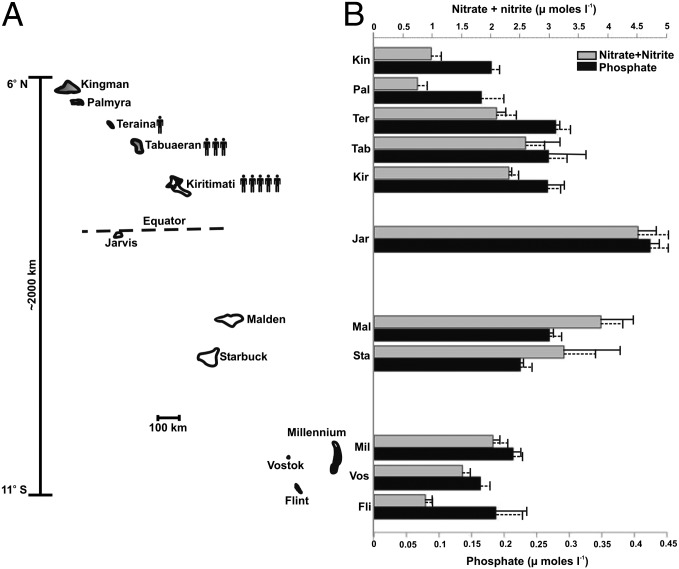
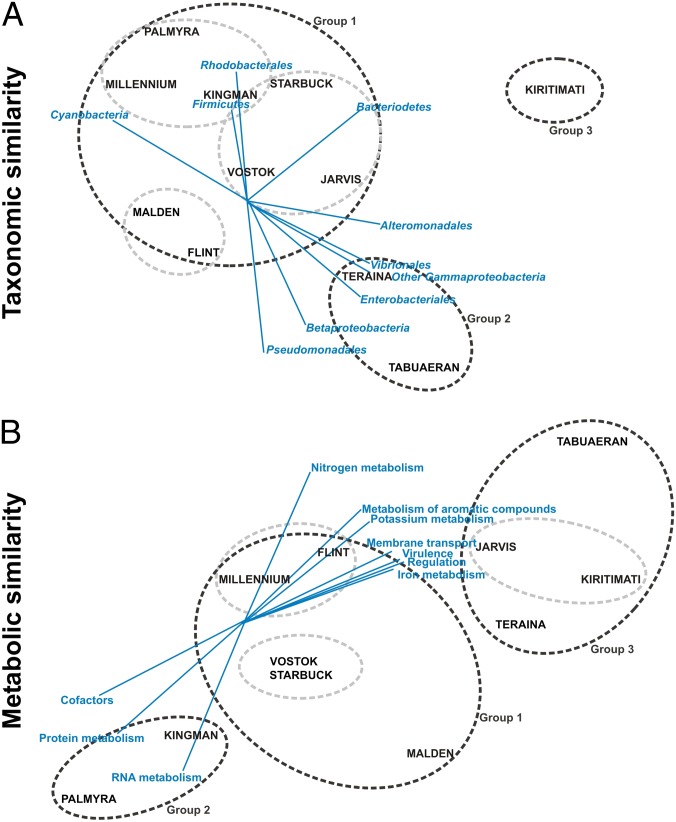
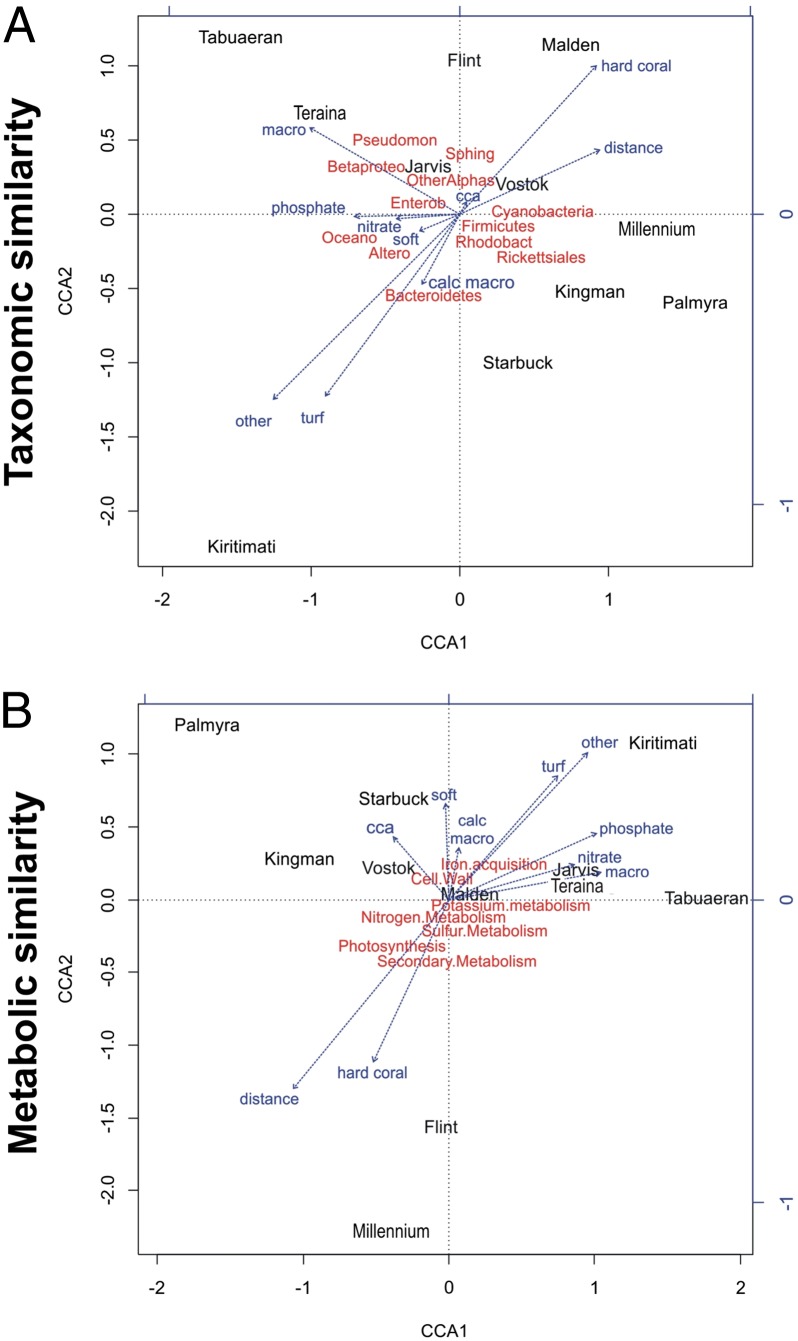
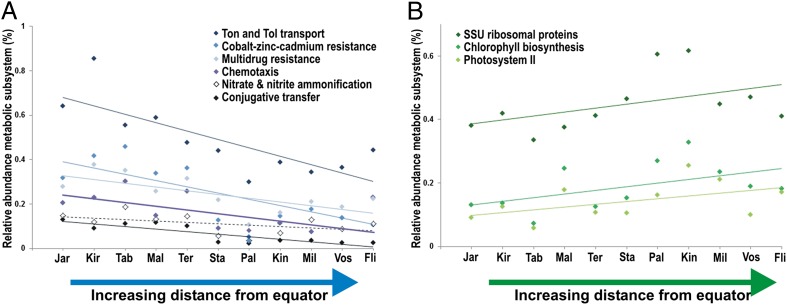
Holobionts are species-specific associations between macro- and microorganisms. On coral reefs, the benthic coverage of coral and algal holobionts varies due to natural and anthropogenic forcings. Different benthic macroorganisms are predicted to have specific microbiomes. In contrast, local environmental factors are predicted to select for specific metabolic pathways in microbes. To reconcile these two predictions, we hypothesized that adaptation of microbiomes to local conditions is facilitated by the horizontal transfer of genes responsible for specific metabolic capabilities. To test this hypothesis, microbial metagenomes were sequenced from 22 coral reefs at 11 Line Islands in the central Pacific that together span a wide range of biogeochemical and anthropogenic influences. Consistent with our hypothesis, the percent cover of major benthic functional groups significantly correlated with particular microbial taxa. Reefs with higher coral cover had a coral microbiome with higher abundances of Alphaproteobacteria (such as Rhodobacterales and Sphingomonadales), whereas microbiomes of algae-dominated reefs had higher abundances of Gammaproteobacteria (such as Alteromonadales, Pseudomonadales, and Vibrionales), Betaproteobacteria, and Bacteriodetes. In contrast to taxa, geography was the strongest predictor of microbial community metabolism. Microbial communities on reefs with higher nutrient availability (e.g., equatorial upwelling zones) were enriched in genes involved in nutrient-related metabolisms (e.g., nitrate and nitrite ammonification, Ton/Tol transport, etc.). On reefs further from the equator, microbes had more genes encoding chlorophyll biosynthesis and photosystems I/II. These results support the hypothesis that core microbiomes are determined by holobiont macroorganisms, and that those core taxa adapt to local conditions by selecting for advantageous metabolic genes.
Keywords: marine bacteria; metabolic potential; microbial biogeography.
Conflict of interest statement
The authors declare no conflict of interest.
Figures
References
-
- Rohwer F, Seguritan V, Azam F, Knowlton N. Diversity and distribution of coral-associated bacteria. Mar Ecol Prog Ser. 2002;243:1–10.
-
- Bourne DG, Munn CB. Diversity of bacteria associated with the coral Pocillopora damicornis from the Great Barrier Reef. Environ Microbiol. 2005;7(8):1162–1174. - PubMed
-
- Knowlton N, Rohwer F. Multispecies microbial mutualisms on coral reefs: The host as a habitat. Am Nat. 2003;162(Suppl 4):S51–S62. - PubMed
Publication types
MeSH terms
LinkOut - more resources
Full Text Sources
Other Literature Sources
Medical
