Radioembolization of hepatic tumors
- PMID: 24982766
- PMCID: PMC4074949
- DOI: 10.3978/j.issn.2078-6891.2014.037
Radioembolization of hepatic tumors
Abstract
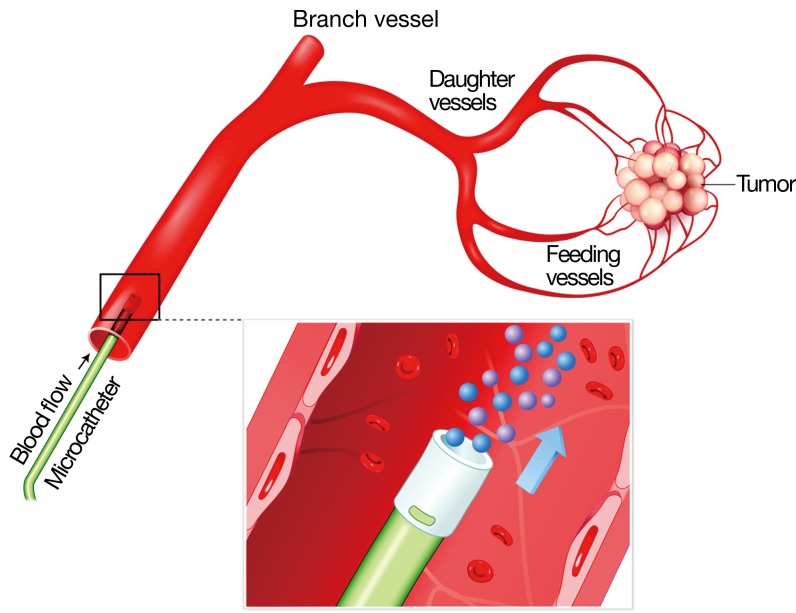
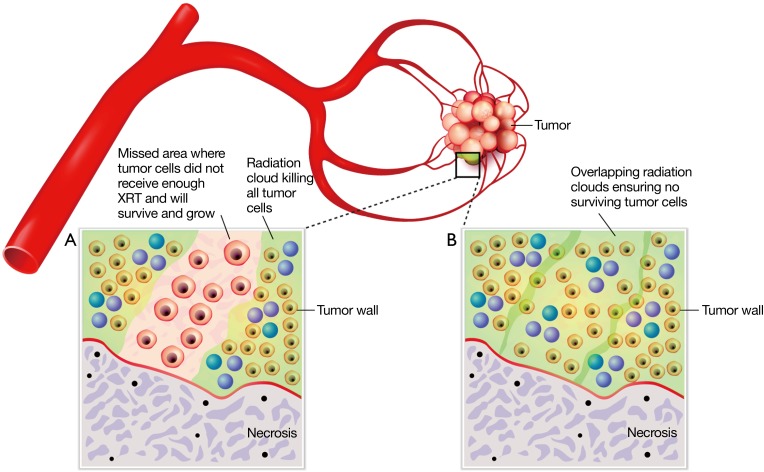
Unresectable primary and metastatic liver tumors are a leading cause of cancer mortality and morbidity. This remains a challenging and key task for every oncologist despite significant advances that have been made with selective targeted systemic agents and in technology advances with radiotherapy delivery. Radioembolization (RE) is a technique of permanently implanting microspheres containing Yttrium-90 ((90)Y), a beta-emitting isotope with a treatment range of 2 mm, into hepatic tumors. This form of brachytherapy utilizes the unique dual vascular anatomy of the liver to preferentially deliver radioactive particles via the hepatic artery to tumor, sparing normal liver parenchyma. The main treatment inclusion criteria are patients with solid tumors, compensated liver functions, life expectancy of at least three months, and ECOG performance status 0-2. Benefit of RE has been proven in patients that have low-to-moderate extrahepatic disease burden, prior liver radiotherapy, heavy prior chemotherapy and biologic agent exposure, and history of hepatic surgery or ablation. Most of the clinical evidence is reported in metastatic colorectal, and neuroendocrine tumors (NET), and primary hepatocellular cancer. A growing body of data supports the use of RE in hepatic metastatic breast cancer, intrahepatic cholangiocarinoma, and many other metastatic tumor types. Side effects are typically mild constitutional and GI issues limited to the first 7-14 days post treatment, with only 6% grade 3 toxicity reported in large series. Potentially serious or fatal radiation induced liver disease is extremely rare, reported in only 1% or fewer in major series of both metastatic and primary tumors treated with RE. Currently, high priority prospective clinical trials are testing RE combined with chemotherapy in first line therapy for colorectal hepatic metastases, and combined with sorafenib for hepatocellular carcinomas (HCCs). Fortunately, this beneficial and now widely available therapy is being increasingly incorporated into the standard therapy algorithms of multidisciplinary GI cancer teams worldwide. This form of radiotherapy differs significantly from daily external beam radiotherapy in many ways, particularly in dose rate, dosimetric coverage and duration of radiation delivery, side effects, and patient selection factors. A wealth of experience using RE in solid tumors exists and ongoing major prospective clinical trials will soon clarify the role of RE in the management of metastatic colorectal liver metastases.
Keywords: Brachytherapy; Yttrium-90 (90Y); liver tumors.
Figures
References
-
- Kennedy AS, Nutting C, Coldwell D, et al. Pathologic response and microdosimetry of (90)Y microspheres in man: review of four explanted whole livers. Int J Radiat Oncol Biol Phys 2004;60:1552-63 - PubMed
-
- Kennedy A, Nag S, Salem R, et al. Recommendations for radioembolization of hepatic malignancies using yttrium-90 microsphere brachytherapy: a consensus panel report from the radioembolization brachytherapy oncology consortium. Int J Radiat Oncol Biol Phys 2007;68:13-23 - PubMed
-
- Kennedy AS, Salem R. Radioembolization (yttrium-90 microspheres) for primary and metastatic hepatic malignancies. Cancer J 2010;16:163-75 - PubMed
-
- Hess KR, Varadhachary GR, Taylor SH, et al. Metastatic patterns in adenocarcinoma. Cancer 2006;106:1624-33 - PubMed
-
- Kasper HU, Drebber U, Dries V, et al. Liver metastases: incidence and histogenesis. Z Gastroenterol 2005;43:1149-57 - PubMed
Publication types
LinkOut - more resources
Full Text Sources