. 2014 Jul 1;9(7):e96054.
doi: 10.1371/journal.pone.0096054. eCollection 2014.

Lifting the mask: identification of new small molecule inhibitors of uropathogenic Escherichia coli group 2 capsule biogenesis

Affiliations

Lifting the mask: identification of new small molecule inhibitors of uropathogenic Escherichia coli group 2 capsule biogenesis

Carlos C Goller et al. PLoS One. .

Abstract

Uropathogenic Escherichia coli (UPEC) is the leading cause of community-acquired urinary tract infections (UTIs), with over 100 million UTIs occurring annually throughout the world. Increasing antimicrobial resistance among UPEC limits ambulatory care options, delays effective treatment, and may increase overall morbidity and mortality from complications such as urosepsis. The polysaccharide capsules of UPEC are an attractive target a therapeutic, based on their importance in defense against the host immune responses; however, the large number of antigenic types has limited their incorporation into vaccine development. The objective of this study was to identify small-molecule inhibitors of UPEC capsule biogenesis. A large-scale screening effort entailing 338,740 compounds was conducted in a cell-based, phenotypic screen for inhibition of capsule biogenesis in UPEC. The primary and concentration-response assays yielded 29 putative inhibitors of capsule biogenesis, of which 6 were selected for further studies. Secondary confirmatory assays identified two highly active agents, named DU003 and DU011, with 50% inhibitory concentrations of 1.0 µM and 0.69 µM, respectively. Confirmatory assays for capsular antigen and biochemical measurement of capsular sugars verified the inhibitory action of both compounds and demonstrated minimal toxicity and off-target effects. Serum sensitivity assays demonstrated that both compounds produced significant bacterial death upon exposure to active human serum. DU011 administration in mice provided near complete protection against a lethal systemic infection with the prototypic UPEC K1 isolate UTI89. This work has provided a conceptually new class of molecules to combat UPEC infection, and future studies will establish the molecular basis for their action along with efficacy in UTI and other UPEC infections.


Conflict of interest statement

Competing Interests: The authors have declared that no competing interests exist.

Figures

Figure 1
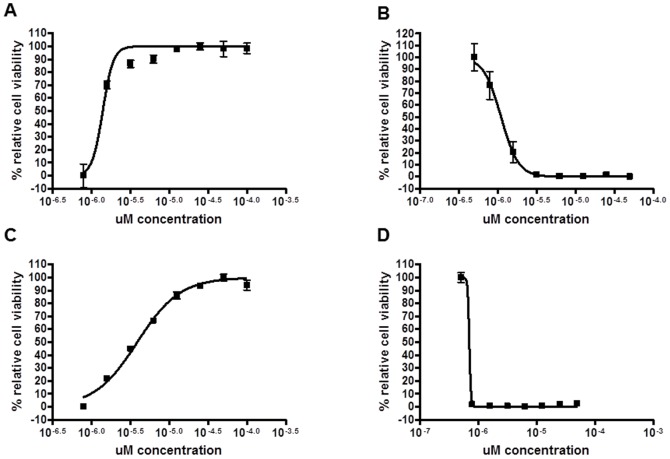
Figure 1. Concentration-response inhibition of K1 and T7 phage-mediated cell lysis.
K1 (A, C) and T7 (B, D) phage activity in E. coli strain UTI89 or EV36 (K1∶K-12 hybrid strain), respectively, following treatment with various concentrations of DU003 (A, B) or DU011 (C, D).
Figure 2
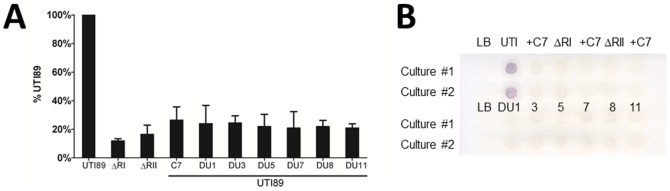
Figure 2. Biochemical and immunologic verification of E. coli Group 2 capsule inhibition through small molecules.
A) Orcinol reactivity of capsular material released by mild acid treatment of cultures grown with 1% DMSO vehicle (UTI89 and genetic capsule mutants) or 100 µM C7, DU001, DU003, DU005, DU007, DU008, or DU011. Data represent independent experiments performed in duplicate. Treatment of K1 strain UTI89 with compounds reduces amount of orcinol-reactive polysaccharides on surface of bacteria by ∼80%. B) Whole-cell anti-K1 dot blots of cultures of UTI89 or indicated genetic capsule mutants treated with 1% DMSO or 100 µM DU001, DU003, DU005, DU007, DU008, or DU011 indicate that treatment of cultures with compounds reduces K1 reactive material to levels comparable to those of genetic capsule mutants. ΔRI and ΔRII indicate a complete deletion of Region I of the capsule kps and Region II capsule neu loci, respectively.
Figure 3
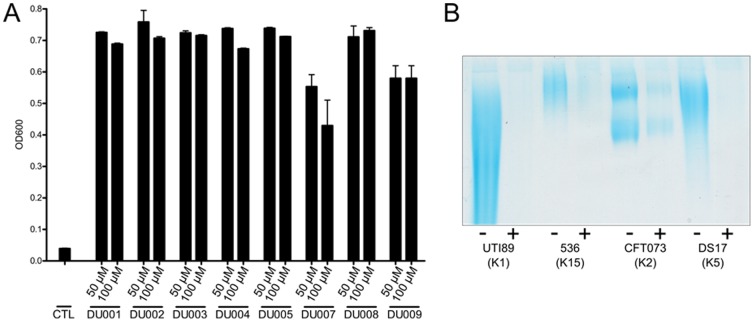
Figure 3. Inhibitor treatment decreases capsule production in different pathogenic E. coli serotypes.
A) K5 E. coli was grown in vehicle or with different inhibitors (50 and 100 µM) and then challenged with K5 lytic phage, which results in cell death in the presence of capsule. Growth was measured by absorbance at OD600. B) Capsular material was isolated from multiple strains grown with and without inhibitor DU011 (200 µM). Capsule preparations were performed in at least 3 independent trials. A single representative image is shown.
Figure 4
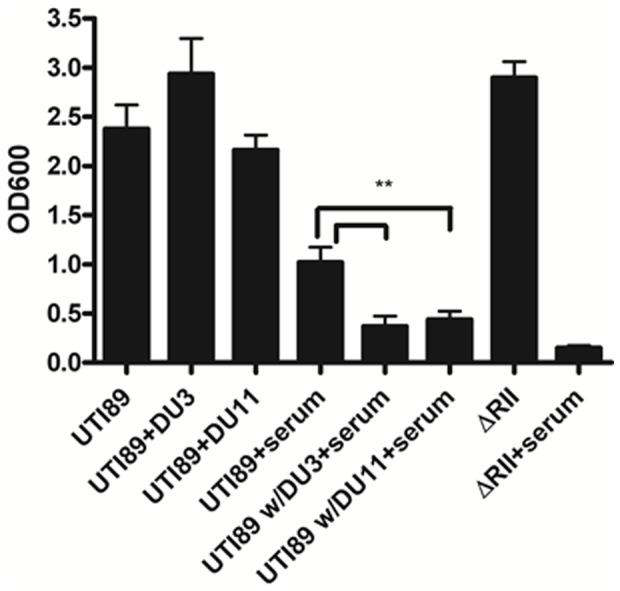
Figure 4. Capsule inhibitors sensitize UPEC K1 strain to serum-mediated killing.
E. coli UTI89 and genetic capsule mutants were grown in the presence and absence of DU003 or DU011 at 50 µM and exposed to human serum. Bacterial metabolism and viability was measured using MTT (3-(4,5-Dimethylthiazol-2-yl)-2,5- diphenyltetrazolium bromide). UTI89 grown in the presence of 50 µM DU003 or DU011 were significantly more sensitive to pooled human serum compared to control UTI89 (** p = 0.0067). This was similar to the serum sensitivity of the capsule mutant UTI89 ΔRII. ΔRI and ΔRII indicate a complete deletion of Region I of the capsule kps and Region II capsule neu loci, respectively.
Figure 5
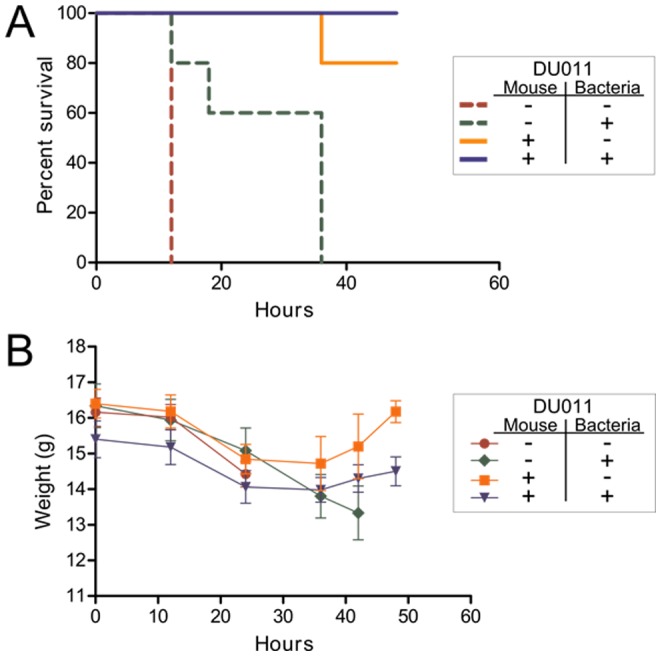
Figure 5. DU011 protects mice against a lethal dose of K1 E. coli.
A) C57BL/6 mice were administered subcutaneous 1% DMSO (control) or DU011 (100 µL of 1 mg/ml in 1% DMSO) 12 hours prior to lethal intraperitoneal injection with 108 CFU of UTI89 prepared in media containing 1% DMSO or DU011 (200 µM in 1% DMSO). Surviving animals continued to receive DMSO or DU011 each 12 hours through the course of the experiment, according to their groups (B) Weight was monitored during DMSO and DU011 administration and after infection.

References

    1. NKUDIC (2005) Urinary Tract Infections in Adults.
    1. Schappert S, Rechtsteiner E (2011) Ambulatory medical care utilization estimates for 2007. Vital and health statistics. Series 13. - PubMed
    1. Foxman B (2010) The epidemiology of urinary tract infection. Nat Rev Urol 7: 653–660 10.1038/nrurol.2010.190 - DOI - PubMed
    1. Gupta K, Scholes D, Stamm WE (1999) Increasing prevalence of antimicrobial resistance among uropathogens causing acute uncomplicated cystitis in women. Jama 281: 736–738 doi:jbr80382 [pii] - PubMed
    1. Ma JF, Shortliffe LMD (2004) Urinary tract infection in children: etiology and epidemiology. Urol Clin North Am 31: 517–x, 517-26, ix-x 10.1016/j.ucl.2004.04.016 - DOI - PubMed

Publication types

MeSH terms

Substances