


Spore formation in Bacillus subtilis
- PMID: 24983526
- PMCID: PMC4078662
- DOI: 10.1111/1758-2229.12130
Spore formation in Bacillus subtilis
Abstract
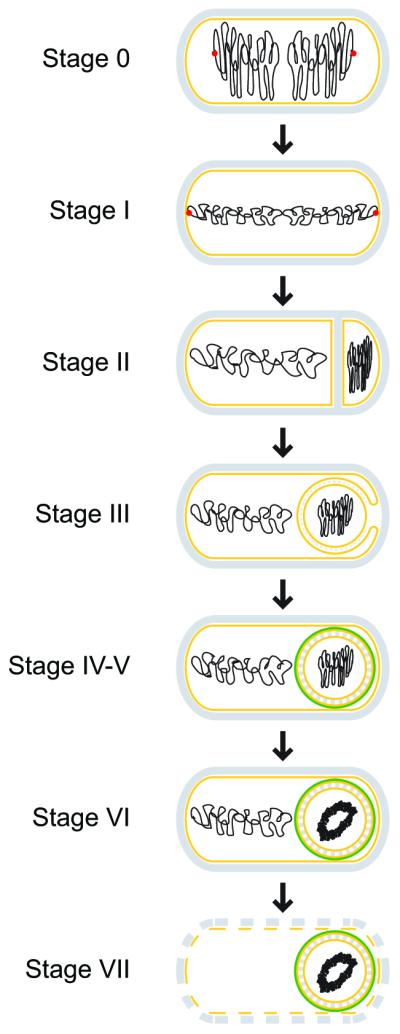
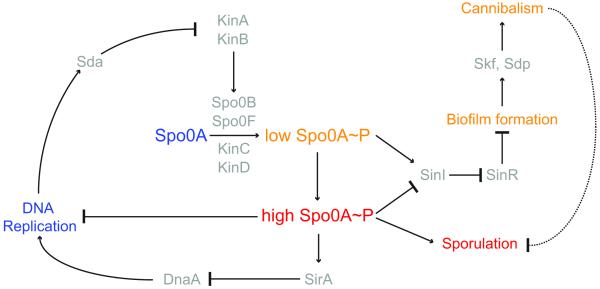
Although prokaryotes ordinarily undergo binary fission to produce two identical daughter cells, some are able to undergo alternative developmental pathways that produce daughter cells of distinct cell morphology and fate. One such example is a developmental programme called sporulation in the bacterium Bacillus subtilis, which occurs under conditions of environmental stress. Sporulation has long been used as a model system to help elucidate basic processes of developmental biology including transcription regulation, intercellular signalling, membrane remodelling, protein localization and cell fate determination. This review highlights some of the recent work that has been done to further understand prokaryotic cell differentiation during sporulation and its potential applications.
Published 2013. This article is a U.S. Government work and is in the public domain in the USA.
Figures
References
-
- Ben-Yehuda S, Fujita M, Liu XS, Gorbatyuk B, Skoko D, Yan J, et al. Defining a centromere-like element in Bacillus subtilis by Identifying the binding sites for the chromosome-anchoring protein RacA. Mol Cell. 2005;17:773–782. - PubMed
-
- Ben-Yehuda S, Rudner DZ, Losick R. RacA, a bacterial protein that anchors chromosomes to the cell poles. Science. 2003;299:532–536. - PubMed
Publication types
MeSH terms
Grants and funding
LinkOut - more resources
Full Text Sources
Other Literature Sources
