The dissolution of double Holliday junctions
- PMID: 24984776
- PMCID: PMC4067992
- DOI: 10.1101/cshperspect.a016477
The dissolution of double Holliday junctions
Abstract
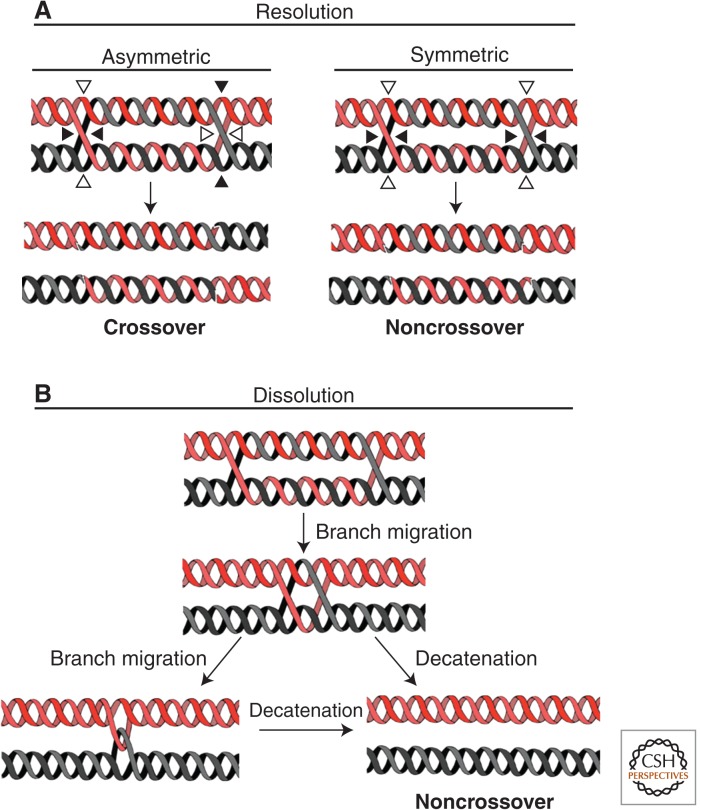
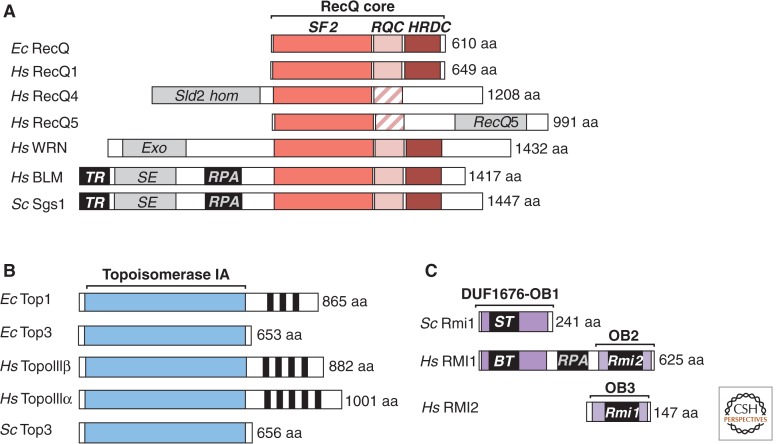
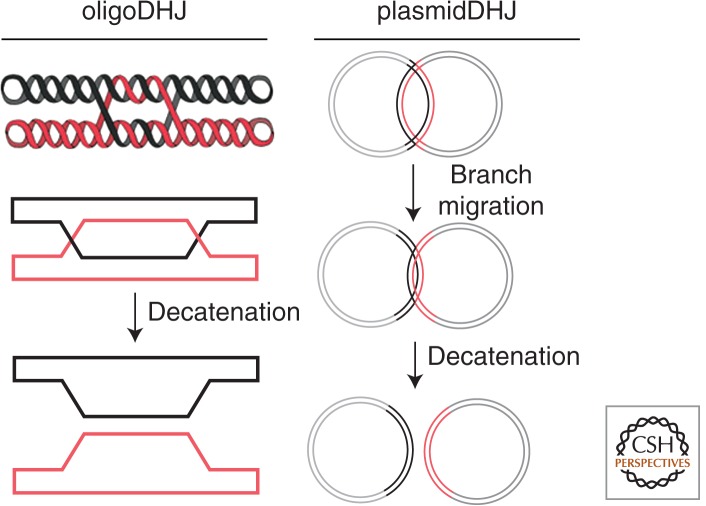
Double Holliday junctions (dHJS) are important intermediates of homologous recombination. The separate junctions can each be cleaved by DNA structure-selective endonucleases known as Holliday junction resolvases. Alternatively, double Holliday junctions can be processed by a reaction known as "double Holliday junction dissolution." This reaction requires the cooperative action of a so-called "dissolvasome" comprising a Holliday junction branch migration enzyme (Sgs1/BLM RecQ helicase) and a type IA topoisomerase (Top3/TopoIIIα) in complex with its OB (oligonucleotide/oligosaccharide binding) fold containing accessory factor (Rmi1). This review details our current knowledge of the dissolution process and the players involved in catalyzing this mechanistically complex means of completing homologous recombination reactions.
Copyright © 2014 Cold Spring Harbor Laboratory Press; all rights reserved.
Figures
References
-
- Bachrati CZ, Hickson ID 2009. Dissolution of double Holliday junctions by the concerted action of BLM and topoisomerase IIIα. Methods Mol Biol 582: 91–102 - PubMed
Publication types
MeSH terms
Substances
LinkOut - more resources
Full Text Sources
Other Literature Sources
Molecular Biology Databases
Miscellaneous