


Selenoproteins: molecular pathways and physiological roles
- PMID: 24987004
- PMCID: PMC4101630
- DOI: 10.1152/physrev.00039.2013
Selenoproteins: molecular pathways and physiological roles
Abstract
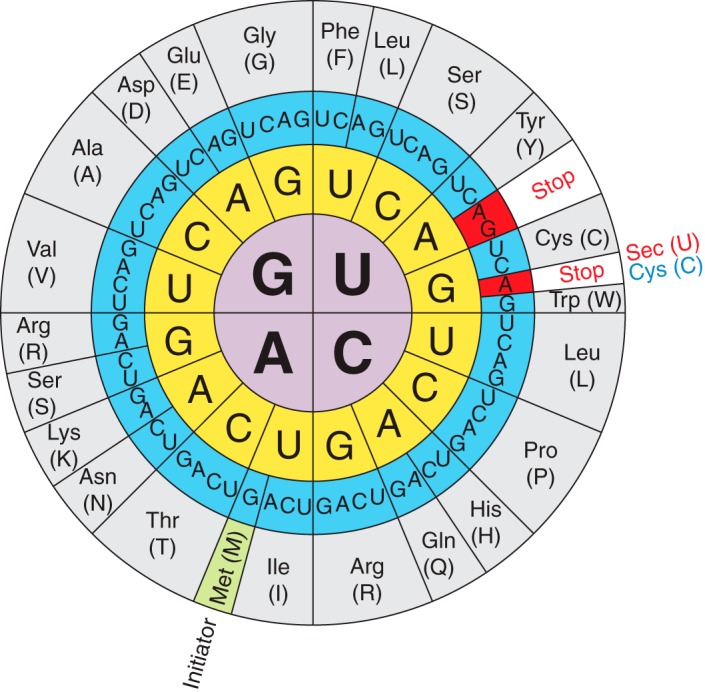
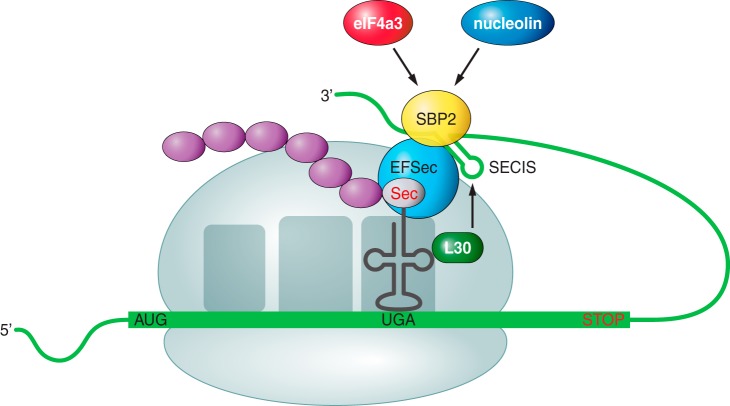
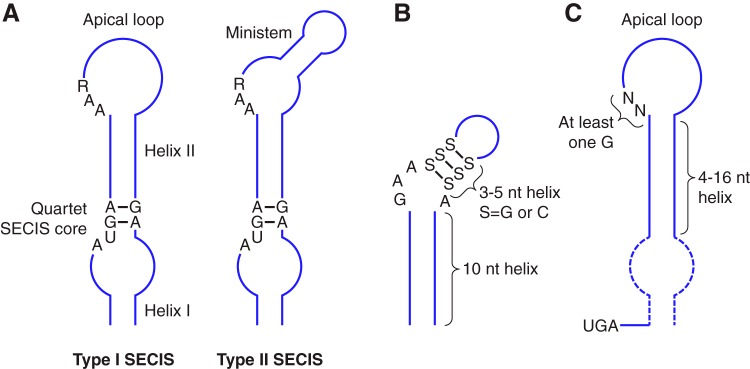
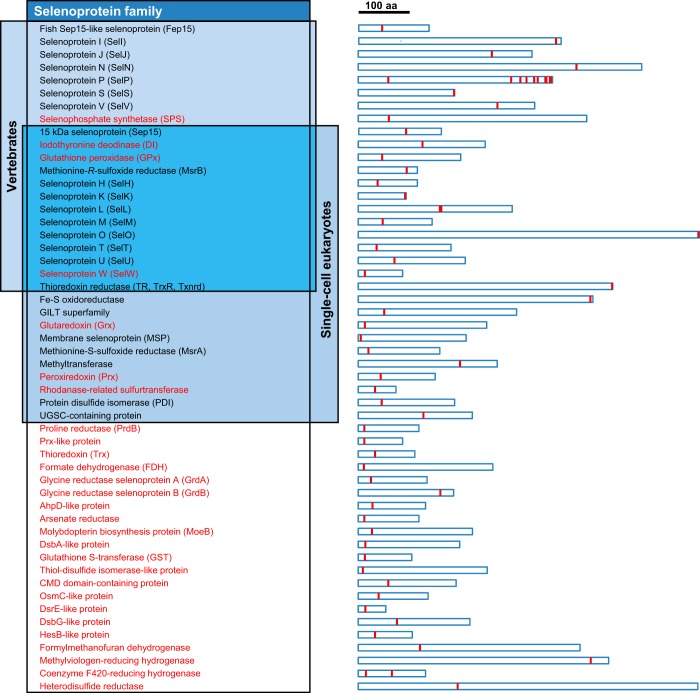
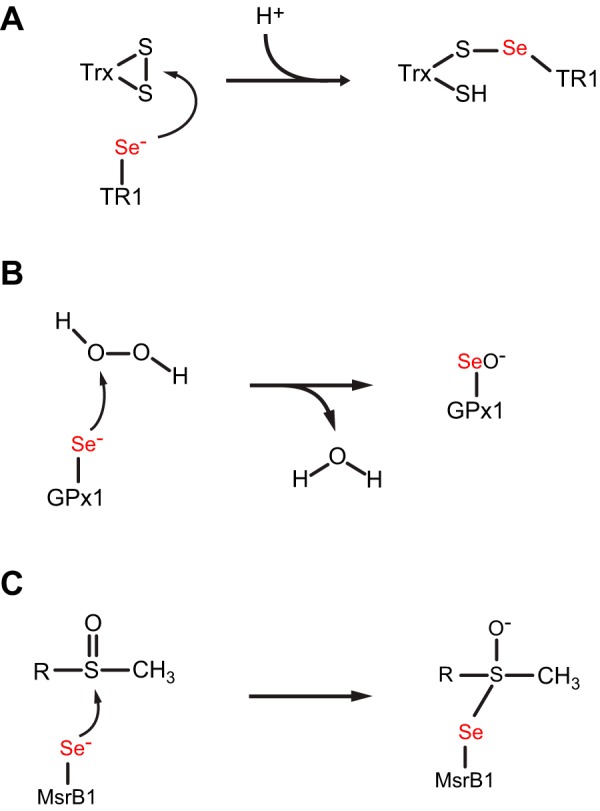
Selenium is an essential micronutrient with important functions in human health and relevance to several pathophysiological conditions. The biological effects of selenium are largely mediated by selenium-containing proteins (selenoproteins) that are present in all three domains of life. Although selenoproteins represent diverse molecular pathways and biological functions, all these proteins contain at least one selenocysteine (Sec), a selenium-containing amino acid, and most serve oxidoreductase functions. Sec is cotranslationally inserted into nascent polypeptide chains in response to the UGA codon, whose normal function is to terminate translation. To decode UGA as Sec, organisms evolved the Sec insertion machinery that allows incorporation of this amino acid at specific UGA codons in a process requiring a cis-acting Sec insertion sequence (SECIS) element. Although the basic mechanisms of Sec synthesis and insertion into proteins in both prokaryotes and eukaryotes have been studied in great detail, the identity and functions of many selenoproteins remain largely unknown. In the last decade, there has been significant progress in characterizing selenoproteins and selenoproteomes and understanding their physiological functions. We discuss current knowledge about how these unique proteins perform their functions at the molecular level and highlight new insights into the roles that selenoproteins play in human health.
Copyright © 2014 the American Physiological Society.
Figures
References
-
- Aachmann FL, Fomenko DE, Soragni A, Gladyshev VN, Dikiy A. Solution structure of selenoprotein W and NMR analysis of its interaction with 14-3-3 proteins. J Biol Chem 282: 37036–37044, 2007 - PubMed
-
- Alanne M, Kristiansson K, Auro K, Silander K, Kuulasmaa K, Peltonen L, Salomaa V, Perola M. Variation in the selenoprotein S gene locus is associated with coronary heart disease and ischemic stroke in two independent Finnish cohorts. Hum Genet 122: 355–365, 2007 - PubMed
Publication types
MeSH terms
Substances
Grants and funding
LinkOut - more resources
Full Text Sources
Other Literature Sources
Molecular Biology Databases
