


Mediterranean diet and health: food effects on gut microbiota and disease control
- PMID: 24987952
- PMCID: PMC4139807
- DOI: 10.3390/ijms150711678
Mediterranean diet and health: food effects on gut microbiota and disease control
Abstract
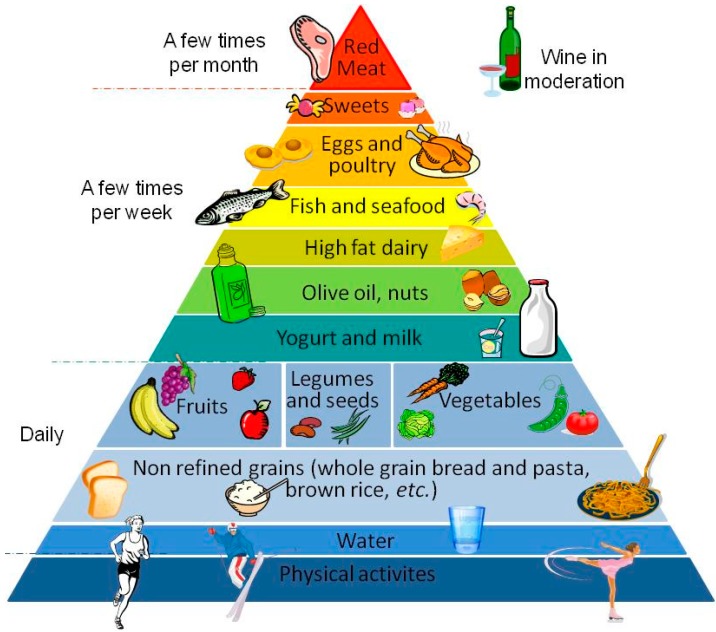
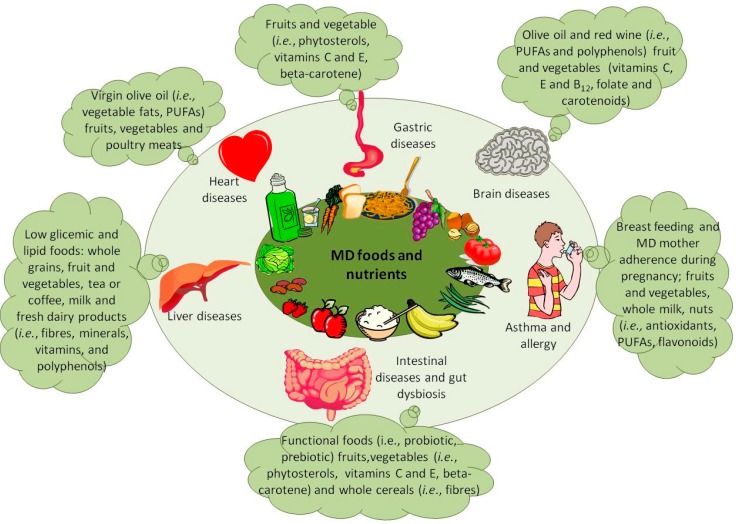
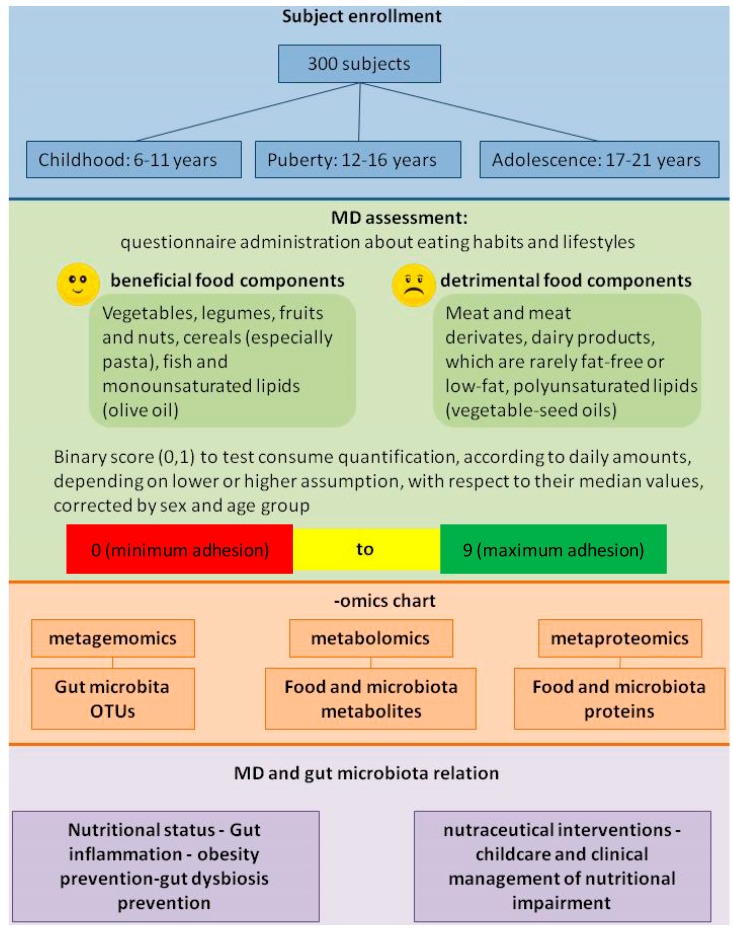
The Mediterranean diet (MD) is considered one of the healthiest dietary models. Many of the characteristic components of the MD have functional features with positive effects on health and wellness. The MD adherence, calculated through various computational scores, can lead to a reduction of the incidence of major diseases (e.g., cancers, metabolic and cardiovascular syndromes, neurodegenerative diseases, type 2 diabetes and allergy). Furthermore, eating habits are the main significant determinants of the microbial multiplicity of the gut, and dietary components influence both microbial populations and their metabolic activities from the early stages of life. For this purpose, we present a study proposal relying on the generation of individual gut microbiota maps from MD-aware children/adolescents. The maps, based on meta-omics approaches, may be considered as new tools, acting as a systems biology-based proof of evidence to evaluate MD effects on gut microbiota homeostasis. Data integration of food metabotypes and gut microbiota "enterotypes" may allow one to interpret MD adherence and its effects on health in a new way, employable for the design of targeted diets and nutraceutical interventions in childcare and clinical management of food-related diseases, whose onset has been significantly shifted early in life.
Figures
References
-
- Willett W.C., Sacks F., Trichopoulou A., Drescher G., Ferro-Luzzi A., Helsing E., Trichopoulos D. Mediterranean diet pyramid: A cultural model for healthy eating. Am. J. Clin. Nutr. 1995;61:S1402–S1406. - PubMed
-
- Hu F.B. Dietary pattern analysis: A new direction in nutritional epidemiology. Curr. Opin. Lipidol. 2002;13:3–9. - PubMed
-
- Estruch R., Salas-Salvado J. Towards an even healthier Mediterranean diet. Nutr. Metab. Cardiovasc. Dis. 2013;23:1163–1166. - PubMed
-
- Bach-Faig A., Berry E.M., Lairon D., Reguant J., Trichopoulou A., Dernini S., Medina F.X., Battino M., Belahsen R., Miranda G., et al. Mediterranean diet pyramid today—Science and cultural updates. Public Health Nutr. 2011;14:2274–2284. - PubMed
-
- Lairon D. Intervention studies on Mediterranean diet and cardiovascular risk. Mol. Nutr. Food Res. 2007;51:1209–1214. - PubMed
Publication types
MeSH terms
LinkOut - more resources
Full Text Sources
Other Literature Sources
Medical
