


Cohort Profile: The Ecuador Life (ECUAVIDA) study in Esmeraldas Province, Ecuador
- PMID: 24990475
- PMCID: PMC4681103
- DOI: 10.1093/ije/dyu128
Cohort Profile: The Ecuador Life (ECUAVIDA) study in Esmeraldas Province, Ecuador
Abstract
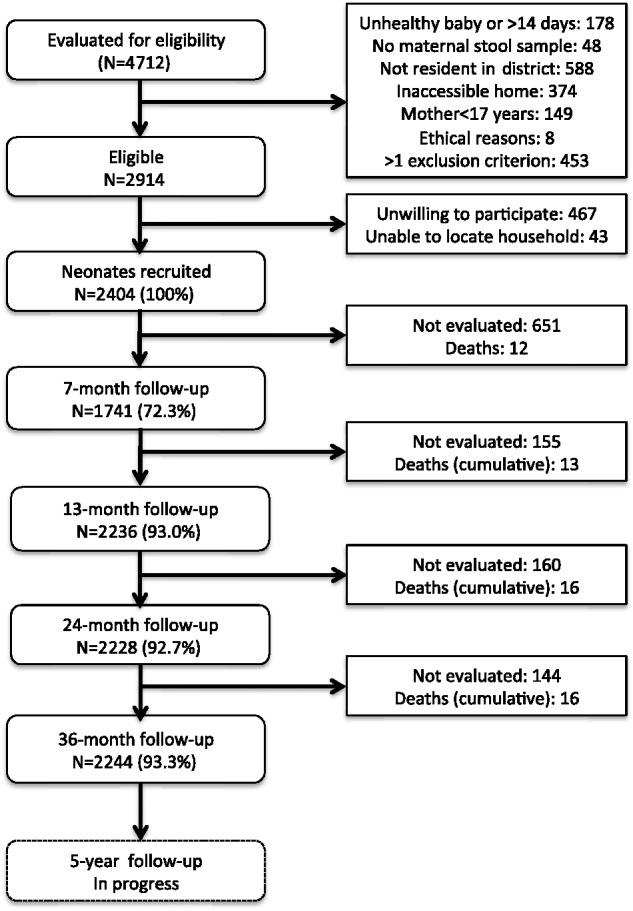
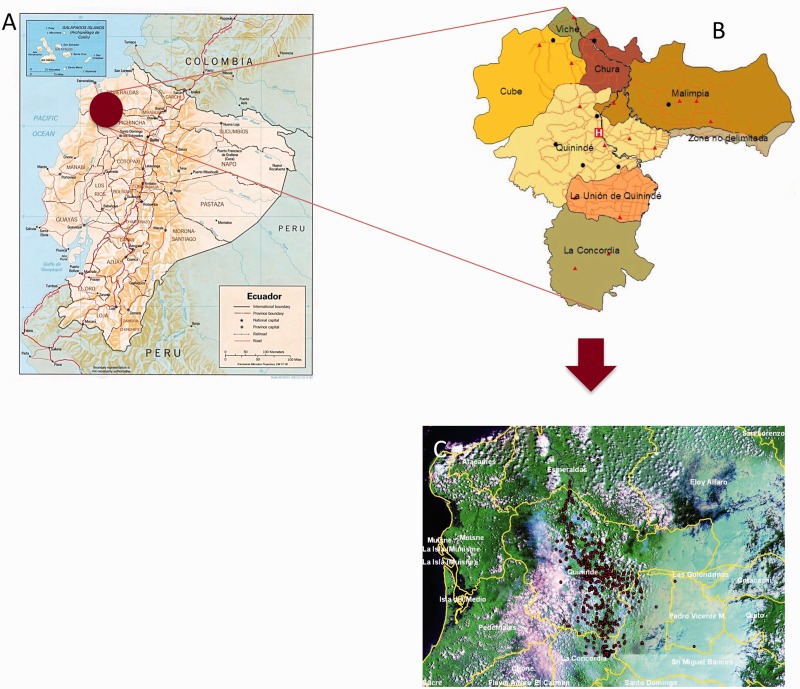
The ECUAVIDA birth cohort is studying the impact of exposures to soil-transmitted helminth (STH) parasites and early-life microbial exposures on the development of atopy, allergic diseases and immune responses in childhood. A total of 2404 newborns were recruited between 2006 and 2009 in a public hospital serving the rural district of Quininde, Esmeraldas Province, in a tropical region of coastal Ecuador. Detailed measurements were done around the time of the birth, at 7 and 13 months and at 2 and 3 years, and data collection is ongoing at 5 and 8 years. Data being collected include questionnaires for: sociodemographic, lifestyle, psychosocial (at 4-6 years only) and dietary (at 6-7 years only) factors; childhood morbidity and clinical outcomes; stool samples for parasites; blood samples for DNA, measurements of vaccine responses and other measures of immune function/inflammation; and anthropometrics. Allergen skin prick test reactivity is done from 2 years and measures of airway function and inflammation at 8 years.
© The Author 2014. Published by Oxford University Press on behalf of the International Epidemiological Association.
Figures
References
-
- Yazdanbakhsh M, Kremsner PG, van Ree R. Allergy, parasites, and the hygiene hypothesis. Science 2002;296:490–94. - PubMed
-
- Bethony J, Brooker S, Albonico M, et al. Soil transmitted helminth infections: ascariasis, trichuriasis, and hookworm. Lancet 2006;367:1521–32. - PubMed
-
- Cooper PJ, Nutman TB. IgE and its role in parasitic helminth infection: implications for anti-IgE based therapies. In: Fick RB, Jardieu P. (eds). Lung Biology in Health and Disease . New York: Marcel Dekker, 2002.
Publication types
MeSH terms
Grants and funding
LinkOut - more resources
Full Text Sources
Other Literature Sources
